Our front page for April 12 — written and set by The Yesterday Times from the events below. Not an archival document.
Day of the year
102
Days left in 2026
263
In 2026 it falls on a
Sunday
Star sign
Aries
Birthstone
Diamond
On April 12 in 1961, 65 years ago, Gagarin Orbits Earth in 108-Minute. This page reports 9 stories from the date, 25 people born on this day.
The stories in full
Space Desk
1961 — Gagarin Orbits Earth in 108-Minute
Soviet cosmonaut circles the globe aboard Vostok 1 — a first for mankind, with the craft reaching 327 kilometers high.
Yuri Gagarin, the first human to travel into space and orbit the Earth — Arkiv: Sydsvenskan
MOSCOW, April 12 — Yuri Gagarin, a 27-year-old Soviet cosmonaut, became the first human to travel into space and orbit the Earth, completing a full circuit of the globe in 108 minutes aboard the spaceship Vostok 1.
Gagarin parachuted to the ground separately from his capsule, ejecting at an altitude of seven kilometers after the craft had descended from its orbit. The flight, launched from the Baikonur Cosmodrome, reached a maximum altitude of 327 kilometers and a minimum of 181 kilometers.
Named as prime pilot only four days before the mission, Gagarin was backed up by Gherman Titov and Grigori Nelyubov. The achievement marks a major triumph for the Soviet space program in its race with the United States.
Gagarin completed one orbit of Earth on 12 April 1961, traveling on Vostok 1.
The flight took 108 minutes from launch to landing.
Vostok 1 reached a maximum altitude of 327 kilometers and a minimum of 181 kilometers.
Gagarin parachuted to the ground separately from his capsule after ejecting at 7 km altitude.
Gagarin was chosen as prime pilot four days before the mission, with Gherman Titov and Grigori Nelyubov as backups.
National Briefs
1980 — One-Legged Runner Starts Cross-Canada Cancer
Terry Fox, a 21-year-old amputee, sets out from St. John's on a coast-to-coast Marathon of Hope.
ST. JOHN'S, April 12 — Terry Fox, a 21-year-old cancer patient with a prosthetic leg, began his transcontinental Marathon of Hope today, running east-to-west across Canada to raise funds for cancer research.
Fox, whose right leg was amputated because of cancer, started from St. John's, Newfoundland and Labrador, planning to cover about 42 kilometers a day. His run was curtailed that Sept. 1, when his cancer returned, but his effort has inspired millions.
Terry Fox began his Marathon of Hope run across Canada in support of cancer research.
Due to a return of his cancer, Terry Fox curtailed his run on September 1, 1980.
Africa Desk
2012 — Guinea-Bissau Military Seizes Power in Coup, Arrests Candidates
Military detains both second-round presidential candidates and the incumbent president.
BISSAU, April 12 — Guinea-Bissau's military seized control in a coup tonight, detaining both second-round presidential candidates, Carlos Gomes Júnior and Kumba Ialá, along with the incumbent president.
Gunfire rang out between 19:00 and 21:00 as mutinous troops battled police with rocket-propelled grenades and blocked roads into the capital.
On 12 April 2012, elements of the armed forces staged a coup about two weeks before the second round of a presidential election.
The military arrested both second-round candidates Carlos Gomes Júnior and Kumba Ialá, along with the incumbent president.
State-owned media were taken off-air as military personnel and equipment moved onto the streets of Bissau.
Gunfire was heard between 19:00 and 21:00 as mutinous troops attempted to seize control of the capital.
Soldiers blocked roads into and out of Bissau and fought police officers loyal to the government with RPGs.
Chronicle
1204 — Crusaders Storm Constantinople, Sack the City
Fourth Crusade breaches the walls, burning much of the capital and dissolving the Byzantine Empire.
CONSTANTINOPLE, April 12 — A strong northern wind drove Venetian ships against the sea walls, and about seventy crusaders entered the city, breaching the defenses of Constantinople.
Within hours, the Fourth Crusade began a sack that consumed much of the capital in a second great fire, leaving 15,000 people homeless. The Byzantine Empire has been dissolved, and its lands are to be partitioned among the crusaders, a division known as Frankokratia.
Prominent crusaders Simon de Montfort and Enguerrand II of Boves refused to take part in the pillage. The schism between the Eastern and Western churches has been solidified.
On 12 April 1204, a strong northern wind aided Venetian ships, and about seventy crusaders entered Constantinople.
During the sack, a second fire burned much of Constantinople, leaving 15,000 people homeless.
The sack of Constantinople in 1204 led to the partition of the Byzantine Empire, called Frankokratia.
Prominent crusaders Simon de Montfort and Enguerrand II of Boves refused to participate in the sack of Constantinople.
Historian Steven Runciman wrote: 'There was never a greater crime against humanity than the Fourth Crusade.'
City Desk
1983 — Washington Wins Chicago, First Black Mayor
Harold Washington defeats Bernard Epton by 48,250 votes, 52% to 48%.
CHICAGO, April 12 — Harold Washington shattered Chicago's political color line tonight, winning election as the city's first African-American mayor. Washington, a congressman, beat Republican Bernard Epton by 48,250 votes, 52% to 48%, in a bitter general election. His Democratic primary victory in February unseated incumbent Mayor Jane Byrne and Richard M. Daley. Many white Democratic machine leaders, including aldermen and ward committeemen, broke ranks to back Epton. More than 100,000 new voters registered before the primary, spurred by a coalition that included the Young Lords. Washington's win caps a campaign that divided the city along racial lines but drew record turnout.
Washington defeated Republican Bernard Epton by 48,250 votes, 52% to 48%, in the April 12 general election.
Washington became the first Black mayor of Chicago upon his victory.
Washington's Democratic primary win in February had unseated incumbent mayor Jane Byrne and Richard M. Daley.
Many white Democratic machine leaders backed Republican Epton after Washington's primary win.
More than 100,000 new voters registered before the primary, led by a coalition including the Young Lords.
War Correspondence
1861 — Fort Sumter Bombarded; Civil War Begins
Confederate batteries open fire at 4:30 a.m.; Anderson surrenders after 34 hours.
CHARLESTON, April 12 — The long-threatened rupture of the Union has come. At 4:30 this morning, Confederate artillery batteries ringing Charleston Harbor opened fire on Fort Sumter, and the American Civil War began. Major Robert Anderson held the fort for 34 hours before surrendering; no lives were lost in the engagement. Confederate Brigadier General P. G. T. Beauregard directed the bombardment. President Lincoln has called for 75,000 volunteers to suppress the rebellion, a step expected to drive four more Southern states from the Union. The thunder of cannonade, heard for miles, has given way to an uneasy quiet over the harbor.
The bombardment began at 4:30 a.m. on April 12, 1861, from Confederate artillery batteries surrounding Charleston Harbor.
Major Robert Anderson surrendered Fort Sumter after 34 hours of bombardment, with no deaths on either side from the engagement.
A gun explosion during surrender ceremonies on April 14 killed two U.S. Army soldiers.
Lincoln immediately called for 75,000 volunteers to suppress the rebellion, prompting four more Southern states to secede.
Confederate Brigadier General P. G. T. Beauregard commanded the forces that bombarded Fort Sumter.
Fire Desk
2014 — Valparaíso Fire Leaves 11,000 Homeless, 15 Dead
Wildfire destroys at least 2,500 homes; government declares disaster zone.
VALPARAÍSO, Chile, April 12 — The wildfire that erupted near this port city has killed 15 people and left 11,000 homeless, officials said as crews battled flames that destroyed at least 2,500 homes. The fire began at 4:40 p.m. in the Camino La Pólvora area, near the El Molle dump, and raced through hillside neighborhoods. Ten people suffered serious injuries. The government declared Valparaíso a disaster zone, later expanded to a state of constitutional exception. ONEMI officials charged that 'the fire was started by the intervention of third parties.' Residents sifted through ashes as fire crews worked to contain the blaze, which continued to threaten nearby communities.
The wildfire started on 12 April 2014 at 16:40 local time in the Camino La Pólvora area near the El Molle dump in Valparaíso.
The fire destroyed at least 2,500 homes and left 11,000 people homeless.
Fifteen people were confirmed killed and ten suffered serious injuries.
The Chilean government declared Valparaíso a disaster zone, later expanded to a state of constitutional exception.
ONEMI officials reported 'the fire was started by the intervention of third parties.'
Foreign Desk
1993 — NATO Begins Deny Flight Over Bosnia
NATO warplanes begin first-ever combat operation, enforcing UN ban on unauthorized flights over Bosnia.
NAPLES, April 12 — NATO warplanes took to the skies over Bosnia today in the alliance's first-ever combat operation, enforcing a UN no-fly zone. Operation Deny Flight, authorized by Security Council Resolution 816 passed March 31, aims to ground Serbian and other aircraft violating the ban. Fighters from several NATO nations will patrol Bosnian airspace, with orders to intercept and, if necessary, engage violators. The mission marks a new chapter for the alliance, which has never before flown operational missions. Deny Flight was triggered by repeated violations, including attacks on UN aid flights.
On 12 April 1993, NATO commenced Operation Deny Flight to enforce a no-fly zone over Bosnia and Herzegovina.
The no-fly zone was authorized by United Nations Security Council Resolution 816, passed on March 31, 1993.
On 28 February 1994, NATO jets shot down four Serb aircraft over central Bosnia for violating the UN no-fly zone.
Provincial Affairs
1776 — North Carolina Congress Votes for Independence
Halifax Resolves mark first official colonial call for separation from Britain.
HALIFAX, April 12 — The North Carolina Provincial Congress this day passed the Halifax Resolves, the first official action by any of the Thirteen Colonies calling for independence from Great Britain.
The resolves, adopted unanimously, instruct the colony's delegates to the Continental Congress to join with other colonies in declaring independence. Joseph Hewes, a delegate from Edenton, will carry the resolves to Philadelphia, where the Congress is expected to take them up in May.
The fourth Provincial Congress, sitting in this town since April 4, acted after weeks of debate. Reports reaching this office say the members were moved by the king's rejection of colonial petitions and the outbreak of hostilities.
North Carolina thus becomes the first colony to speak plainly for separation, a step that may embolden others.
The fourth North Carolina Provincial Congress passed the Halifax Resolves on April 12, 1776.
The Halifax Resolves were the first official endorsement of independence from Great Britain by one of the Thirteen Colonies.
Joseph Hewes presented the Halifax Resolves to the Continental Congress on May 27, 1776.
The fourth congress met in Halifax from April 4 to May 14, 1776, presided over by Samuel Johnston.
What the papers printed that morning
Real front pages from 12 April 1961, scanned by the Library of Congress. These are archival documents, not our work.
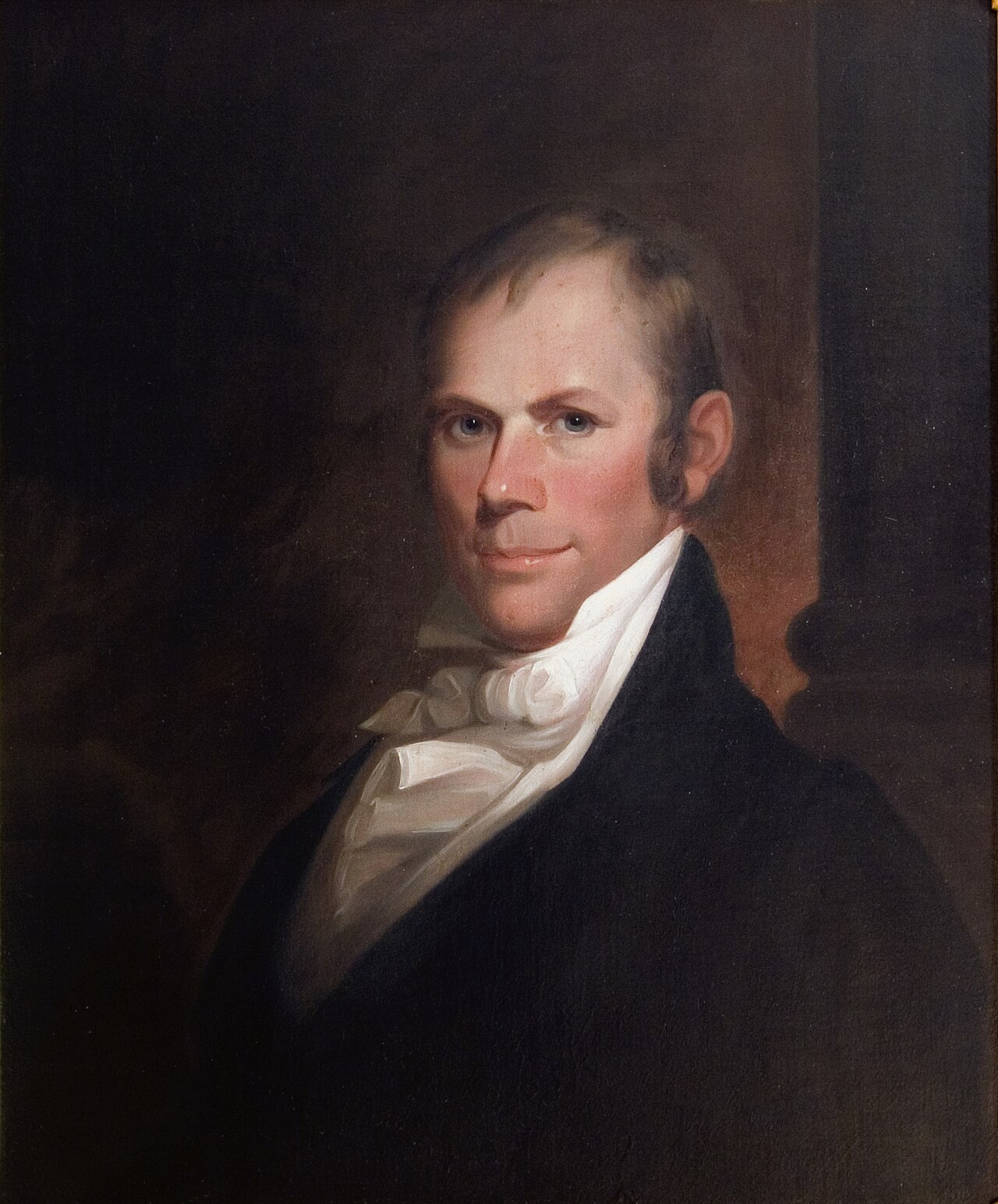
1777Henry ClayHenry Clay was an American lawyer, statesman, and diplomat who represented Kentucky in both the United States House of Representatives and the United States Senate.
1957Vince Gill(69 this year)Vincent Grant Gill is an American singer, songwriter, and musician.
1948Joschka Fischer(78 this year)Joseph Martin "Joschka" Fischer is a German former politician of the Alliance 90/The Greens party.
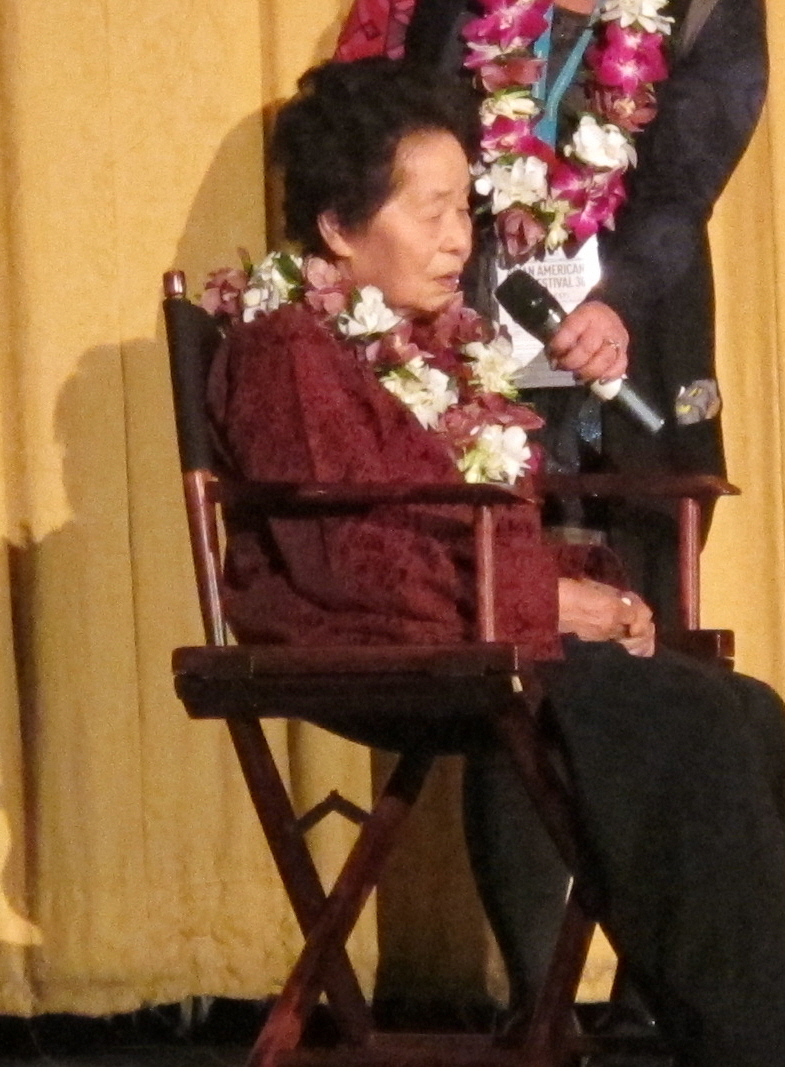
1913Keiko FukudaKeiko Fukuda was a Japanese-American martial artist.
1987Brooklyn Decker(39 this year)Brooklyn Danielle Decker is an American model and actress, perhaps best known for her appearances in the Sports Illustrated Swimsuit Issue, including the cover of the 2010 issue.
1950Flavio Briatore(76 this year)Flavio Briatore is an Italian businessman, who serves as executive adviser and de facto team principal of Alpine in Formula One.
811Muhammad al-JawadMuhammad ibn Ali al-Jawad, also known as Muhammad al-Taqi, was a descendant of the Islamic prophet Muhammad and the ninth of the Twelve Imams, succeeding his father Ali al-Rida.
1705William CookworthyWilliam Cookworthy was an English Quaker minister, a successful pharmacist and an innovator in several fields of technology.
1869Henri Désiré LandruHenri Désiré Landru was a French serial killer, nicknamed the Bluebeard of Gambais and a prolific marriage fraudster.
1874William B. BankheadWilliam Brockman Bankhead was an American politician who served as the 42nd speaker of the United States House of Representatives from 1936 to 1940, representing Alabama's 10th and later 7th congressional districts as a Democrat from 1917 to 1940.
1898Lily PonsAlice Joséphine Pons, known professionally as Lily Pons, was a French-American operatic lyric coloratura soprano and actress who had an active career from the late 1920s through the early 1970s. As an opera singer, she specialized in the coloratura soprano repertoire and was particularly associated with the title roles in Lakmé and Lucia di Lammermoor.
1925Oliver PostgateRichard Oliver Postgate was an English animator, puppeteer, and writer.
1925Ned MillerHenry Ned Miller was an American country music singer-songwriter.
1930Manuel NeriManuel John Neri Jr. was an American sculptor who is recognized for his life-size figurative sculptures in plaster, bronze, and marble.
1932Herbert Butros KhauryHerbert Butros Khaury, also known as Herbert Buckingham Khaury, and known professionally as Tiny Tim, was an American musician, songwriter and musical archivist.
1936Charles NapierCharles Lewis Napier was an American actor who was known for playing supporting and occasional leading roles in television and films.
1939Alan Ayckbourn(87 this year)Sir Alan Ayckbourn is a prolific British playwright and director.
1939Johnny RaperJohn William Raper was an Australian professional rugby league footballer and coach.
1940Herbie Hancock(86 this year)Herbert Jeffrey Hancock is an American jazz musician, bandleader, and composer.
1951Tom NoonanThomas Patrick Noonan was an American actor, director and screenwriter, best known for his roles as Francis Dollarhyde in Manhunter (1986), Frankenstein's Monster in The Monster Squad (1987), Cain in RoboCop 2 (1990), The Ripper in Last Action Hero (1993), Kelso in Heat (1995), Sammy Barnathan in Synecdoche, New York (2008), Mr. Ulman in The House of the Devil (2009), Reverend Nathaniel in Hell on Wheels (2011–2014), the Pallid Man in 12 Monkeys (2015–2018), and as the voice of everyone but Michael and Lisa in Anomalisa (2015).
1956Andy Garcia(70 this year)Andrés Arturo García Menéndez is an American actor, director, producer, and musician.
1962Carlos Sainz(64 this year)Carlos Sainz Cenamor is a Spanish rally driver.
1962Art Alexakis(64 this year)Arthur Paul Alexakis is an American musician best known as the singer-songwriter and guitarist of the rock band Everclear.
1968Toby Gad(58 this year)Tobias Gad is a German music producer and songwriter based in Los Angeles.
1971Shannen DohertyShannen Maria Doherty was an American actress.
Quote of the Day
“To be great is to be misunderstood.” — Ralph Waldo Emerson, Self-Reliance
April 12 History Quiz
What was the name of the spacecraft that carried Yuri Gagarin into space?
Vostok 1
Which fort was bombarded by Confederate forces on April 12, 1861?
Fort Sumter
In 1980, Terry Fox began his Marathon of Hope in which Canadian province?
Every event on this page was picked by hand from the historical record, written up as a news report, and checked against its source. Photographs are matched to the event they illustrate and verified before they are used. Sources are linked on each story.



![Front page of St. Croix avis, Christiansted, St. Croix [V.I.], 12 April 1961](https://tile.loc.gov/image-services/iiif/service:ndnp:vnstcsc:batch_vnstcsc_duggan_ver01:data:sn84037526:00513681379:1961041201:0335/full/pct:50/0/default.jpg)
 “Aquarius/Let The Sunshine In (The Flesh Failures)”,
 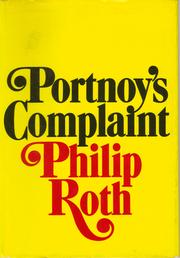 Portnoy's Complaint, Philip Roth
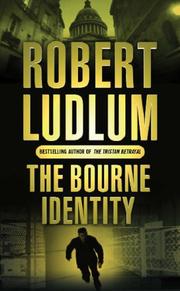 The Bourne Identity, Robert Ludlum
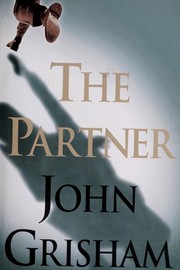 The Partner, John Grisham
 “In Da Club”,
 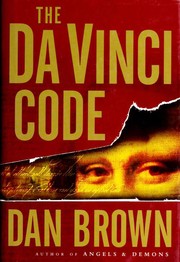 The Da Vinci Code, Dan Brown
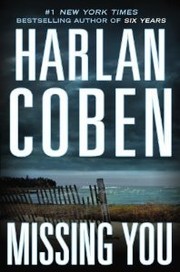 Missing You, Harlan Coben
 Onyx Storm, Rebecca Yarros