Our front page for July 21 — written and set by The Yesterday Times from the events below. Not an archival document.
Day of the year
202
Days left in 2026
163
In 2026 it falls on a
Tuesday
Star sign
Cancer
Birthstone
Ruby
On July 21 in 2007, 19 years ago, Rowling's Final Potter Tale Sets 24-Hour Sales Record. This page reports 11 stories from the date, 25 people born on this day.
The stories in full
Books
2007 — Rowling's Final Potter Tale Sets 24-Hour Sales Record
Harry Potter and the Deathly Hallows sold 15 million copies in its first day, making it the fastest-selling book in history.
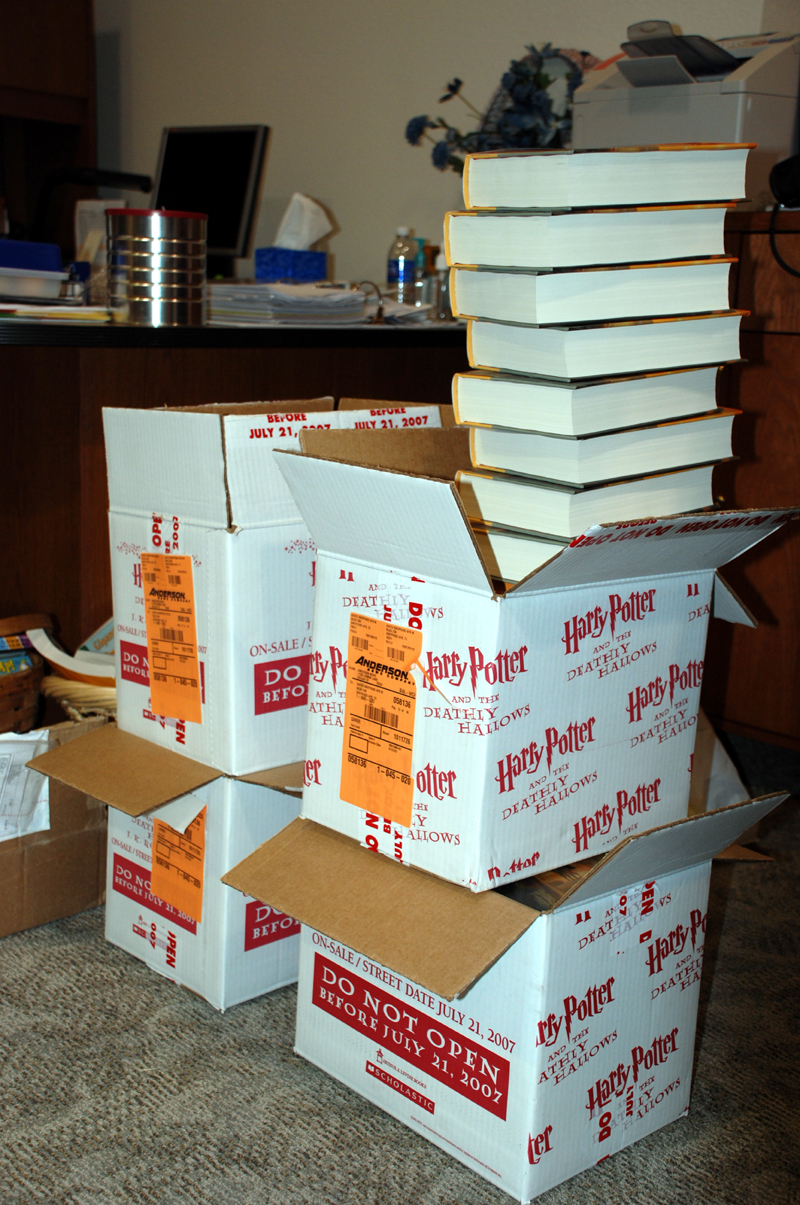
Scholastic shipping boxes containing Harry Potter and the Deathly Hallows before its 2007 release — A1C Jacob Corbin
J. K. Rowling, the creator of the boy wizard who has enchanted millions, saw the seventh and final installment of her series, Harry Potter and the Deathly Hallows, fly off shelves at a record pace. Published at midnight, the book sold 15 million copies in its first 24 hours, making it the fastest-selling book in history, according to publisher figures. In the United States alone, 8.3 million copies were snapped up, while the United Kingdom accounted for 2.65 million. The Guinness World Record for most novels sold within 24 hours of release is now hers.
Rowling completed the manuscript in January at the Balmoral Hotel in Edinburgh, bringing an end to a literary phenomenon that has spanned a decade. To mark the launch, she held an all-night book signing at the Natural History Museum in London, where 1,700 guests chosen by ballot lined up for her signature. The event drew fans from across the globe, many in costume, eager to bid farewell to Harry, Hermione, and Ron.
Scholastic, the U.S. publisher, had shipped millions of copies in sealed boxes to bookstores nationwide, with retailers bracing for a weekend of frenzied sales. Rowling is scheduled to tour the United States in October, including a stop at Carnegie Hall in New York City, with tickets allocated by sweepstake.
The novel sold 8.3 million copies in the US and 2.65 million in the UK within 24 hours of release.
It holds the Guinness World Record for most novels sold within 24 hours of release.
J. K. Rowling completed the novel in January 2007 at the Balmoral Hotel in Edinburgh.
The launch was celebrated with an all-night book signing by Rowling at the Natural History Museum in London for 1,700 guests chosen by ballot.
Rowling toured the US in October 2007, with an event at Carnegie Hall in New York City allocated by sweepstake.
World Affairs
1960 — Ceylon Woman Takes Oath as World's First
Sirimavo Bandaranaike, sworn in as prime minister of Ceylon, becomes the first democratically elected female head of government.
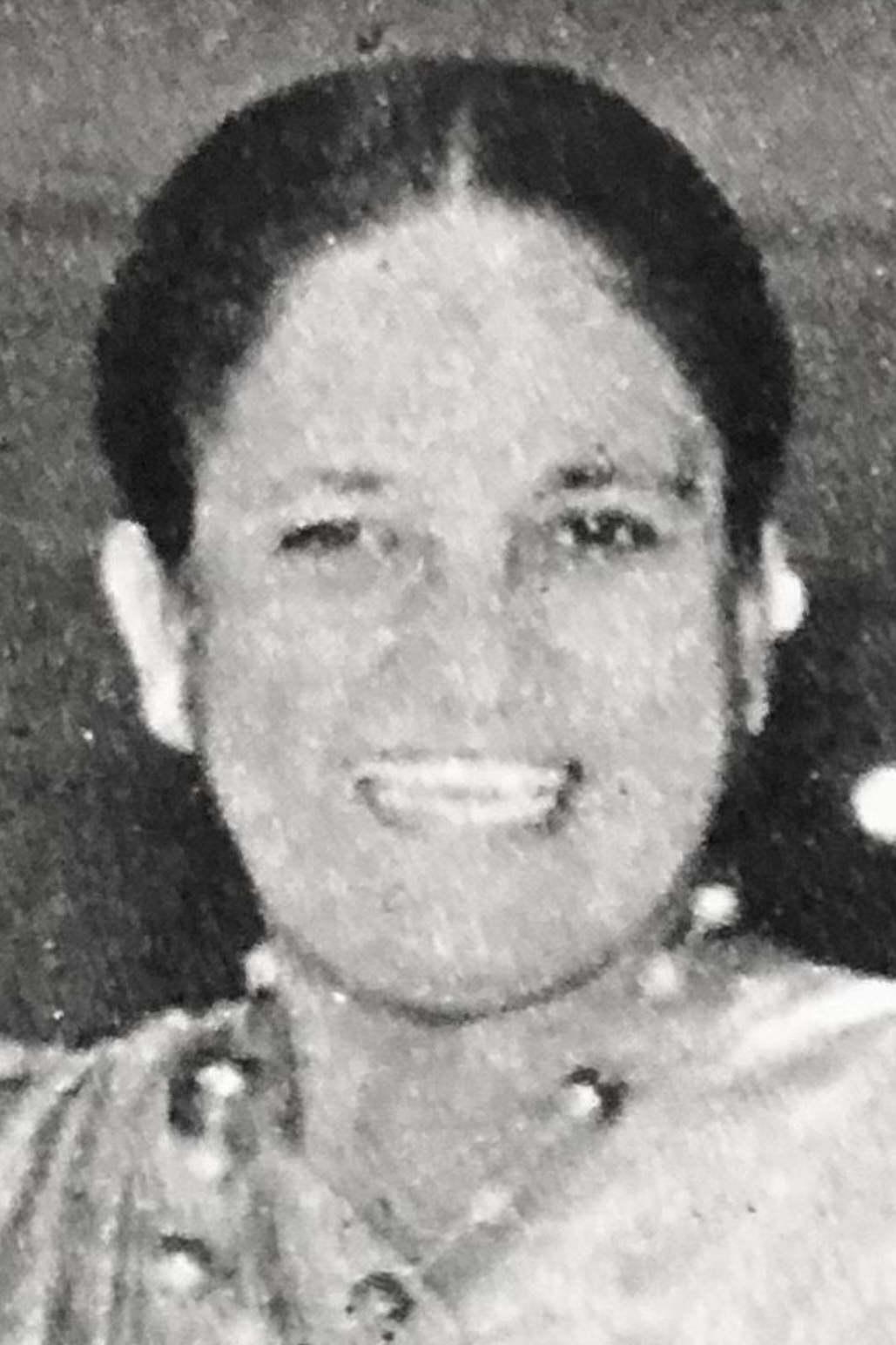
She is the first. Sirimavo Bandaranaike was sworn in as prime minister of Ceylon today, becoming the world's first democratically elected female head of government. The 44-year-old widow, who led her party to victory in July's general election, defeated Prime Minister Dudley Senanayake's United National Party. She also takes on the defence portfolio, making her the first woman in history to hold such a post.
Her opponents have dubbed her the 'Weeping Widow,' a reference to her succession of her assassinated husband, S. W. R. D. Bandaranaike, who was gunned down in 1959. Yet she has proved a formidable campaigner, rallying the rural masses with promises of nationalization and socialist reform. She will serve from 1960 to 1965, and she is expected to be a forceful presence on the world stage, breaking a barrier that has stood for millennia.
As chairperson of the Sri Lanka Freedom Party, she has consolidated her authority, and she is expected to serve three terms as prime minister. Her victory is being hailed as a landmark for women everywhere, though she herself has said she is simply continuing her husband's work.
Sirimavo Bandaranaike was elected prime minister of Ceylon in July 1960, defeating Prime Minister Dudley Senanayake's UNP.
She was the first democratically elected female prime minister of a sovereign country, serving from 1960 to 1965.
Bandaranaike also became the world's first female defence minister, holding that portfolio from 1960 to 1965.
Her opponents dubbed her the 'Weeping Widow' after she succeeded her assassinated husband, S. W. R. D. Bandaranaike.
She was chairperson of the Sri Lanka Freedom Party from 1960 to 1994 and served three terms as prime minister.
City Desk
1877 — Pittsburgh in Ruins After Rioters Burn Railroad Yards
An estimated 61 people, including women and children, were killed as strikers burned the Union Depot and 38 other buildings.
Much of central Pittsburgh lies in ashes tonight after rioters, inflamed by the railroad strike, burned and looted the city's railroad yards. The Union Depot and 38 other buildings at the Pennsylvania Railroad yards were put to the torch, and more than 120 locomotives and more than 1,200 rail cars were destroyed. An estimated 61 people, including women and children, were killed in the rioting, which has been the most violent and destructive of any city in the Great Strike.
Property losses are estimated at from $2 to $5 million, according to the railroad and a state report. The rioting erupted after strikers clashed with militia, and the mob soon turned to wholesale destruction. Fresh troops are expected to arrive on July 28, and it is hoped that peace will be restored within two days, allowing trains to resume. The city's commercial district is a scene of desolation, with smoke still rising from the ruins.
An estimated 61 people, including women and children, were killed in the Pittsburgh riots.
Strikers burned the Union Depot and 38 other buildings at the Pennsylvania Railroad yards.
More than 120 locomotives and more than 1,200 rail cars were destroyed in Pittsburgh.
Estimates of property losses ranged from $2 to $5 million, according to the railroad and a state report.
Fresh troops arrived in Pittsburgh on July 28, and within two days peace was restored and trains resumed.
Courts
1925 — Scopes Found Guilty in Evolution Trial
John T. Scopes, the Dayton biology teacher, was fined $100 for violating the Butler Act by teaching evolution.
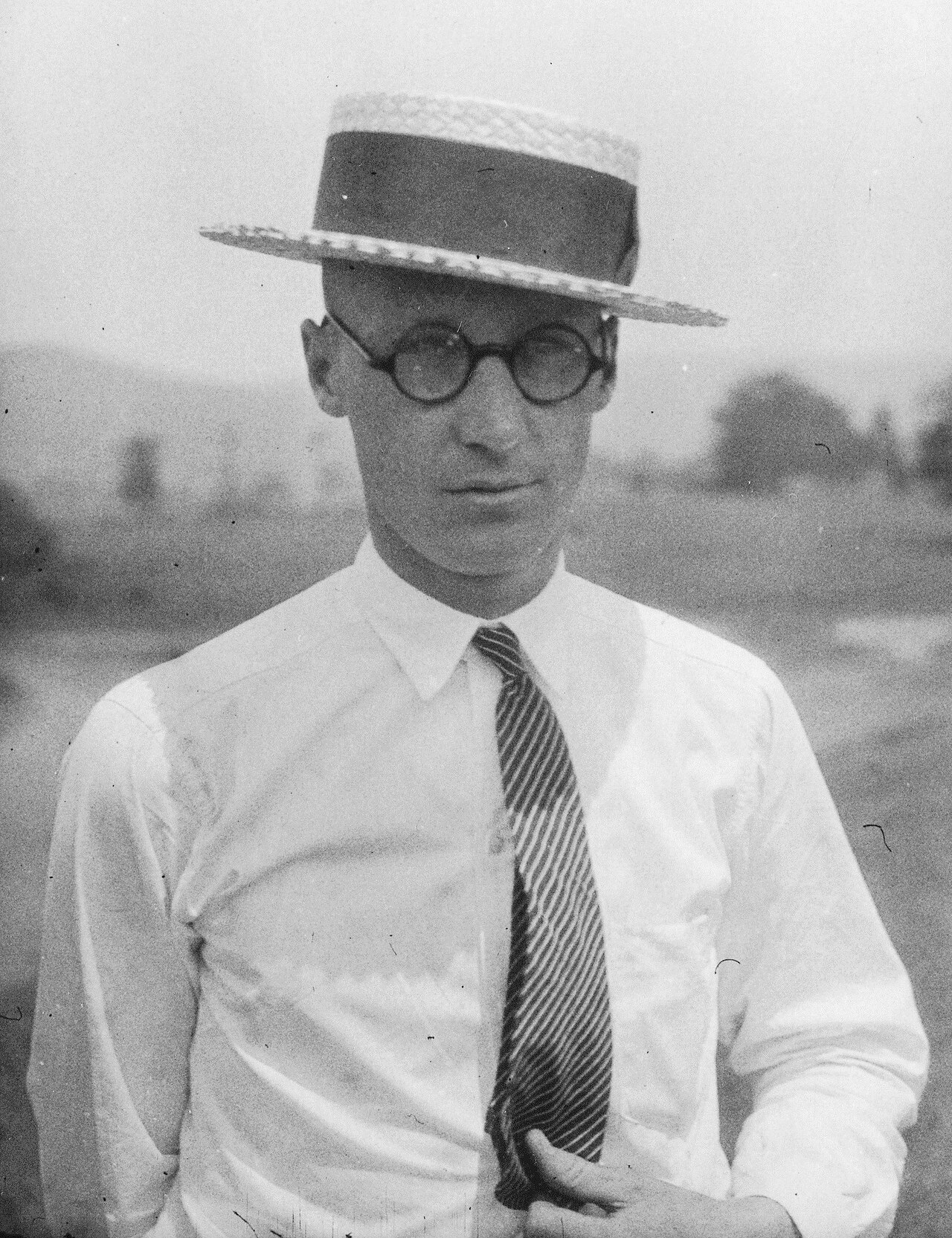
In the sweltering courtroom at Dayton, the jury returned its verdict: guilty. John T. Scopes, the high school biology teacher, was fined $100 for violating Tennessee's Butler Act, which forbids the teaching of human evolution. The trial, the first in American history to be nationally broadcast by radio, has drawn worldwide attention.
Scopes, who was defended by Clarence Darrow and a battery of lawyers, was prosecuted by Tom Stewart, with William Jennings Bryan assisting. Bryan had spoken at Scopes' commencement.
Scopes was fined $100 (equivalent to $1,836 in 2025) after being found guilty on July 21, 1925.
The trial was deliberately staged by Dayton businessmen, including George Rappleyea, to attract publicity to the town.
Scopes later admitted to reporter William Kinsey Hutchinson that he had skipped the evolution lesson and never violated the law.
The defense team included Clarence Darrow, Dudley Field Malone, John Neal, Arthur Garfield Hays, and Frank McElwee.
The prosecution was led by Tom Stewart and included William Jennings Bryan, who had spoken at Scopes' high school commencement.
From the Provinces
365 — Sea Recedes, Cities Fall: Crete and Alexandria Smitten
A great earthquake near Crete loosed a wave that wrecked the eastern Mediterranean, devastating its chief cities.
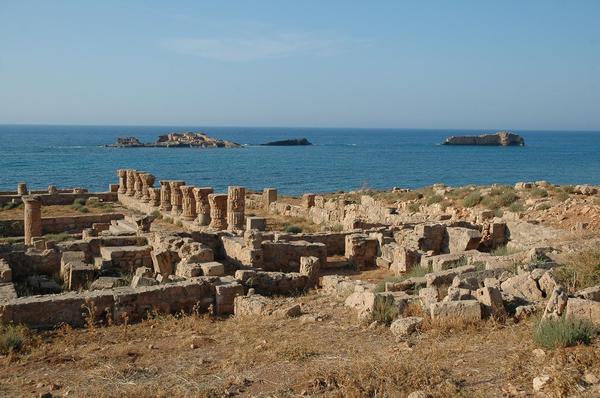
Ruins at Apollonia, a site submerged by a historic earthquake and tsunami near Crete — Jona Lendering
The eastern Mediterranean lies in ruin. A great earthquake near Crete loosed a wave that smote the coasts, and the cities of Crete and Alexandria are devastated. Italy, Greece, and Palestine have also felt the blow, and the sea, it is said, withdrew and then returned with fury. In Alexandria, the waters swept over the quays and into the lower quarters, and many ships were dashed against the wharves. On Crete, whole towns are thrown down, and the ruins of Apollonia, long a port of the island, now lie half drowned beneath the waves. The temples and the walls of the old cities are broken, and the folk go about mourning their dead. The earth shook, and the sea rose, and the order of the world seemed undone. In the days since, the reports reaching this office speak of fires and of the cries of the injured. The harbours are choked with wreckage, and the merchants can no longer put to sea. The priests have been called upon to make offerings, for the omens were dire. The damage to the granaries and the aqueducts will be felt for many seasons, and the rulers of the affected lands are said to be sending aid. But the full count of the dead is not yet known, for the roads are broken and the messengers are slow.
The earthquake and tsunami devastated Crete and Alexandria.
The earthquake and tsunami also affected Italy, Greece, and Palestine.
Earthquake Desk
1952 — Kern County Quake Kills 12, Damage Set at $60 Million
A 7.3-magnitude quake at 4:52 a.m. killed 12 and caused $60 million in damage.
In the annals of California's seismic history, this morning's shock will hold a grim place. A 7.3-magnitude earthquake struck the southern San Joaquin Valley at 4:52 a.m. Pacific Daylight Time, killing 12 and injuring hundreds. Property damage is estimated at $60 million.
The 7.3-magnitude earthquake struck at 4:52 a.m. Pacific Daylight Time, killing 12 and injuring hundreds.
Property damage was estimated at $60 million, with the town of Tehachapi suffering the greatest loss of life.
The earthquake occurred on the White Wolf Fault near Wheeler Ridge and was the strongest in California since 1906.
Six aftershocks of magnitude 5 or greater struck on the same day; a M5.8 aftershock on August 22 killed two more and added $10 million in damage.
Fearing aftershocks, many slept outdoors, leading to an outbreak of encephalitis from mosquito-borne viruses.
City Chronicle
1378 — Wool Workers Seize Florence, Name Michele di Lando
Armed wool workers seize Florence, install Michele di Lando as gonfaloniere, and hang the executioner.
Michele di Lando, a wool carder, now holds the highest office in Florence, gonfaloniere of justice, after thousands of armed wool workers besieged the Signoria this day and took the government by force. The rebels hanged the public executioner by his feet before the Palazzo Vecchio.
On July 21, 1378, thousands of armed wool workers besieged the Signoria and hanged the public executioner by his feet in front of the Palazzo Vecchio.
The rebels appointed wool carder Michele di Lando as gonfaloniere of justice, the city's highest executive office.
They forced the Signoria to create three new guilds, granting political representation to previously unrepresented labourers.
The three new guilds had a total membership of roughly 13,000 men, compared to 4,000-5,000 in the existing twenty-one guilds.
The rebellion was sparked after the Signoria quadrupled the fee for guild admittance, turning the Sotto posti into opponents.
Hong Kong Desk
2019 — 45 Injured as White-Clad Mob Attacks Protesters in Yuen Long
Suspected triad members storm Yuen Long station as police stay away, dealing a blow to public confidence.
Forty-five people were injured in Yuen Long tonight when white-clad suspected triad members indiscriminately attacked people inside the station, leaving the platform strewn with the wounded. Police were absent during the attack, and local police stations were shuttered, prompting suspicion that the assault was coordinated with the force.
On 21 July 2019, white-clad suspected triad members indiscriminately attacked people inside Yuen Long station.
Police were absent during the Yuen Long attack, and local police stations were shuttered.
The Yuen Long attack was seen as a turning point, crippling public confidence in the police.
Suspicion arose that the Yuen Long attack was coordinated with police due to their absence.
The attack occurred while a standoff between protesters and police was taking place on Hong Kong Island.
Local Front
1918 — German U-boat Shells Nauset Beach
Imperial German U-boat attacks barges and aircraft near Orleans, Massachusetts, on July 21, 1918.
An Imperial German Navy U-boat opened fire on a small convoy of barges and defending aircraft near Orleans, Massachusetts, on July 21, 1918. The shelling struck Nauset Beach, the only U.S. soil hit by foreign fire in the war.
The German submarine shelled Nauset Beach, the only U.S. site hit by foreign munitions during World War I.
The shells were apparently aimed at barges close off shore near Orleans, Massachusetts.
This was the first time a foreign nation had fired artillery on U.S. soil since the Siege of Fort Texas in 1848.
The attack occurred on July 21, 1918, when an Imperial German Navy U-boat opened fire on a small convoy of barges and defending aircraft.
Foreign Desk
1946 — Mob Lynches Bolivian President, Hangs Body in La Paz Streets
Gualberto Villarroel killed by rioters after weeks of unrest; junta of strikers takes interim control.
The body of President Gualberto Villarroel hung from a lamppost in La Paz's Plaza Murillo this afternoon, desecrated by a mob that had stormed the Palacio Quemado after weeks of unrest. Rioters lynched the president and dragged his corpse through the streets before stringing it up publicly.
Earlier, MNR deputy Paz Estenssoro ordered the palace phones cut from the military, saying, "It doesn't matter, screw them. Let's go." The violence followed a teachers' strike on July 8 for a pay raise from $12.50 to $20 a month, and police gunfire on July 10 that killed three and wounded eleven in the same plaza.
Teachers in La Paz went on strike on 8 July 1946 demanding a salary increase from $12.50 to $20 a month.
On 10 July, police dispersed student protests in Plaza Murillo with rifle and machine gun fire, leaving 3 dead and 11 wounded.
On 21 July, MNR deputy Paz Estenssoro ordered cutting off Palacio Quemado phones from the military, saying 'It doesn't matter, screw them. Let's go.'
President Gualberto Villarroel was lynched and hanged on 21 July 1946, ending weeks of unrest in La Paz.
A junta of striking groups chaired by independent magistrates took interim control after Villarroel's death.
Science Desk
1959 — First Mathematical Olympiad Opens in Romania
Seven Warsaw Pact nations sent teams to the first International Mathematical Olympiad, where contestants under 20 solve six problems for up to 42 points.
The first International Mathematical Olympiad opened in Romania, launching a contest that will pit the brightest pre-university minds of the Eastern Bloc against each other. Seven Warsaw Pact nations sent teams to compete in the inaugural event, held over two days with six problems total. Each contestant gets four-and-a-half hours daily to solve three problems, each worth 7 points for a maximum of 42. Calculators are banned. Awards go to roughly the top 50 percent of individual scorers, with no official team standings. Contestants must be under 20 and not enrolled at any university. The problems demand pure reasoning, not computation.
The first IMO was held in Romania in 1959, initially for eastern European member countries of the Warsaw Pact.
The competition consists of six problems held over two consecutive days, with three problems each day.
Contestants have four-and-a-half hours each day to solve three problems, each worth 7 points for a maximum total of 42 points.
Calculators are banned, and protractors were banned relatively recently.
Awards are given to approximately the top-scoring 50% of individual contestants, with no official team recognition.
What the papers printed that morning
Real front pages from 21 July 1960, scanned by the Library of Congress. These are archival documents, not our work.
1948Cat Stevens(78 this year)Yusuf Islam, commonly known by his stage names Cat Stevens or Yusuf/Cat Stevens, is a British singer-songwriter and musician.
1926Norman JewisonNorman Frederick Jewison was a Canadian filmmaker.
1956Michael Connelly(70 this year)Michael Joseph Connelly is an American author of detective novels and other crime fiction, notably those featuring LAPD Detective Hieronymus "Harry" Bosch and criminal defense attorney Mickey Haller, including 10 with both those characters.
1968Brandi Chastain(58 this year)Brandi Denise Chastain is an American retired soccer player, two-time FIFA Women's World Cup champion, two-time Olympic gold-medalist, coach, sports broadcaster, and co-founder of Bay FC, the professional soccer club representing the Bay Area in the National Women's Soccer League.
1971Charlotte Gainsbourg(55 this year)Charlotte Lucy Gainsbourg is a French and British actress and singer.
1535García Hurtado de MendozaGarcía Hurtado de Mendoza y Manrique, 5th Marquis of Cañete was a Spanish Governor of Chile, and later Viceroy of Peru.
1875Charles GondouinCharles Gondouin was a French rugby union player and tug of war competitor who competed in the 1900 Summer Olympics.
1880Milan Rastislav ŠtefánikMilan Rastislav Štefánik was a Slovak politician, diplomat, aviator and astronomer.
1893Hans FalladaHans Fallada was a German writer of the first half of the 20th century.
1924Don KnottsJesse Donald Knotts was an American actor and comedian.
1931Leon SchidlowskyJorge León Schidlowsky Gaete was a Chilean and Israeli composer and painter.
1940Jim Clyburn(86 this year)James Enos Clyburn is an American politician serving as the U.S. representative for South Carolina's 6th congressional district.
1943Robert Shrum(83 this year)Robert M. Shrum is the director of the Center for the Political Future and the Carmen H. and Louis Warschaw Chair in Practical Politics at the University of Southern California, where he is a professor of political science in the Dornsife College of Letters, Arts and Sciences.
1944John Atta MillsJohn Evans Fiifi Atta Mills was a Ghanaian politician and legal scholar who served as the 11th president of Ghana from 2009 until his death in 2012.
1946Ken StarrKenneth Winston Starr was an American lawyer and judge who as independent counsel authored the Starr Report, which served as the basis of the impeachment of Bill Clinton.
1947Chetan ChauhanChetan Pratap Singh Chauhan was a cricketer who played 40 Test matches for India.
1955Béla TarrBéla Tarr was a Hungarian film director, screenwriter and producer.
1959Paul Vautin(67 this year)Paul Vautin, nicknamed Fatty, is an Australian former rugby commentator and former professional rugby league player, captain and coach.
1972Korey Cooper(54 this year)Skillet is an American Christian rock band formed in Memphis, Tennessee, in 1996.
1972Catherine Ndereba(54 this year)Catherine Nyambura Ndereba is a retired Kenyan marathon runner.
1974Geoff Jenkins(52 this year)Geoffrey Scott Jenkins is an American former professional baseball outfielder, who played in Major League Baseball (MLB) for the Milwaukee Brewers (1998–2007) and Philadelphia Phillies (2008).
1975Christopher Barzak(51 this year)Christopher Barzak is an American author.
1976Jaime Murray(50 this year)Jaime Erica Murray is an English actress.
1979Tamika Catchings(47 this year)Tamika Devonne Catchings is an American former professional basketball player who played her entire 15-year career for the Indiana Fever of the Women's National Basketball Association (WNBA).
1981Blake Lewis(45 this year)Blake Colin Lewis is an American musician and actor who was the runner-up on the sixth season of American Idol.
Quote of the Day
“I am large, I contain multitudes.” — Walt Whitman, Leaves of Grass
July 21 History Quiz
Which book became the fastest-selling book in history upon its July 21 release?
Harry Potter and the Deathly Hallows
In what country did Sirimavo Bandaranaike become the world's first elected female head of government?
Sri Lanka
What was the main subject taught by John Scopes that led to his trial?
Every event on this page was picked by hand from the historical record, written up as a news report, and checked against its source. Photographs are matched to the event they illustrate and verified before they are used. Sources are linked on each story.



![Front page of St. Croix avis, Christiansted, St. Croix [V.I.], 21 July 1960](https://tile.loc.gov/image-services/iiif/service:ndnp:vnstcsc:batch_vnstcsc_duggan_ver01:data:sn84037526:00513681367:1960072101:0635/full/pct:50/0/default.jpg)
 “Roses Are Red (My Love)”,
 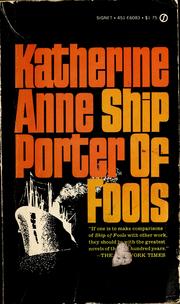 Ship of Fools, Katherine Anne Porter
 Breakfast of Champions, Kurt Vonnegut
 ...And Ladies of the Club, Helen Hooven Santmyer
 “She Ain't Worth It”,
 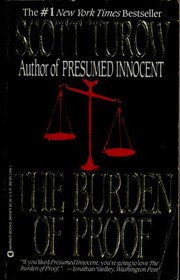 The Burden of Proof, Scott Turow
 “U Remind Me”,
 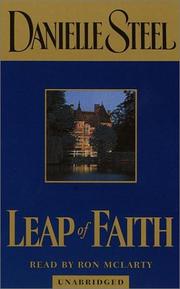 Leap of Faith, Danielle Steel
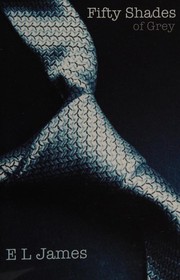 Fifty Shades of Grey, E. L. James


