Our front page for May 8 — written and set by The Yesterday Times from the events below. Not an archival document.
Day of the year
128
Days left in 2026
237
In 2026 it falls on a
Friday
Star sign
Taurus
Birthstone
Emerald
On May 8 in 1950, 76 years ago, Iron Age Corpse Found in Danish Bog. This page reports 10 stories from the date, 25 people born on this day.
The stories in full
Archaeology Desk
1950 — Iron Age Corpse Found in Danish Bog
Peat cutters in Denmark uncovered a naturally mummified Iron Age man, dead by hanging between 405 and 380 BC and preserved in a fetal pose.
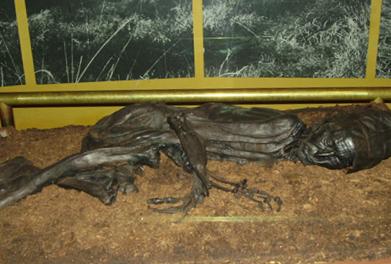
The Tollund Man, a naturally preserved Iron Age corpse found in a Danish bog — Grönneger 1
The first thing the peat cutters saw was a face, so fresh it might have belonged to a man asleep in the bog. Viggo and Emil Hojgaard, working the Bjældskovdal peat bog 12 km west of Silkeborg, Denmark, on 8 May 1950, had sliced into a layer of peat and exposed the Tollund Man, a naturally mummified corpse from the Pre-Roman Iron Age.
The body lay 60 m from firm ground, buried under 2.3 m of peat, arranged in a fetal position. Radiocarbon dating places his death between 405 and 380 BC. He stood 1.61 metres, and isotopic analysis suggests he spent his final year in present-day Denmark.
Doctors examining the remains concluded he died by hanging; rope furrows are visible under his chin and at the sides of his neck. His last meal, a porridge of barley, pale persicaria and flax, was eaten 12 to 24 hours before death.
The find has drawn scientists from across Europe, who marvel at the preservation. The man's skin, hair, and even his stubble remain intact. He now rests at a museum in Silkeborg, where scholars hope further study will reveal more of his life and death.
Peat cutters Viggo and Emil Hojgaard discovered the corpse on 8 May 1950 in the Bjældskovdal peat bog, 12 km west of Silkeborg, Denmark.
The body lay 60 m from firm ground, buried under 2.3 m of peat, arranged in a fetal position.
Radiocarbon dating indicates Tollund Man died between 405 and 380 BC, during the Pre-Roman Iron Age.
His height was recorded as 1.61 metres, and isotopic analysis suggests he spent his final year in present-day Denmark.
Doctors concluded he died by hanging, with rope furrows visible under his chin and at the sides of his neck.
Vatican Bureau
2025 — First American Pope Elected
Cardinal Robert Francis Prevost, born September 14, 1955, in Chicago, becomes Pope Leo XIV on May 8, 2025, as the first American-born pontiff.
Pope Leo XIV, the first American-born pontiff, greets the faithful from the Vatican balcony — Edgar Beltrán / The Pillar
The Catholic Church has its first American-born pope. Cardinal Robert Francis Prevost, elected Pope Leo XIV on May 8, 2025, breaks centuries of tradition as the first pontiff from the United States, the first with Peruvian citizenship, and the first from the Order of Saint Augustine. He is only the second from the Americas, succeeding Pope Francis. Prevost, born September 14, 1955, at Mercy Hospital in Chicago's Bronzeville neighborhood, earned a Doctor of Canon Law from the Pontifical University of St. Thomas Aquinas in Rome in 1987. His election surprised Vatican insiders, who had dismissed an American pope as unrealistic given U.S. superpower status. The new pope chose the name Leo XIV to echo Leo XIII's concern for workers, and as a direct response to challenges posed by artificial intelligence. He inherits a Church navigating both technological upheaval and shifting global influence.
Cardinal Robert Francis Prevost was elected Pope Leo XIV on May 8, 2025.
Leo XIV is the first pope born in the United States, the first with Peruvian citizenship, and the first from the Order of Saint Augustine.
Prevost was born on September 14, 1955, at Mercy Hospital in the Bronzeville neighborhood of Chicago, Illinois.
He earned a Doctor of Canon Law degree in 1987 from the Pontifical University of St. Thomas Aquinas in Rome.
Prevost chose the papal name Leo XIV to echo Pope Leo XIII's concern for workers and as a response to artificial intelligence challenges.
City Desk
1970 — Workers Attack War Protesters in New York
Construction crews attacked war protesters in New York on May 8, 1970, amid nationwide unrest.
The spring of 1970 has seen the nation's campuses erupt in protest, and today that anger spilled into the streets of New York. Construction workers attacked students and others protesting the Vietnam War on May 8, a day when 100,000 gathered in Washington and 150,000 in San Francisco.
On May 8, 1970, construction workers attacked students and others protesting the Vietnam War in New York City.
The nationwide student strike began on May 1, 1970, with walkouts on nearly 900 campuses across the United States.
The strike escalated after Ohio National Guardsmen shot four students at Kent State University on May 4, 1970.
On May 8, 100,000 protesters gathered in Washington and 150,000 in San Francisco against the Vietnam War.
Nationwide, 30 ROTC buildings were burned or bombed, and National Guard units were mobilized on 21 campuses in 16 states.
War Report
1821 — Androutsos Holds Gravia; Turks Retreat
Greek captain with 120 men repulses Ottoman army of 8,000 at Battle of Gravia Inn on May 8, 1821.
Odysseas Androutsos, commanding a Greek force of 120 men, repulsed an Ottoman army of 8,000 soldiers at the Battle of Gravia Inn on May 8, 1821.
On May 8, 1821, at the Battle of Gravia Inn, Greek forces under Odysseas Androutsos repulsed the Ottoman army.
Androutsos led a handful of Greek men who inflicted heavy casualties on the Turkish army.
After his defeat at Gravia, Ottoman commander Omer Vrioni postponed his advance towards the Peloponnese to await reinforcements.
Vrioni then invaded Livadeia, capturing it on 10 June, and lifted the siege of the Acropolis in Athens.
Olympic Desk
1984 — Soviet Union to Boycott Los Angeles Games; 19 Nations Join
Moscow cites security fears as 140 nations still plan to compete in record field.
The Soviet Union announced today that it will boycott the Summer Olympic Games in Los Angeles, citing security concerns. Nineteen countries will join the boycott, including fifteen from the Eastern Bloc and four non-aligned nations.
Soviet-U.S. Olympic relations, already strained by the loss of Korean Air Lines Flight 007 in 1983, were further damaged by activist groups. The California State Assembly and Senate approved a non-binding resolution on September 16, 1983, urging a ban on Soviet participation.
Boycotting nations will hold alternative events, the Friendship Games, from July to September. Despite the boycott, 140 nations are set to compete in Los Angeles, a record at the time.
The Soviet Union initiated the boycott on May 8, 1984, citing security concerns.
The boycott involved nineteen countries, including fifteen from the Eastern Bloc and four non-aligned nations.
Boycotting countries organized alternative sporting events called the Friendship Games from July to September 1984.
Despite the boycott, 140 nations took part in the Los Angeles Games, a record at the time.
The loss of Korean Air Lines Flight 007 in 1983 and subsequent activist groups seriously hampered Soviet-U.S. Olympic relations.
Aviation Desk
1927 — Nungesser and Coli Vanish Over Atlantic in Paris-New York Flight Bid
French aviators' plane, L'Oiseau Blanc, last seen off Ireland; fate unknown.
French aviators Charles Nungesser and François Coli have disappeared while attempting the first non-stop flight from Paris to New York. They took off from Le Bourget airport on May 8 in L'Oiseau Blanc, a Levasseur PL.8 biplane painted with Nungesser's war insignia.
The aircraft was sighted heading past Ireland before vanishing.
Charles Nungesser and François Coli took off from Le Bourget airport near Paris on 8 May 1927 in L'Oiseau Blanc, a Levasseur PL.8 biplane.
Their aircraft was painted with Nungesser's World War I insignia and was sighted heading past Ireland before disappearing.
Two weeks after their disappearance, Charles Lindbergh successfully completed the first solo non-stop transatlantic flight from New York to Paris.
Monuments honoring Nungesser and Coli's attempt exist at Le Bourget airport in Paris and on the cliffs of Étretat, the last sighting point in France.
Religious Life
1373 — Dying Woman Visions of Christ's Passion Recorded
After a curate administered last rites on May 8, 1373, Julian, 30, received 15 visions and a 16th the next night.
A crucifix held above a sickbed in Norwich, and a dying woman's sight fades. On May 8, 1373, a curate administered last rites to Julian, 30, who expected death. As the figure of Jesus began to bleed, she experienced 15 visions, followed by a 16th the next night.
On 8 May 1373, a curate administered last rites to the 30‑year‑old Julian, who was seriously ill and expected to die.
As the crucifix was held above her bed, Julian lost her sight and felt numb before seeing the figure of Jesus begin to bleed.
Over several hours on 8 May 1373, Julian experienced 15 visions of Jesus, followed by a 16th the next night.
Julian called her visions 'shewings' of the Passion of Christ and later wrote two accounts, the Short Text and the Long Text.
Accidents
1842 — Rail Disaster Near Versailles Kills Scores
Snapped axle derails train carrying 770 passengers in 16 to 18 carriages, killing scores.
The first French railway disaster, and the deadliest in the world so far, has prompted systematic research into metal fatigue. Near Versailles, a train carrying 770 passengers in 16 to 18 carriages derailed when an axle on the leading locomotive snapped.
The train carried 770 passengers in 16 to 18 carriages hauled by two steam locomotives.
The derailment occurred when an axle on the leading locomotive snapped, causing the carriages to pile up and catch fire.
Passengers were locked in their compartments as was the custom in continental Europe at the time, trapping them.
The crash was the first French railway disaster and the deadliest in the world at that time.
Among the estimated 52 to 200 deaths was the famous explorer Jules Dumont d'Urville.
Washington Dispatch
1957 — President Diem Opens State Visit Amid Cheers of Thousands
South Vietnam's leader is greeted at the airport by President Eisenhower and later addresses Congress.
In the high noon of the Cold War, the arrival of South Vietnamese President Ngô Đình Diệm in the American capital marks a moment of singular importance. President Dwight D. Eisenhower personally greeted Diệm at the airport, an honor previously accorded to only one other visiting head of state. Fifty thousand well-wishers lined the motorcade route in Washington, and in New York City, 250,000 persons turned out for a ticker tape parade. The receptions were organized by the American Friends of Vietnam, a bipartisan lobby group. Diệm addressed the US Congress, where his policies were heartily endorsed by both sides of the aisle.
President Dwight D. Eisenhower personally greeted Diệm at the airport, an honor accorded to only one other visiting head of state.
Diệm's motorcade in Washington, D.C., was greeted by 50,000 wellwishers.
Diệm received a ticker tape parade in New York City attended by 250,000 people.
The American Friends of Vietnam, a lobby group including politicians from both major parties, organized the receptions.
Diệm addressed the US Congress, and his policies were heartily endorsed by both sides of politics.
War Desk
1942 — Germans Launch Counteroffensive in Kerch Peninsula
Axis forces strike back in May, repulsing the Soviet offensive in the Crimea.
General von Manstein's forces struck hard this month, hurling back the Soviet tide on the Kerch Peninsula. The Germans, having regrouped after the winter battles, launched a major counteroffensive that caught the Red Army off balance. In May 1942, the Wehrmacht defeated the Soviet offensive in this eastern Crimea salient, turning the battle into a rout. The Kerch Peninsula, jutting into the Sea of Azov, had been a fierce battleground since autumn. Now, the Axis push threatens to cut off Soviet forces and open the road to the Caucasus.
In May 1942, the Germans defeated a Soviet offensive in the Kerch Peninsula.
What the papers printed that morning
Real front pages from 8 May 1950, scanned by the Library of Congress. These are archival documents, not our work.
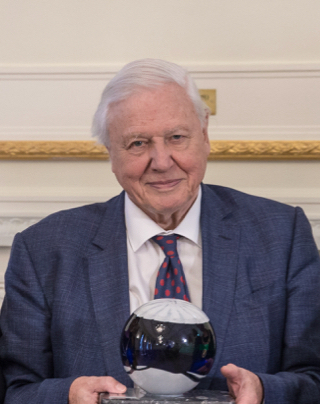
1926David Attenborough(100 this year)Sir David Frederick Attenborough is an English broadcaster, natural historian, and writer.
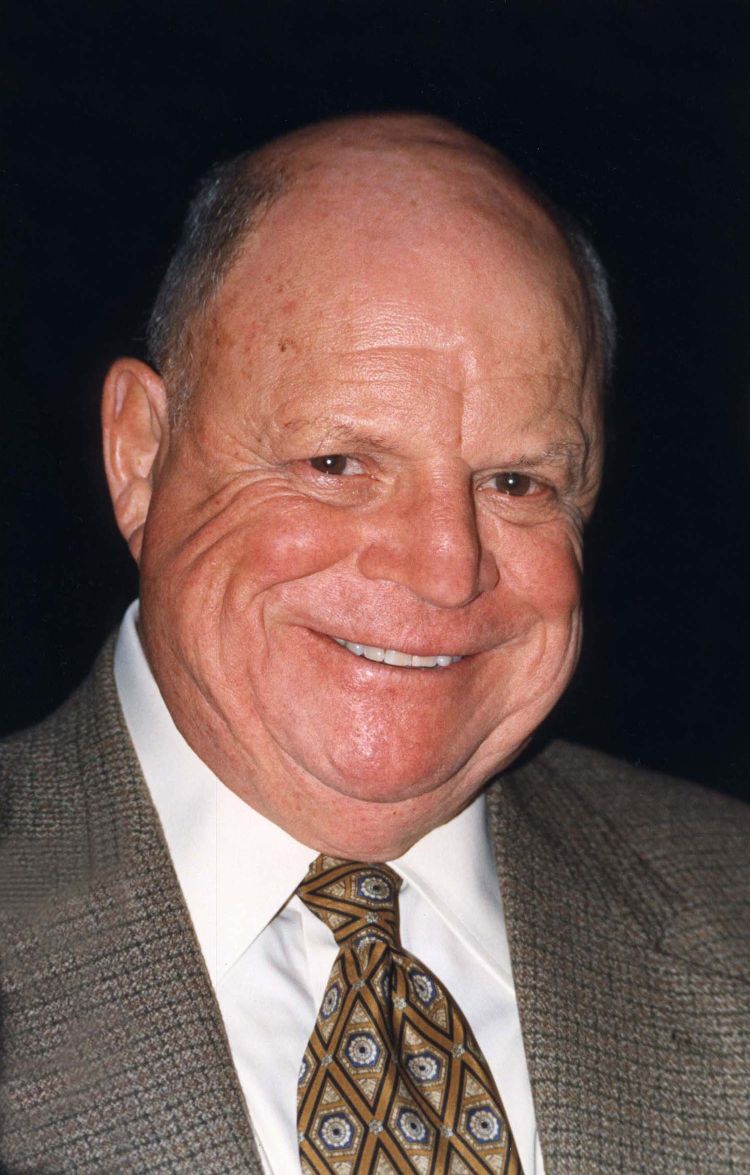
1926Don RicklesDonald Jay Rickles was an American stand-up comedian and actor, known primarily for his insult comedy.
1990Kemba Walker(36 this year)Kemba Hudley Walker is an American professional basketball coach and former player who is a player enhancement coach for the Charlotte Hornets of the National Basketball Association (NBA).
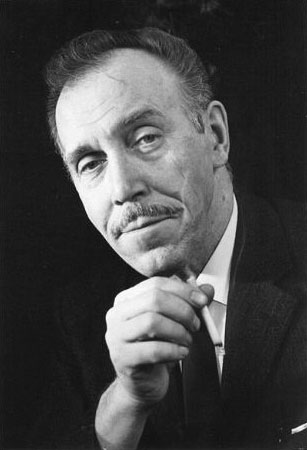
1920Tom of FinlandTouko Valio Laaksonen, known by his pseudonym Tom of Finland, was a Finnish artist who made stylized erotic art featuring suggestively hypermasculine male characters.
1916João HavelangeJean-Marie Faustin Godefroid "João" de Havelange was a Brazilian lawyer, businessman, and athlete who was the seventh president of FIFA from 1974 to 1998.
1964Melissa Gilbert(62 this year)Melissa Ellen Gilbert is an American actress.
1972Darren Hayes(54 this year)Darren Stanley Hayes is an Australian singer, songwriter, music producer and composer.
1641Nicolaes WitsenNicolaes Witsen was a Dutch statesman who was mayor of Amsterdam thirteen times, between 1682 and 1706.
1786John VianneyJohn Vianney was a French Catholic priest and member of the Third Order of Mary who is often referred to as the Curé d'Ars.
1821William Henry VanderbiltWilliam Henry Vanderbilt was an American businessman and railroad magnate.
1850Ross BarnesCharles Roscoe Barnes was one of the stars of baseball's National Association (1871–1875) and the early National League (1876–1881), playing second base and shortstop.
1867Margarete BöhmeMargarete Böhme was, arguably, one of the most widely read German writers of the early 20th century.
1884Harry S. TrumanHarry S. Truman was the 33rd president of the United States, serving from 1945 to 1953.
1893Edd RoushEdd J. Roush was an American professional baseball player and coach.
1899Friedrich HayekFriedrich August von Hayek was an Austrian economist and philosopher.
1903FernandelFernand Joseph Désiré Contandin, better known as Fernandel, was a French comic actor.
1913Bob ClampettRobert Emerson Clampett Sr. was an American animator, director, producer and puppeteer best known for his work on the Looney Tunes and Merrie Melodies animated series from Warner Bros.
1916Chinmayananda SaraswatiSwami Chinmayananda Saraswati, also known as Pujya Gurudev Swami Chinmayananda Saraswati, was a Hindu spiritual leader and a teacher.
1920Barbara HowardBarbara Howard was a Canadian sprinter and educator.
1928Ted SorensenTheodore Chaikin Sorensen was an American lawyer, writer, and presidential adviser.
1930Gary Snyder(96 this year)Gary Sherman Snyder is an American poet, essayist, lecturer, and environmental activist.
1943Gamini LokugeGamini Kulawansa Lokuge was a Sri Lankan politician.
1953Alex Van Halen(73 this year)Alexander Arthur Van Halen is an American musician who was the drummer of the rock band Van Halen, which he formed with his younger brother Eddie Van Halen, who was the band's guitarist.
1954David Keith(72 this year)David Lemuel Keith is an American actor and director.
1957Bill Cowher(69 this year)William Laird Cowher is an American former professional football linebacker and coach who served as the head coach for the Pittsburgh Steelers of the National Football League (NFL) for 15 seasons.
Quote of the Day
“Once you learn to read, you will be forever free.” — Frederick Douglass, Narrative of the Life of Frederick Douglass
May 8 History Quiz
Who was elected Pope Leo XIV on May 8?
Cardinal Robert Francis Prevost
Which country announced a boycott of the 1984 Los Angeles Olympics on this date?
Every event on this page was picked by hand from the historical record, written up as a news report, and checked against its source. Photographs are matched to the event they illustrate and verified before they are used. Sources are linked on each story.




 “Runaway”,
 The Agony and the Ecstasy, Irving Stone
 “Joy To The World”,
  The Passions of the Mind, Irving Stone
 The Parsifal Mosaic, Robert Ludlum
 The Bridges of Madison County, Robert James Waller
 “Yeah!”,
 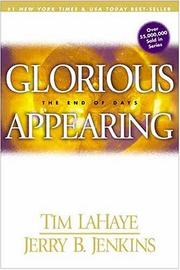 Glorious Appearing, Tim LaHaye and Jerry B. Jenkins
 “Nothin' On You”,
 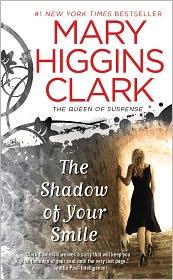 The Shadow of Your Smile, Mary Higgins Clark
 Ocean Prey, John Sandford