Our front page for January 1 — written and set by The Yesterday Times from the events below. Not an archival document.
Day of the year
1
Days left in 2026
364
In 2026 it falls on a
Thursday
Star sign
Capricorn
Birthstone
Garnet
On January 1 in 1892, 134 years ago, Ellis Island Opens as Gateway for Millions. This page reports 11 stories from the date, 25 people born on this day.
The stories in full
Harbor News
1892 — Ellis Island Opens as Gateway for Millions
New inspection station opens on Ellis Island, expected to process nearly 12 million immigrants before a fire destroys the first building in 1897.
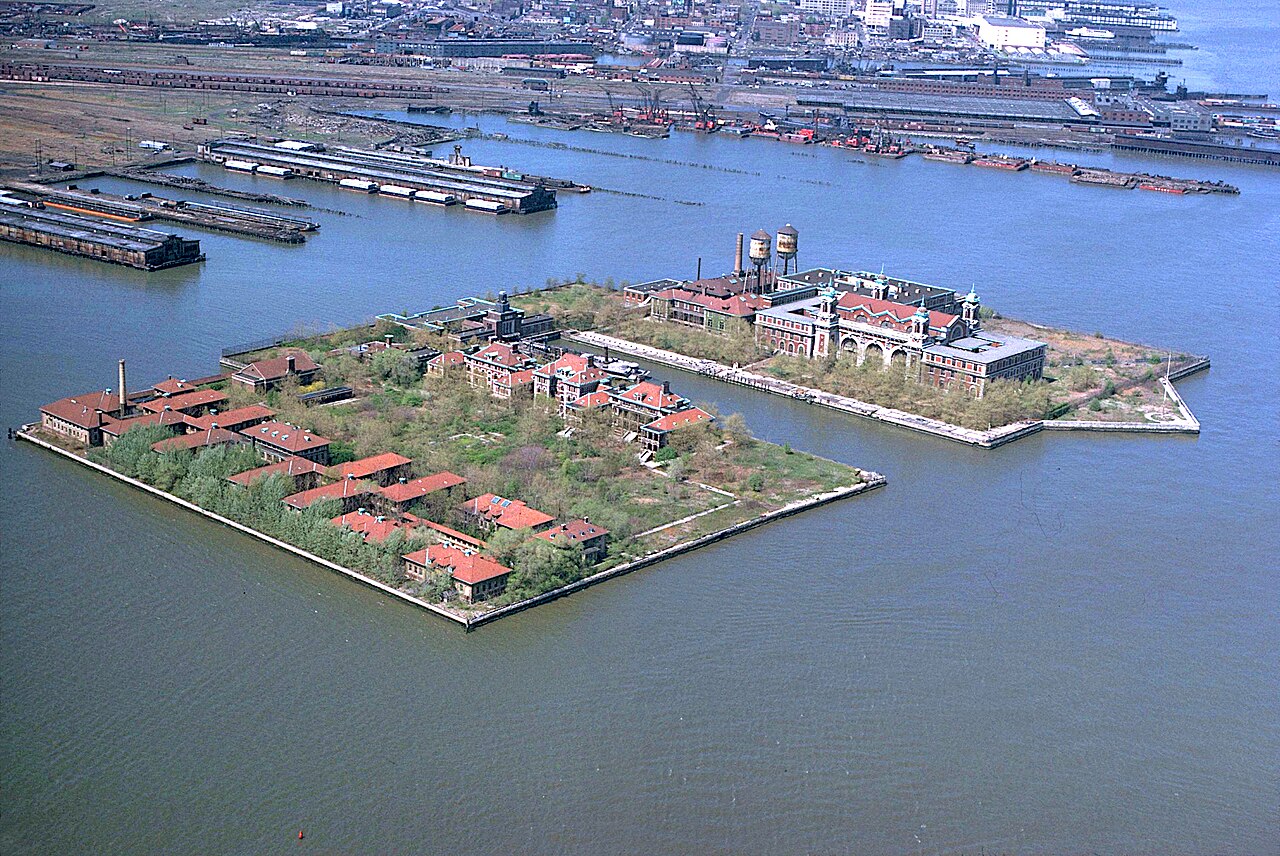
The Ellis Island Immigration Station, which served as the gateway for millions of immigrants — Wikimedia Commons
NEW YORK, January 1 — The United States immigration station on Ellis Island in New York Harbor commenced operations today, destined to become the portal through which nearly 12 million newcomers would pass over the coming decades. The first vessel arrived this morning, and medical and legal inspections began forthwith. The island, expanded by land reclamation to 27.5 acres between the late 1890s and 1930s, now offers ample room for the vast numbers anticipated. The original station, which opened with such promise, was destroyed by fire in 1897, and a new facility was subsequently erected. In 1965, Ellis Island became part of the Statue of Liberty National Monument, securing its place in the nation's heritage. Immigration officials expressed confidence that the new station would operate with efficiency, a marked improvement over the chaotic conditions at Castle Garden.
Ellis Island opened as an immigration station on January 1, 1892.
The station processed about 12 million immigrants from 1892 to 1954.
The first inspection station was destroyed by fire in 1897.
The island was expanded by land reclamation to 27.5 acres between the late 1890s and 1930s.
Ellis Island has been part of the Statue of Liberty National Monument since 1965.
Space Desk
2019 — New Horizons Achieves Historic Flyby of Arrokoth
NASA probe reaches farthest world ever visited — 43.4 AU from the Sun — a milestone in solar system exploration.
In the annals of space exploration, few missions have pushed the boundaries of human knowledge as far as NASA's New Horizons, which today completed a historic flyby of Arrokoth, a trans-Neptunian object located a staggering 43.4 astronomical units from the Sun.
This encounter marks the farthest world ever visited by a spacecraft, a testament to the engineering prowess and scientific ambition of the mission team. Arrokoth, a classical Kuiper belt object, orbits in a region of low-eccentricity orbits clustered near 44 AU, offering a pristine glimpse into the early solar system.
New Horizons, which previously made history by flying 12,500 kilometers above Pluto on July 14, 2015, has now added another feather to its cap. The spacecraft, launched on January 19, 2006, from Cape Canaveral aboard an Atlas V rocket at approximately 16.26 kilometers per second relative to the Sun, has traveled over a decade to reach this distant rendezvous.
New Horizons flew by Arrokoth on January 1, 2019, when it was 43.4 AU from the Sun.
Arrokoth is a classical Kuiper belt object in low-eccentricity orbits clustered near 44 AU.
New Horizons is the first spacecraft to explore a dwarf planet, having flown 12,500 km above Pluto on July 14, 2015.
The New Horizons mission cost approximately $700 million over 15 years from 2001 to 2016.
New Horizons was launched on January 19, 2006, from Cape Canaveral by an Atlas V rocket at about 16.26 km/s relative to the sun.
Printing and Publishing
1785 — John Walter Launches The Daily Universal Register
New London paper debuts with logographic typesetting — will later become The Times — circulation to reach 5,000 by 1815.
LONDON, January 1 — John Walter, a man of enterprise and vision, has today begun publication of a new daily newspaper under the title The Daily Universal Register, a venture that promises to bring the latest intelligence to the metropolis with a efficiency hitherto unseen.
Walter, who purchased the patent for logography, a typesetting system that composes words in a single piece, has established a printing house to produce his paper, which will appear every morning except Sundays. The first issue, dated this day, offers a comprehensive account of domestic and foreign affairs, commercial news, and literary notices.
It is anticipated that The Daily Universal Register will, in time, become a leading voice in the public sphere, and indeed, it would later be known as The Times, a name that would become synonymous with journalistic excellence.
In the years ahead, the paper would adopt Friedrich Koenig's new steam-driven cylinder press in 1814, a revolutionary innovation that would speed production and enable a circulation of 5,000 by then, growing to 51,200 by 1854.
The paper's reputation would be greatly enhanced by the dispatches of its correspondent in the Crimean War, William Howard Russell, whose reports were immensely influential. In 1890, the paper was rescued from financial failure by editor Charles Frederic Moberly Bell, ensuring its continued prosperity.
The offices of The Daily Universal Register are located at Printing House Square, near Blackfriars, where the presses are already turning out copies for the morning trade.
The Times began publication on 1 January 1785 under the title The Daily Universal Register.
Founder John Walter bought the patent for logography, a typesetting system, and opened a printing house.
The paper was printed on Friedrich Koenig's new steam-driven cylinder press beginning in 1814.
By 1815, The Times had a circulation of 5,000, which grew to 51,200 by 1854.
William Howard Russell, the paper's correspondent in the Crimean War, was immensely influential with his dispatches.
Trade Desk
1995 — WTO Debuts, Replaces GATT
New trade body begins with 166 members, representing over 98% of global trade and GDP, based in Geneva.
GENEVA, January 1 — The World Trade Organization, an international body designed to supervise and liberalize trade, came into being today, replacing the General Agreement on Tariffs and Trade (GATT).
Established pursuant to the 1994 Marrakesh Agreement, the WTO inherits a legacy of trade liberalization. The GATT, signed by 123 nations on 30 October 1947, had applied provisionally since 1 January 1948.
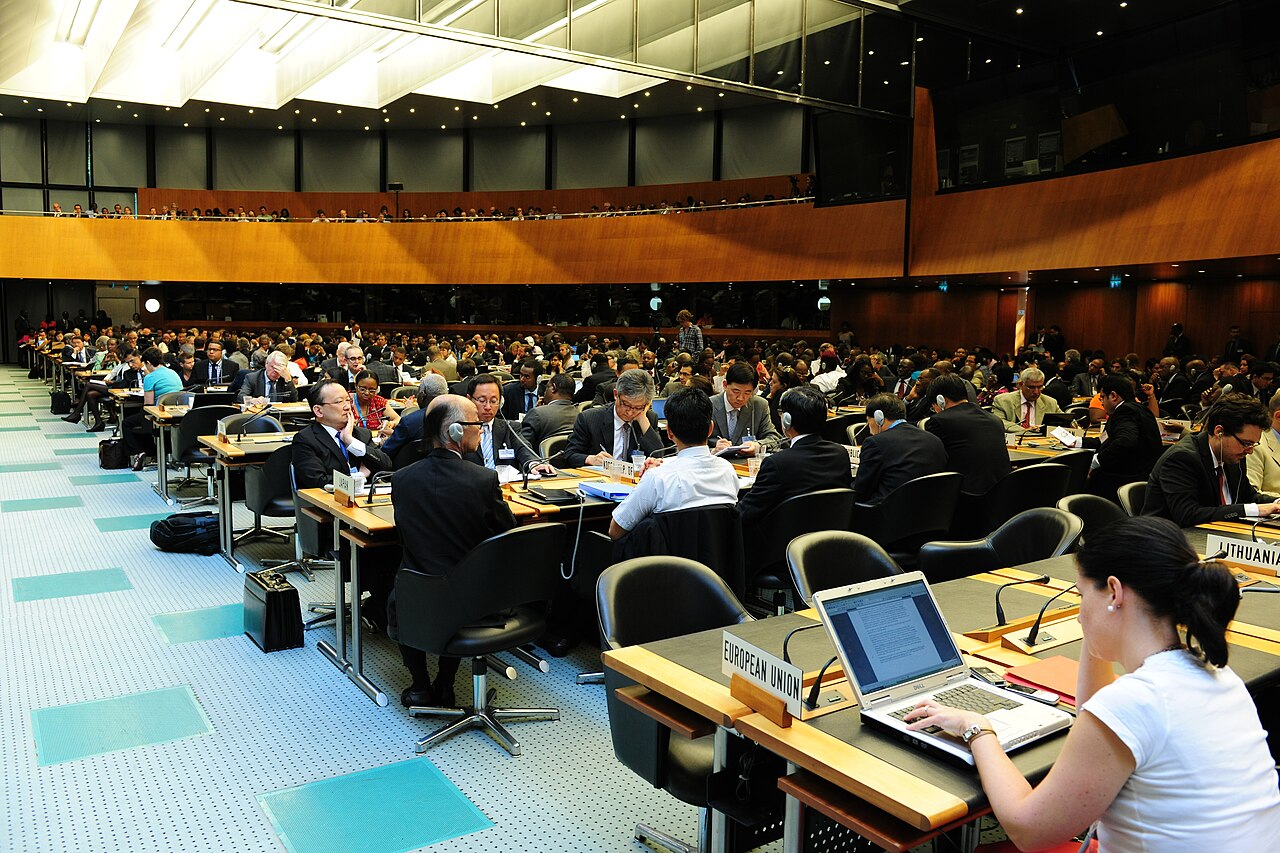
The new organization, headquartered in Geneva, has 166 members, representing over 98% of global trade and GDP. Delegates convened at a meeting to discuss international trade policy, symbolizing the cooperative spirit of the endeavor.
The Uruguay Round Final Act, signed on 15 April 1994 at Marrakesh, Morocco, officially established this body.
The WTO was established on 1 January 1995, pursuant to the 1994 Marrakesh Agreement.
The WTO has 166 members, representing over 98% of global trade and global GDP.
The WTO is headquartered in Geneva, Switzerland.
The GATT was signed by 123 nations in Geneva on 30 October 1947 and applied provisionally from 1 January 1948.
The Uruguay Round Final Act was signed on 15 April 1994 at Marrakesh, Morocco, officially establishing the WTO.
Astronomical Observations
1801 — New Star Discovered at Palermo Observatory
Signor Piazzi beholds a wandering body in the heavens — he names it Ceres
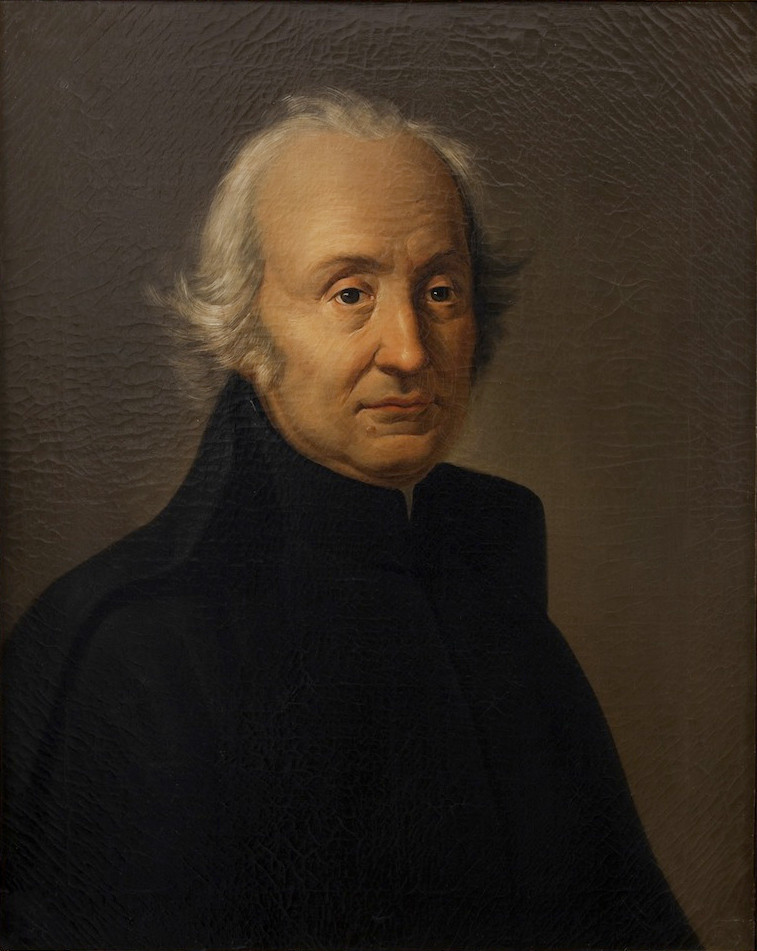
Astronomer Giuseppe Piazzi, who discovered the dwarf planet Ceres in 1801 — Costanzo Angelini
PALERMO, January 1 — Giuseppe Piazzi, astronomer at the Royal Observatory of Palermo, this day discovered a new celestial body, which he has named Ceres, in honour of the Roman goddess of agriculture and motherly love.
Signor Piazzi at first took the object for a fixed star, but, perceiving that it moved, he gave it the name of a new star. His observations are published under the title 'Risultati delle osservazioni della nuova stella, scoperta il dì 1. Gennaio all'Osservatorio Reale di Palermo.'
Astronomers will await with interest further accounts of this body, which may prove a planet of new order. The learned world is indebted to Signor Piazzi for his diligence and skill. The discovery was made on the first night of the new century, during routine observations of the constellation Taurus. Piazzi tracked the object through subsequent nights, noting its slow drift against the fixed stars. His account has been forwarded to fellow astronomers across Europe for confirmation.
Giuseppe Piazzi discovered the dwarf planet Ceres on 1 January 1801 at the Royal Observatory of Palermo.
Piazzi initially mistook Ceres for a fixed star before noticing its motion.
Piazzi called Ceres 'a new star' in his publication.
His results were published as 'Risultati delle osservazioni della nuova stella, scoperta il dì 1. Gennaio all'Osservatorio Reale di Palermo'.
Religious Intelligence
1773 — Newton's New Hymn Sung at Olney
Verses on grace first used at prayer meeting — print publication to follow
OLNEY, January 1 — At the prayer meeting held this day in this town, the congregation did sing a new hymn, composed by the Rev. John Newton, to illustrate his sermon on New Year's Day. Whether music accompanied the verses is unknown; the congregation may have chanted them.
John Newton wrote the hymn to illustrate a sermon on New Year's Day of 1773.
The lyrics were probably first used in a prayer meeting in Olney, England, on 1 January 1773.
It is unknown if any music accompanied the verses; it may have simply been chanted by the congregation.
The hymn debuted in print in 1779 in Newton and Cowper's Olney Hymns.
Aviation
1914 — World's First Scheduled Airline Opens in Florida
St. Petersburg-Tampa Airboat Line makes its first scheduled flight on January 1.
ST. PETERSBURG, January 1 — Scheduled air travel became a reality today when the St. Petersburg-Tampa Airboat Line, the first airline to operate with winged aircraft, made its initial flight. Pheil paid $400 at auction for the honor, and the plane carried newspapers as its first cargo.
Antony H. Jannus piloted the first scheduled flight of the St. Petersburg–Tampa Airboat Line on January 1, 1914.
Over 3,000 spectators watched a parade with an Italian band at the departure point in St. Petersburg.
Former St. Petersburg mayor Abram C. Pheil won the first round-trip ticket at auction with a bid of $400.
The 23-minute flight rarely exceeded an altitude of 5 feet above Tampa Bay.
The first air-cargo carried was a bundle of St. Petersburg Times newspapers.
Musical Chronicle
1725 — Bach's New Cantata Sounds With Trumpets
Cantata opens and closes with trumpet fanfares, with three trumpets and timpani in the score.
LEIPZIG, January 1 — In this season of sacred music, a new cantata by Johann Sebastian Bach, director of music at the Thomaskirche, was heard for the first time this day. The work, 'Jesu, nun sei gepreiset,' opens and closes with trumpet fanfares, with three trumpets and timpani in the score.
Bach led the Thomanerchor in the first performance of the cantata on 1 January 1725.
The cantata features trumpet fanfares at the start and end, with three trumpets and timpani in the orchestration.
The cantata is based on a 1593 hymn by Johannes Hermann, a theologian and former Thomaskantor.
Bach reprised the cantata at least once, between 1732 and 1735.
The cantata's duration is 30 minutes, and it is scored for four soloists, four-part choir, and a festive Baroque ensemble.
Virginia Intelligence
1776 — Lord Dunmore Orders Norfolk Put to Flame
The town is reduced to ashes — the rebel forces join in the destruction — the fleet stands by
NORFOLK, January 1 — Lord Dunmore, the royal Governor, has this day commanded the burning of the town of Norfolk, which is now reduced to a heap of smoking ruins. The town’s destruction followed the Third Virginia Convention’s refusal to disband its militia and accept martial law. British forces, driven to their ships after the defeat at Great Bridge, set the blaze.
Lord Dunmore ordered the Burning of Norfolk on January 1, 1776.
The Burning of Norfolk occurred after the Third Virginia Convention refused to disband its militia or accept martial law.
British forces took refuge on ships near Norfolk after their defeat at Great Bridge on December 9, 1775.
Nearly 500 Allied aircraft destroyed on the ground — but German losses were heavy and surprise was incomplete — a blow that failed to cripple the enemy.
BRUSSELS, Jan. 1 — Nearly 500 Allied airplanes were destroyed on the ground this morning when the Luftwaffe launched Operation Bodenplatte, a mass assault on airfields in the Low Countries, after repeated delays caused by bad weather.
The raid was planned by Generalmajor Dietrich Peltz, a former dive bomber pilot, in support of the German Army's Operation Northwind. Only 11 of the Luftwaffe's 34 air combat Gruppen attacked on time and with surprise, according to reports reaching this office.
Allied aircrew casualties were small, for the destruction was wrought mostly on parked planes.
Operation Bodenplatte was launched on 1 January 1945 after being delayed repeatedly due to bad weather.
The operation resulted in the destruction of almost 500 Allied airplanes, but Allied aircrew casualties were small.
Only 11 of the Luftwaffe's 34 air combat Gruppen made attacks on time and with surprise.
The operation was planned by Generalmajor Dietrich Peltz, a former dive bomber pilot, and supported the German Army's Operation Northwind.
British signals intelligence recorded the buildup of German air forces but did not realize an operation was imminent.
National Affairs
1808 — Importation of Slaves Banned by Federal Law
Act of 1807 takes effect this day — Jefferson's measure criminalizes foreign slave trade — South Carolina's recent imports noted
WASHINGTON, January 1 — The importation of slaves into the United States is from this day prohibited by law, pursuant to the Act Prohibiting Importation of Slaves, which took effect on the earliest date allowed by the Constitution. President Jefferson urged its passage in his 1806 address, and the 1807 statute criminalizes all such importation, even aboard foreign ships. South Carolina, which reopened the trade in December 1803, imported 39,075 persons between 1804 and 1808. Slavery itself remains lawful. In New York, Peter Williams, Jr., delivered an oration celebrating the abolition of the slave trade.
The Act Prohibiting Importation of Slaves took effect on January 1, 1808, the earliest date permitted by the U.S. Constitution.
President Thomas Jefferson promoted the legislation, calling for its enactment in his 1806 State of the Union address.
The 1807 law criminalized all importation of slaves from abroad, even on foreign ships, building on the 1794 Slave Trade Act.
South Carolina reopened the transatlantic slave trade in December 1803 and imported 39,075 enslaved people between 1804 and 1808.
Historians estimate up to 50,000 slaves were illegally imported into the United States after 1808, mostly through Spanish Florida and Texas.
What the papers printed that morning
Real front pages from 1 January 1892, scanned by the Library of Congress. These are archival documents, not our work.
1449Lorenzo de' MediciLorenzo di Piero de' Medici, known as Lorenzo the Magnificent, was an Italian statesman, de facto ruler of the Florentine Republic, and the most powerful patron of Renaissance culture in Italy.
1484Huldrych ZwingliHuldrych Zwingli was a Swiss Christian theologian, musician, and leader of the Reformation in Switzerland.
1752Betsy RossElizabeth Griscom Ross, also known by her second and third married names, Ashburn and Claypoole, was an American upholsterer who was credited by her relatives in 1870 with designing and making the first U.S. flag, commonly known as the Betsy Ross flag.
766Ali al-RidhaAli ibn Musa al-Rida was a descendant of the Islamic prophet Muhammad and the eighth of the Twelve Imams, succeeding his father Musa al-Kazim and his grandfather Ja'far al-Sadiq.
1467Sigismund I the OldSigismund I the Old was King of Poland and Grand Duke of Lithuania from 1506 until his death in 1548.
1865Harry CoulbyHarry Coulby was an American businessman known as the "Czar of the Great Lakes" for his expertise in managing the Great Lakes shipping fleet of Pickands Mather & Company and the Pittsburgh Steamship Company.
1879E. M. ForsterEdward Morgan Forster was an English author.
1888Chesley BonestellChesley Knight Bonestell Jr. was an American painter, designer, and illustrator, best known for his realistic-looking paintings of space exploration, including future spacecraft and scenes set on moons and planets in the Solar System.
1892Artur RodzińskiArtur Rodziński was a Polish and American conductor of orchestral music and opera.
1895J. Edgar HooverJohn Edgar Hoover was an American law enforcement administrator who served as the fifth and final director of the Bureau of Investigation (BOI) and the first director of the Federal Bureau of Investigation (FBI).
1900Xavier CugatXavier Cugat was an American musician and bandleader who was a leading figure in the spread of Latin music in the United States.
1927Doak WalkerEwell Doak Walker II was an American football player who was a halfback and kicker.
1934Alan BergAlan Harrison Berg was an American talk radio show host in Denver, Colorado.
1939Michèle Mercier(87 this year)Michèle Mercier is a French actress.
1943Tony Knowles(83 this year)Anthony Carroll Knowles is an American politician and businessman who served as the seventh governor of Alaska from 1994 to 2002.
1950Wayne Bennett(76 this year)Wayne James Bennett is an Australian professional rugby league football coach who is the head coach of the South Sydney Rabbitohs in the NRL and a former player.
1952Shaji N. KarunShaji Neelakantan Karunakaran ISC, better known by his stage name Shaji N. Karun, was an Indian film director and cinematographer.
1958Grandmaster Flash(68 this year)Joseph Robert Saddler, known by his stage name Grandmaster Flash, is a Barbadian-American DJ.
1959Panagiotis Giannakis(67 this year)Panagiotis "Notis" Giannakis, alternatively spelled Panayiotis Yiannakis or Yannakis, is a former Greek professional basketball player and coach.
1971Jyotiraditya Madhavrao Scindia(55 this year)Jyotiraditya Madhavrao Scindia is an Indian politician who is serving as the 43rd Minister of Communications and 10th Minister of Development of North Eastern Region since 2024.
1974Christian Paradis(52 this year)Christian Paradis is a Canadian politician who served as the Member of Parliament (MP) for Mégantic—L'Érable from 2006 to 2015.
1975Fernando Tatís(51 this year)Fernando Gabriel Tatís Medina Sr. is a Dominican former professional baseball third baseman.
1976Tank(50 this year)Durrell Artaze Babbs, better known by his stage name Tank, is an American singer, songwriter, actor, record producer, and podcaster.
1995Poppy(31 this year)Moriah Rose Pereira, known professionally as Poppy, is an American singer, songwriter, musician, and YouTuber.
1997Noah Kahan(29 this year)Noah Berkenkamp Kahan is an American singer-songwriter.
Quote of the Day
“Two roads diverged in a wood, and I— I took the one less traveled by, And that has made all the difference.” — Robert Frost, Mountain Interval
January 1 History Quiz
Which spacecraft flew past Arrokoth on January 1, 2019?
Every event on this page was picked by hand from the historical record, written up as a news report, and checked against its source. Photographs are matched to the event they illustrate and verified before they are used. Sources are linked on each story.
![Front page of Los Angeles herald, Los Angeles [Calif.], 1 January 1892](https://tile.loc.gov/image-services/iiif/service:ndnp:curiv:batch_curiv_lovelock_ver01:data:sn84025968:00280769423:1892010101:0005/full/pct:50/0/default.jpg)
![Front page of Pittsburg dispatch, Pittsburg [Pa.], 1 January 1892](https://tile.loc.gov/image-services/iiif/service:ndnp:pst:batch_pst_eisenhower_ver01:data:sn84024546:00237282085:1892010101:0004/full/pct:50/0/default.jpg)
![Front page of New-York tribune, New York [N.Y.], 1 January 1892](https://tile.loc.gov/image-services/iiif/service:ndnp:dlc:batch_dlc_jaguar_ver02:data:sn83030214:0017503853A:1892010101:0008/full/pct:50/0/default.jpg)
 “The Sound Of Silence”,
 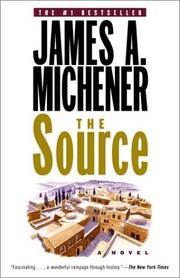 The Source, James Michener
 “Brand New Key”,
 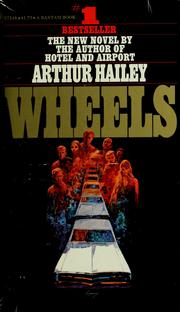 Wheels, Arthur Hailey
 Slow Waltz in Cedar Bend, Robert James Waller
 “Smooth”,
  Harry Potter and the Chamber of Secrets, J. K. Rowling
 “Firework”,
  Dead or Alive, Tom Clancy and Grant Blackwood
 Call Us What We Carry, Amanda Gorman


