Our front page for July 2 — written and set by The Yesterday Times from the events below. Not an archival document.
Day of the year
183
Days left in 2026
182
In 2026 it falls on a
Thursday
Star sign
Cancer
Birthstone
Ruby
On July 2 in 1964, 62 years ago, Johnson Signs Civil Rights Act; Segregation Outlawed. This page reports 12 stories from the date, 25 people born on this day.
The stories in full
National Desk
1964 — Johnson Signs Civil Rights Act; Segregation Outlawed
President Lyndon B. Johnson signs the Civil Rights Act of 1964 at the White House, outlawing segregation in schools, at the workplace, and in facilities serving the general public — a landmark achievement first proposed by President Kennedy.
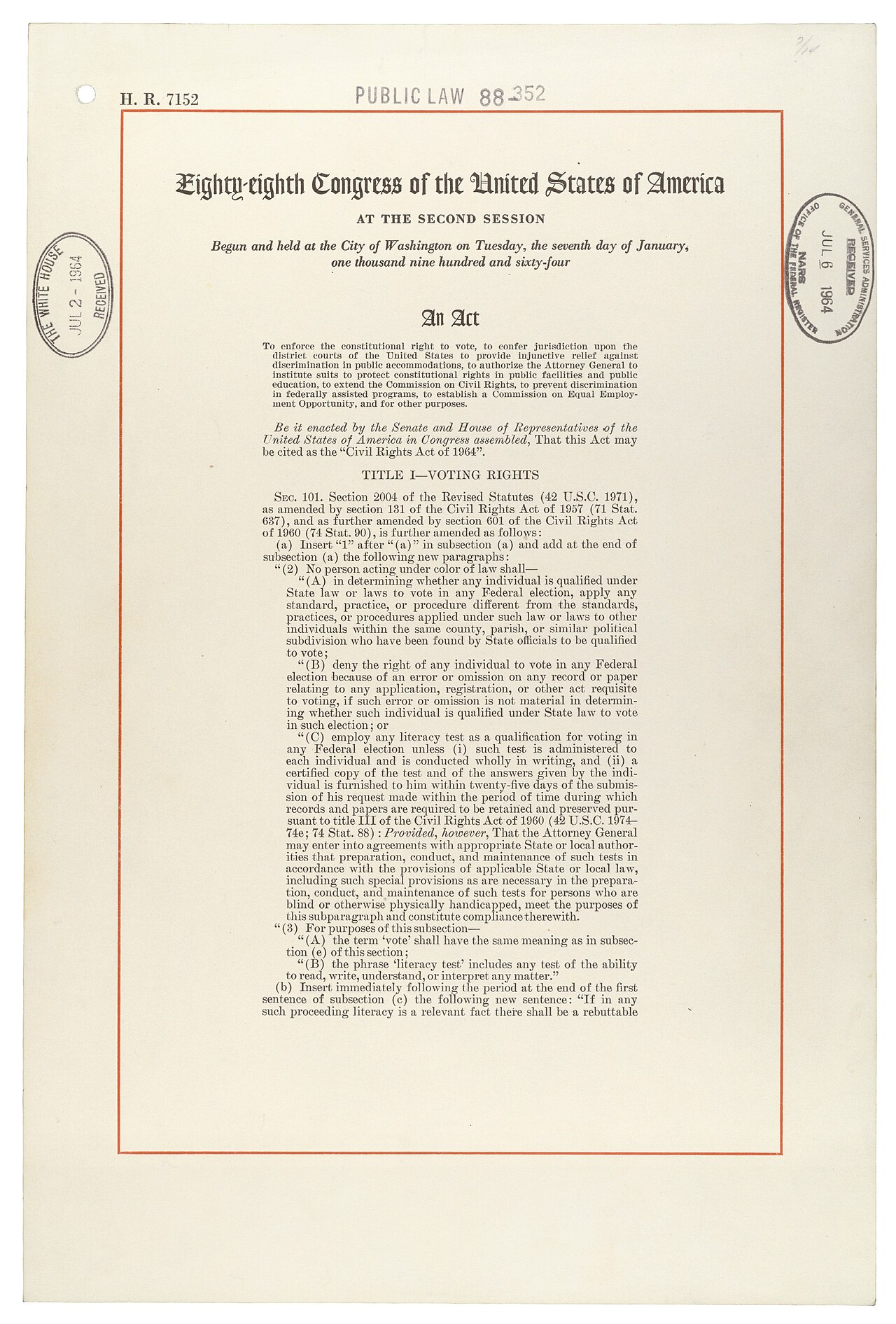
The Civil Rights Act of 1964, the landmark legislation ending legal segregation in America — US Congress
WASHINGTON, July 2 — In a moment freighted with the moral urgency of a century, President Lyndon B. Johnson today signed the Civil Rights Act of 1964 into law at the White House, outlawing segregation in schools, at the workplace, and in facilities serving the general public. The act, which passed the House of Representatives by a vote of 290–130 and the Senate by 73–27, prohibits discrimination based on race, color, religion, sex, or national origin in public accommodations, employment, and federally assisted programs.
President John F. Kennedy first proposed the legislation in June 1963, but it faced a 72-day filibuster in the Senate before passage. Johnson, who took up the cause after Kennedy's assassination, pressed Congress with the full weight of his office, and today's signing represents the most sweeping civil rights measure since Reconstruction.
Across the South, where segregation has been enforced by law and custom, reactions were mixed; in the North, supporters hailed the act as a fulfillment of the nation's founding ideals. The law's enforcement provisions will be carried out by the Justice Department and the new Equal Employment Opportunity Commission, though its immediate impact will be tested in the courts and on the streets.
What remains to be seen is how quickly the act's promises are translated into reality. The longer struggle for equality, many observers note, has only just begun — but the legal foundation has now been laid, and the nation has taken a decisive step toward the promise of equal justice under law.
President Lyndon B. Johnson signed the Civil Rights Act of 1964 into law at the White House on July 2, 1964.
The final vote was 290–130 in the House of Representatives and 73–27 in the Senate.
The act prohibits discrimination based on race, color, religion, sex, and national origin in public accommodations, employment, and federally assisted programs.
President John F. Kennedy first proposed the legislation in June 1963, but it faced a 72-day filibuster in the Senate.
The act is considered one of the most significant legislative achievements in American history.
Books
1998 — Rowling's 'Chamber of Secrets' Casts Spell on UK Bestseller
Rowling's second Harry Potter novel took the top spot on UK lists, beating Grisham, Clancy and Pratchett.
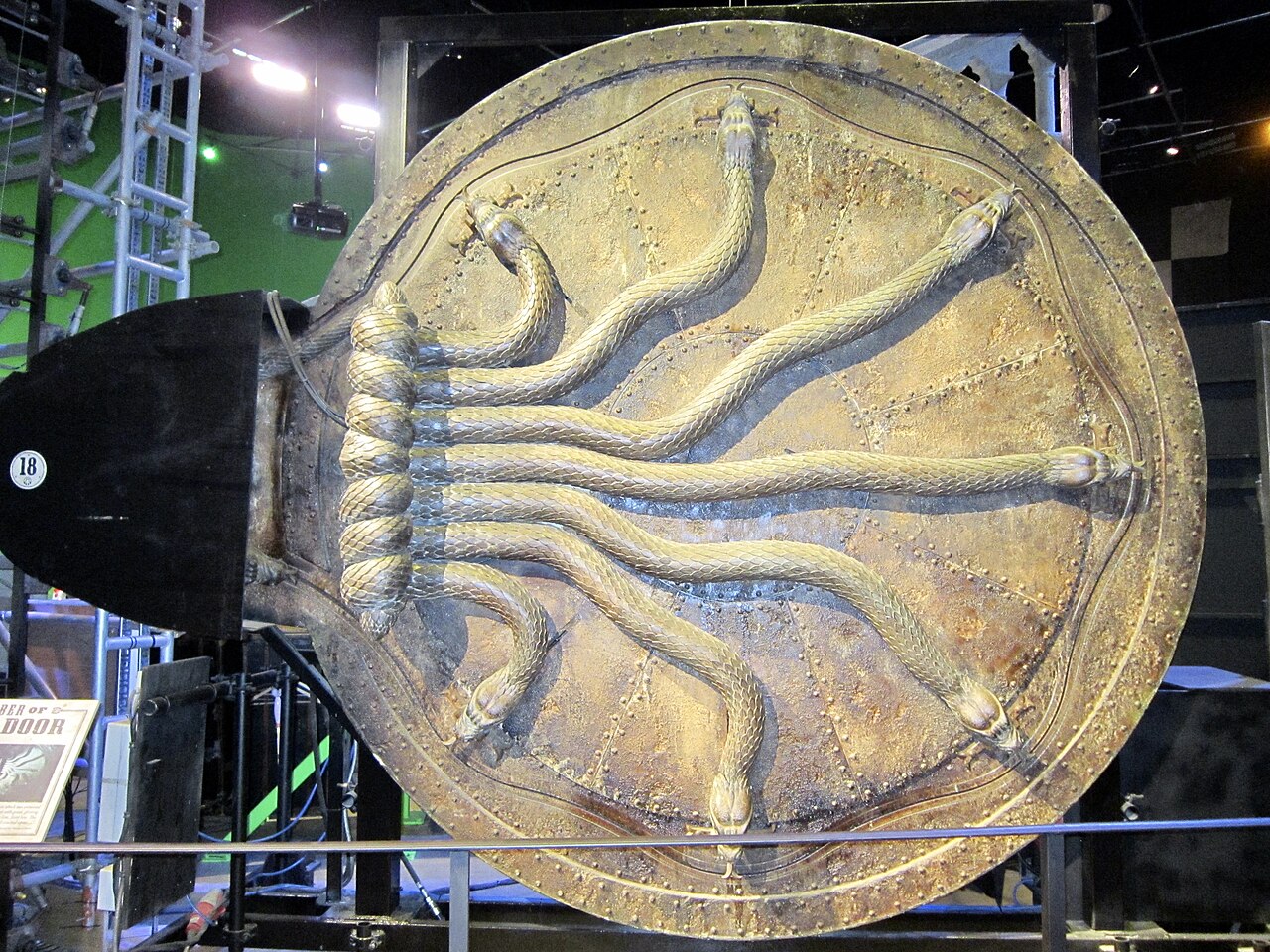
The Chamber of Secrets door, a key prop from the Harry Potter film series — Ank kumar
LONDON, July 2 — J. K. Rowling, the former teacher who conjured a boy wizard named Harry Potter, has done it again. Her second novel, "Harry Potter and the Chamber of Secrets," published today by Bloomsbury, immediately took first place on UK bestseller lists, displacing John Grisham, Tom Clancy and Terry Pratchett.
Rowling, 32, admitted she found the book difficult to finish, taking it back for six weeks of revision after delivering the manuscript. The effort has paid off: the novel has already won the British Book Awards Children's Book of the Year, making Rowling the first author to win for two years in succession.
Harry Potter and the Chamber of Secrets was published in the UK on 2 July 1998 by Bloomsbury.
The book immediately took first place in UK bestseller lists, displacing authors John Grisham, Tom Clancy and Terry Pratchett.
J. K. Rowling found it difficult to finish the book, taking it back for six weeks of revision after delivering the manuscript.
The novel won the British Book Awards Children's Book of the Year, making Rowling the first author to win for two years in succession.
In the US, the book was published on 2 June 1999 by Scholastic Inc. and went straight to the top of three bestseller lists.
World Briefing
2020 — Jade Mine Landslide in Myanmar Kills Up to 200 Miners
A wall of mud and water engulfs freelance jade pickers in Hpakant; death toll already the worst in the country's mining history.
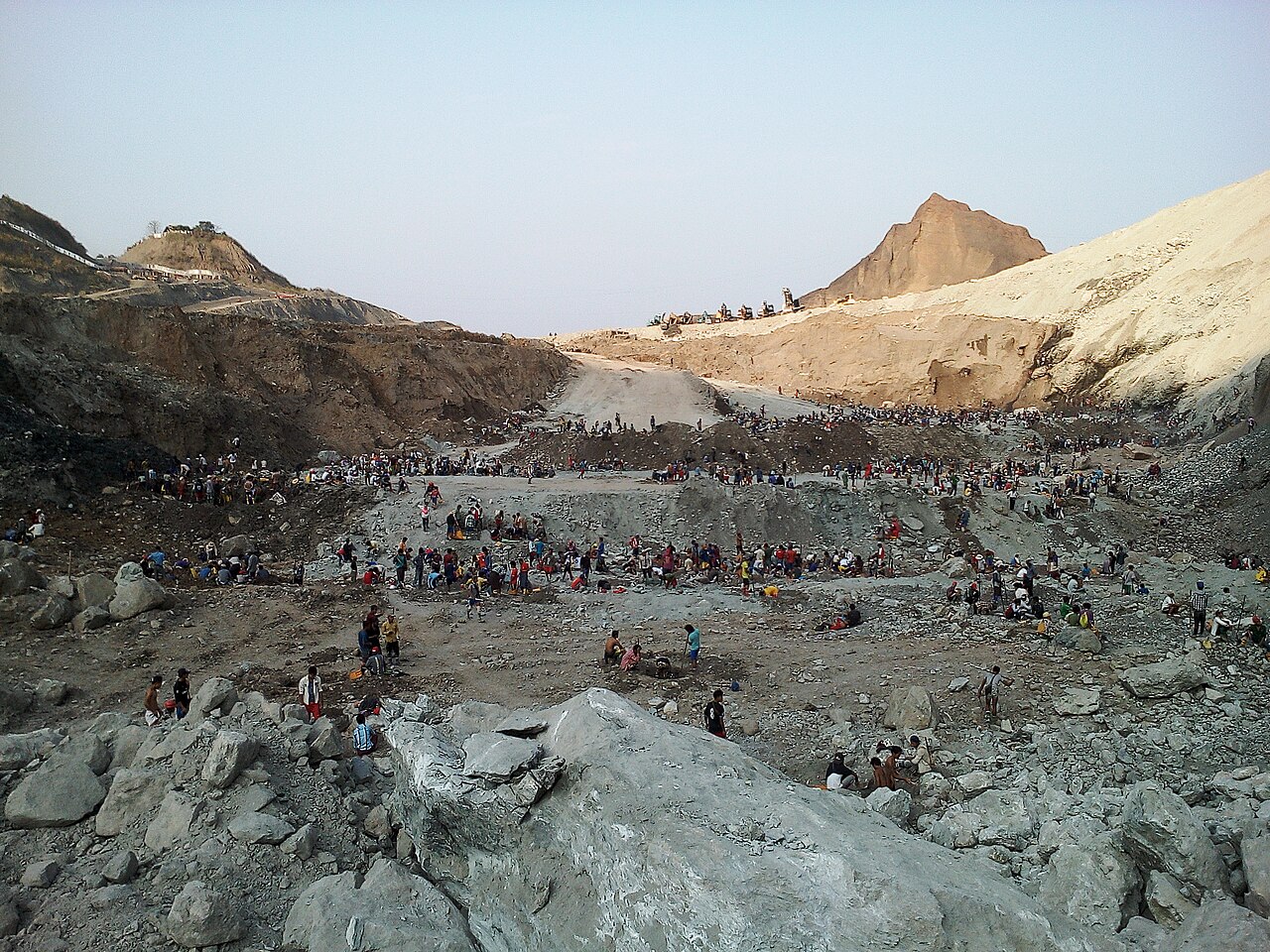
Miners search for jade in Hpakant, Myanmar, following a catastrophic and deadly landslide — Yin_Min_Tun
HPAKANT, Myanmar — A wall of mud and water six meters high, triggered by heavy rains, crashed into freelance jade pickers at the Wai Khar jade mine here on July 2, killing between 175 and 200 miners. The 06:30 local time disaster is the deadliest mining accident in Burmese history, surpassing a 2015 landslide that killed 116.
The landslide at the Wai Khar jade mine in Hpakant, Myanmar on July 2, 2020 killed between 175 and 200 miners.
A 6-meter wave of mud and water triggered by heavy rains buried freelance 'jade pickers' at 06:30 local time.
As of July 4, 174 bodies had been recovered, with over 100 people missing and 54 injured evacuated.
The disaster was the deadliest mining incident in Myanmar's history, surpassing a 2015 landslide that killed 116.
Recovery efforts were hindered by heavy rains, and unidentified bodies were buried in a mass grave dug by a mechanical digger.
Washington Desk
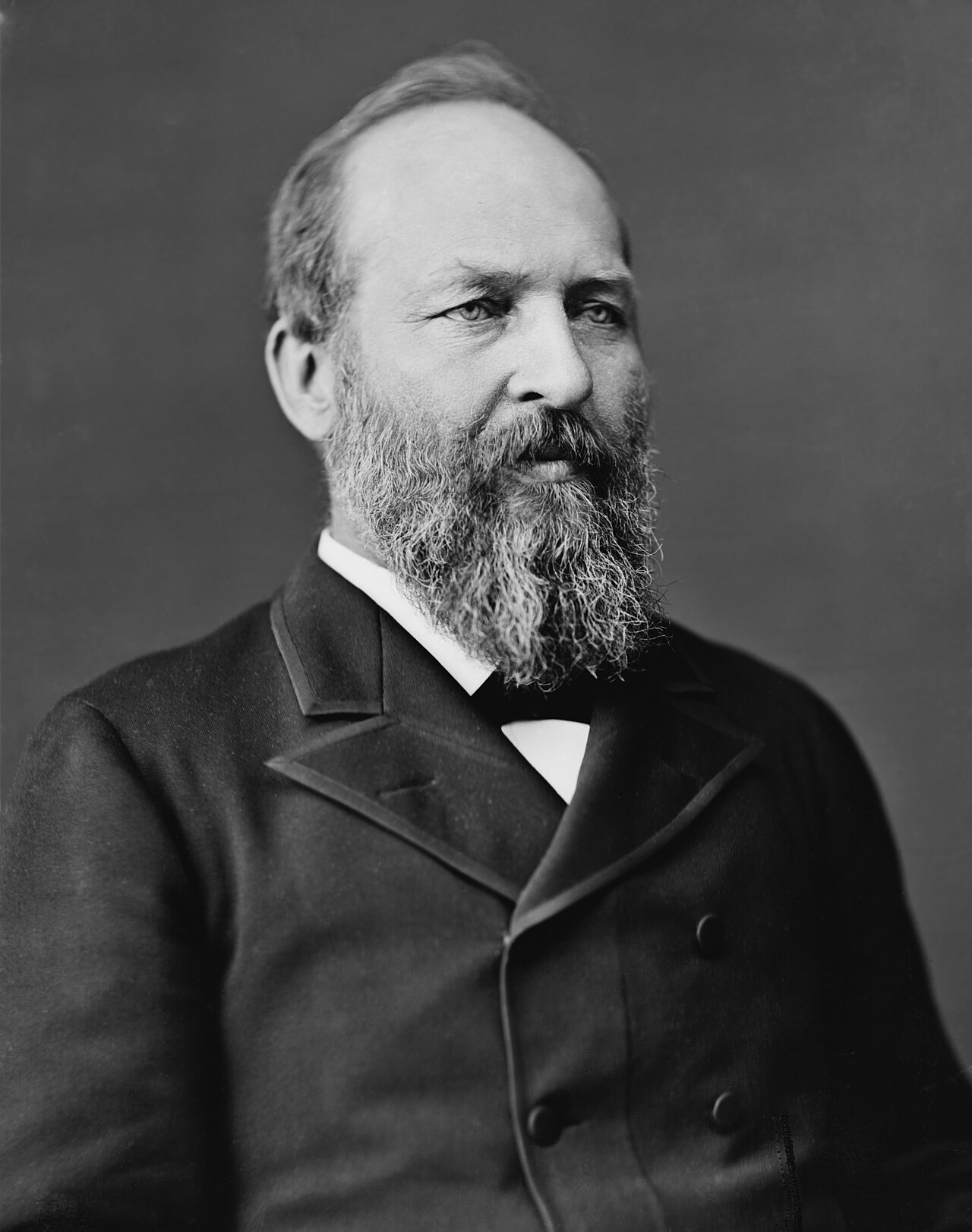
1881 — President Garfield Shot at Station; Wound Grave
Charles J. Guiteau, a deluded office seeker, fires at the president at the Baltimore and Potomac Railroad station; physicians hold little hope.
WASHINGTON, July 2 — President James A. Garfield was shot today at the Baltimore and Potomac Railroad station, and physicians attending him have pronounced the wound grave. Charles J. Guiteau, a deluded office seeker, is in custody, charged with the assault on the chief magistrate.
The President was walking through the station's waiting room, accompanied by Secretary of State James G. Blaine, when Guiteau approached from behind and fired two shots from a revolver. One bullet grazed the President's arm; the other entered his back and lodged near the spine. He was removed to the White House, where doctors have probed for the ball but have been unable to locate it.
Guiteau, who has claimed he was impelled by political motives, made no attempt to flee and surrendered quietly. He had been seen loitering about the station for days, but no one thought to question him.
The President, 49, was known to be in excellent health, yet the nature of the wound has alarmed his physicians. The public, which had seen him take office only four months ago, now waits anxiously as bulletins are issued from the Executive Mansion. Vice President Chester A. Arthur, summoned from his home in New York, is expected to arrive in the capital at any hour. If the President should succumb, the succession would pass to Arthur, who has been on cool terms with the administration but whose loyalty to the Constitution, all assume, would be absolute.
On July 2, 1881, Garfield was shot by Charles J. Guiteau, a deluded office seeker.
Garfield died on September 19 from infections related to the wounds.
He was succeeded by Vice President Chester A. Arthur.
The Civil War
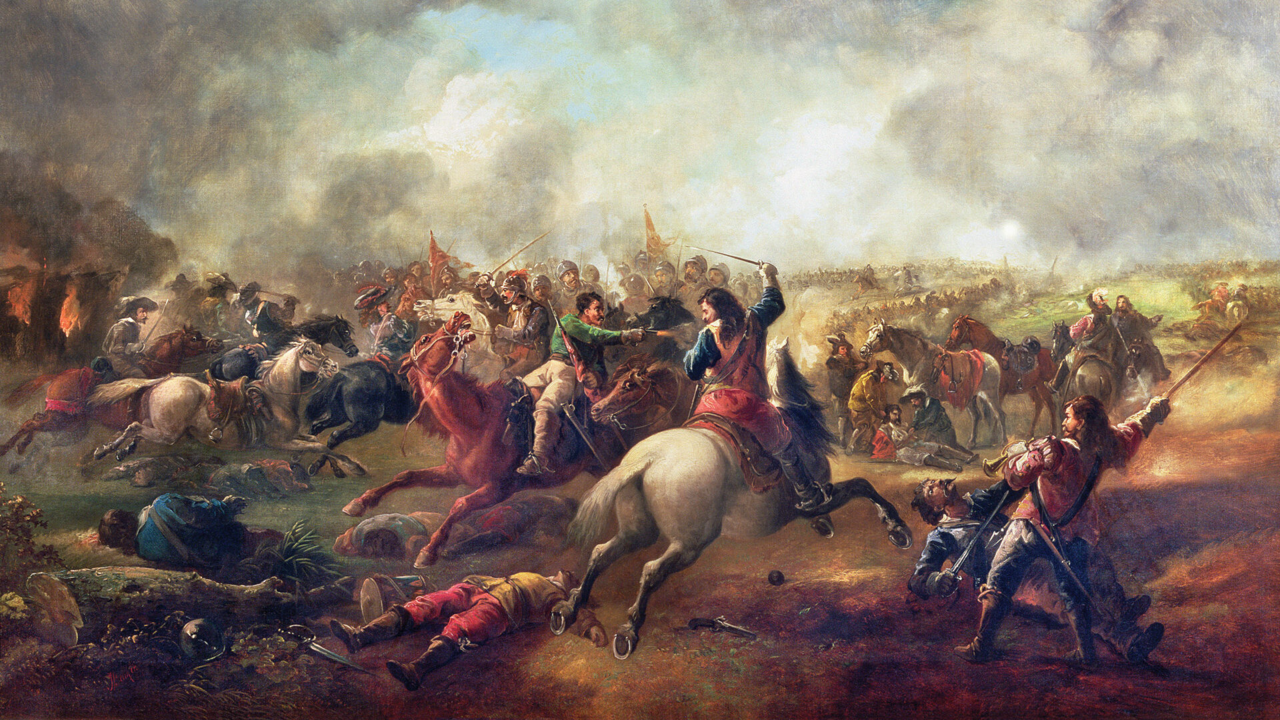
1644 — Marston Moor: Rupert's Army Broken
Royalists lose the North as York falls to Parliament and the Covenanters.
Parliamentarian forces crush Royalist troops at the decisive 1644 Battle of Marston Moor — John Barker (1811-1886)
YORK, July 2 — The smoke of the greatest battle of these wars yet hangs over Marston Moor, where the combined forces of the Scottish Covenanters and the English Parliament have utterly broken the King's army. Prince Rupert, having marched from Knaresborough, some 30 kilometers hence, found the field lost and his horse scattered. The victory is decisive; the North is lost to the Crown. York, beleaguered, must now yield, and the Earl of Newcastle, his cause undone, has fled into exile. Yet even in triumph there is discord, for the Parliamentarian commanders, having won so much, have fallen to disputing among themselves and failed to press their advantage.
The Battle of Marston Moor was the largest battle of the First English Civil War.
The Royalist defeat at Marston Moor was decisive and lost them control of the North.
Prince Rupert arrived at Knaresborough, 30 kilometers from York, on the day of the battle.
York surrendered on 16 July 1644 following the Royalist defeat at Marston Moor.
The Earl of Newcastle went into exile after the battle.
Maritime Affairs
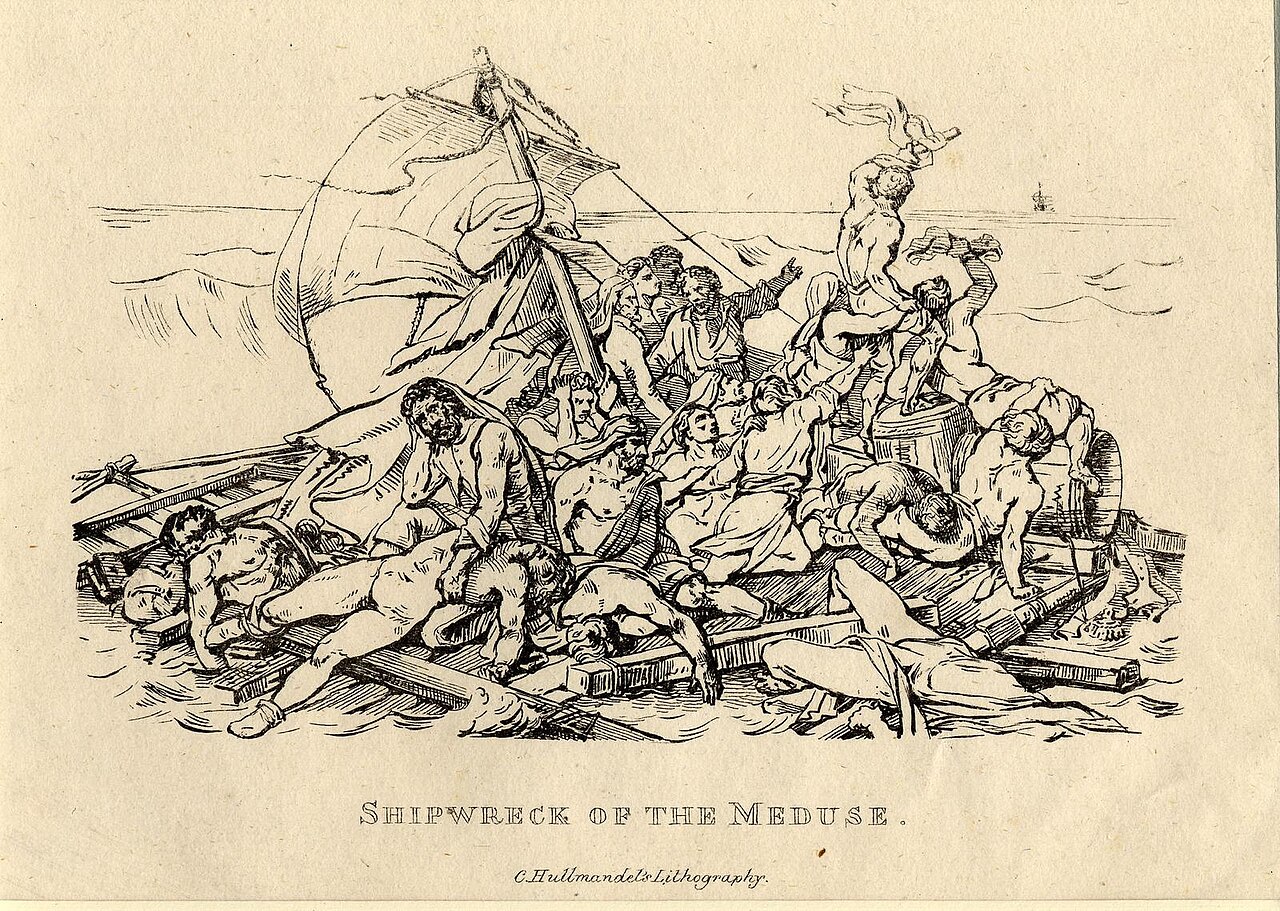
1816 — Medusa's Wreck Becomes National Scandal
A frigate ran aground off Mauritania, more than 160 kilometers off course; of 147 people adrift for thirteen days, only fifteen survived.
PARIS, July 2 — The wreck of the frigate Méduse has become a symbol of Bourbon-era incompetence. The ship ran aground off Mauritania, more than 160 kilometers off course, under a captain who had hardly sailed in twenty years and owed his post to politics. Forced onto an improvised raft, 147 people drifted for thirteen days; only fifteen survived, some through cannibalism. The captain received a three-year sentence, but the scandal erupted when a survivor's account reached an anti-Bourbon newspaper.
Méduse ran aground 50 kilometers off the coast of present-day Mauritania on 2 July 1816 after being more than 160 kilometers off course.
The ship's captain, Hugues Duroy de Chaumareys, had hardly sailed in 20 years and was given command for political reasons.
After the grounding, 146 men and 1 woman were forced onto an improvised raft towed by the frigate's launches.
After 13 days at sea, the raft was discovered with only 15 survivors, and some had resorted to cannibalism.
Chaumareys was sentenced to only three years in jail after being found guilty of incompetent navigation in a 1817 court-martial.
Soviet Desk
1990 — Kremlin Lifts Lithuania Blockade
Soviet blockade lifted after Lithuanian parliament suspends its statehood act on July 2.
MOSCOW, July 2 — The Soviet economic blockade of Lithuania, imposed April 18, was lifted today after the Lithuanian parliament agreed to suspend the effects of its act to re-establish the state. The siege, which sealed borders and froze bank accounts, cut energy, food, and medicine supplies.
The Soviet Union imposed an economic blockade on Lithuania between 18 April and 2 July 1990.
The blockade was lifted after the Lithuanian parliament agreed to suspend the effects of the Act of the Re-Establishment of the State of Lithuania.
Total losses from the blockade on the Lithuanian side exceeded 500 million roubles, or 1.5% of the gross national product.
The blockade restricted or cancelled the centralised supply of energy resources, foodstuffs, and pharmaceuticals to Lithuania.
The Soviet Union sealed Lithuania's borders and blocked its bank accounts during the blockade.
Church Music
1724 — Bach Leads New Cantata at Leipzig
Meine Seel erhebt den Herren heard on the Feast of the Visitation.
LEIPZIG, July 2 — Johann Sebastian Bach, cantor of St. Thomas's, this day directed the first performance of his new chorale cantata, Meine Seel erhebt den Herren, BWV 10, on the Feast of the Visitation. The work is scored for choir, trumpet, two oboes, strings, and continuo. Luther's text supplies the verses.
Bach composed BWV 10 as the fifth of 40 chorale cantatas in his second cantata cycle.
The cantata is scored for mixed choir, trumpet, two oboes, strings, and continuo.
An organ transcription of the duet was published around 1748 as one of the Schübler Chorales.
The text of BWV 10 is based on Martin Luther's German translation of the Magnificat canticle.
World Desk
1976 — Vietnam Unified Under Communist Rule
Saigon renamed Ho Chi Minh City as North and South merge into one state.
HANOI, July 2 — The Democratic Republic of Vietnam and the Republic of South Vietnam merged today into the Socialist Republic of Vietnam, more than a year after the war ended on April 30, 1975. Saigon, the former southern capital, is now Ho Chi Minh City.
The merger took place more than a year after the Vietnam War ended on 30 April 1975.
Saigon, the former capital of South Vietnam, was renamed Ho Chi Minh City upon reunification.
The unified state retained a Soviet-style political and economic system and Eastern Bloc memberships until the Đổi Mới reforms of 1986.
The Democratic Republic of Vietnam (North Vietnam) and the Republic of South Vietnam merged to form the Socialist Republic of Vietnam on 2 July 1976.
Science Desk
2013 — Pluto's Newest Moons Named Kerberos and Styx
International Astronomical Union names the fourth and fifth moons.
The International Astronomical Union has officially named Pluto's fourth and fifth moons Kerberos and Styx. Kerberos, discovered in 2011, is about 12 kilometers across. Styx, found in 2012, orbits at 42,700 kilometers. Both moons have nearly circular prograde orbits in the same plane as Charon.
The International Astronomical Union officially named Pluto's moons Kerberos and Styx in 2013.
Kerberos was discovered on 20 July 2011 while searching for Plutonian rings.
Styx was discovered on 7 July 2012 while looking for potential hazards for the New Horizons mission.
Styx orbits Pluto at 42,700 kilometers from the system's barycenter, and Kerberos is 12 kilometers on its longest axis.
The four small moons, including Kerberos and Styx, have nearly circular prograde orbits in the same orbital plane as Charon.
War Desk
1779 — French Troops Land at Grenada, Seize Island
Admiral Estaing lands 1,400 troops from Dillon's Regiment and 700 more, completing the island's conquest.
ST. GEORGE'S, July 2 — The harbour below bristles with captured British masts as French troops, landed this day near this town, complete their conquest of Grenada. Admiral Charles Henri Hector, Count of Estaing put ashore 1,400 men of Dillon's Regiment and 700 more from four other regiments.
French Admiral Charles Henri Hector, Count of Estaing commanded the fleet that captured Grenada.
The French landed 1,400 troops from Dillon's Regiment and 700 from four other regiments on July 2, 1779.
British Governor Lord Macartney surrendered unconditionally after French forces captured cannons on Hospital Hill and turned them on Fort George.
Estaing permitted his troops to loot St. George's after Macartney rejected his harsh terms of capitulation.
The French took about 700 prisoners and captured 200 British merchantmen anchored in the harbour.
Asia Desk
2013 — Aceh Quake Kills at Least 35, Injures Hundreds
At least 35 killed and 276 injured in Indonesia's Aceh province, still rebuilding from the 2004 tsunami.
BANDA ACEH, July 2 — A powerful earthquake has killed at least 35 people and injured 276 others in Indonesia's Aceh province, a region still rebuilding from the 2004 tsunami. The quake struck at 2:37 p.m. local time at a depth of 10 kilometers and lasted about 15 seconds, shaking buildings as far away as Malaysia.
The 6.1-magnitude earthquake struck at 2:37pm local time on 2 July 2013 at a depth of 10 kilometers.
At least 43 people were killed and more than 2,500 others were injured in Aceh province.
Approximately 4,300 homes were damaged or destroyed across the province.
In Central Aceh, a mosque collapse killed six children and trapped 14 others.
On 3 July, 40 billion rupiah (about US$4 million) was allocated for emergency relief efforts.
What the papers printed that morning
Real front pages from 2 July 1881, scanned by the Library of Congress. These are archival documents, not our work.
1908Thurgood MarshallThoroughgood "Thurgood" Marshall was an American lawyer who served as an associate justice of the Supreme Court of the United States from 1967 until 1991.
1986Lindsay Lohan(40 this year)Lindsay Dee Lohan is an American actress, singer, and producer.
1989Alex Morgan(37 this year)Alexandra Morgan Carrasco is an American former professional soccer player.
1714Christoph Willibald GluckChristoph Willibald Ritter von Gluck was a composer of Italian and French opera in the early classical period.
1942Vicente Fox(84 this year)Vicente Fox Quesada is a Mexican businessman and politician who served as the 62nd president of Mexico from 2000 to 2006.
1979Joe Thornton(47 this year)Joseph Eric Thornton is a Canadian former professional ice hockey centre.
1985Ashley Tisdale(41 this year)Ashley Michelle Tisdale-French is an American actress and singer.
1486Jacopo SansovinoJacopo d'Antonio Sansovino was an Florentine sculptor and architect of the Italian Renaissance.
1667Pietro OttoboniPietro Ottoboni was an Italian cardinal and grandnephew of Pope Alexander VIII, who was also born Pietro Ottoboni.
1820George Law CurryGeorge Law Curry was a predominant American political figure and newspaper publisher in the region that eventually became the state of Oregon.
1821Charles TupperSir Charles Tupper, 1st Baronet, was a Canadian Father of Confederation who served as the sixth prime minister of Canada from May 1 to July 8, 1896.
1903Alec Douglas-HomeAlexander Frederick Douglas-Home, Baron Home of the Hirsel, known as Lord Dunglass from 1918 to 1951 and the Earl of Home from 1951 to 1963, was a British Conservative politician and Prime Minister of the United Kingdom from 1963 to 1964.
1917Leonard J. ArringtonLeonard James Arrington was an American author, academic and the founder of the Mormon History Association (MHA).
1924Chia-ying YehFlorence Chia-ying Yeh, also known as Ye Jiaying, Jialing (迦陵), and by her married name Chia-ying Yeh Chao, was a Chinese-born Taiwanese-Canadian poet and sinologist.
1925Patrice LumumbaPatrice Émery Lumumba was a Congolese politician, independence leader and revolutionary who served as the first prime minister of the First Congolese Republic from June until September 1960, following his party's success in the May 1960 election.
1927Brock PetersBrock Peters was an American actor, best known for playing the villainous "Crown" in the 1959 film version of Porgy and Bess, and Tom Robinson in the 1962 film To Kill a Mockingbird.
1936Omar SuleimanOmar Mahmoud Suleiman was an Egyptian army general, politician, diplomat, and intelligence officer.
1937Richard Petty(89 this year)Richard Lee Petty, nicknamed "the King", is an American former stock car racing driver who competed from 1958 to 1992 in the former NASCAR Grand National and Winston Cup Series, most notably driving the No. 43 Plymouth/Pontiac for Petty Enterprises.
1939Mike CastleMichael Newbold Castle was an American politician and lawyer who served as the U.S. representative for Delaware's at-large congressional district from 1993 to 2011.
1940Kenneth Clarke(86 this year)Kenneth Harry Clarke, Baron Clarke of Nottingham is a British politician who served in two of the Great Offices of State, as Home Secretary from 1992 to 1993 and Chancellor of the Exchequer from 1993 to 1997.
1943Larry LakeLarry Ellsworth Lake was an American-born Canadian composer, trumpeter, freelance writer on music, radio broadcaster, and record producer.
1954Chris Huhne(72 this year)Christopher Murray Paul Huhne is a British energy and climate change consultant, and former journalist, business economist and politician who was the Liberal Democrat Member of Parliament for Eastleigh from 2005 to 2013 and the Secretary of State for Energy and Climate Change from 2010 to 2012.
1957Bret Hart(69 this year)Bret Sergeant Hart is a Canadian and American retired professional wrestler.
1974Sean Casey(52 this year)Sean Thomas Casey, nicknamed "the Mayor", is an American former professional baseball first baseman, coach and media personality.
1976Tomáš Vokoun(50 this year)Tomáš Vokoun is a Czech former professional ice hockey goaltender who played in the National Hockey League (NHL) from 1997 to 2013, mainly with the Nashville Predators.
Quote of the Day
“It is much safer to be feared than loved.” — Niccolò Machiavelli (trans. W. K. Marriott), The Prince
July 2 History Quiz
What year was the Civil Rights Act signed into law?
1964
Who shot President James A. Garfield?
Charles Guiteau
In 'Harry Potter and the Chamber of Secrets', what creature guards the entrance to the Chamber?
Every event on this page was picked by hand from the historical record, written up as a news report, and checked against its source. Photographs are matched to the event they illustrate and verified before they are used. Sources are linked on each story.


![Front page of Sacramento daily record-union, Sacramento [Calif.], 2 July 1881](https://tile.loc.gov/image-services/iiif/service:ndnp:curiv:batch_curiv_lytton_ver01:data:sn82014381:00175037949:1881070201:0379/full/pct:50/0/default.jpg)
 “Strangers In The Night”,
  Valley of the Dolls, Jacqueline Susann
 The Thorn Birds, Colleen McCullough
 “Flashdance...What A Feeling”,
  “I Swear”,
  The Chamber, John Grisham
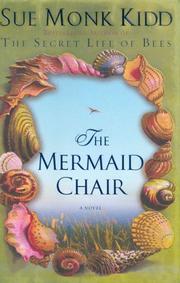 The Mermaid Chair, Sue Monk Kidd
 Hit List, Laurell K. Hamilton
 “Jimmy Cooks”,
  It Ends with Us, Colleen Hoover


