Our front page for July 3 — written and set by The Yesterday Times from the events below. Not an archival document.
Day of the year
184
Days left in 2026
181
In 2026 it falls on a
Friday
Star sign
Cancer
Birthstone
Ruby
On July 3 in 1863, 163 years ago, Lee Repulsed; Great Assault on Cemetery Ridge Fails. This page reports 13 stories from the date, 25 people born on this day.
The stories in full
The War in Pennsylvania
1863 — Lee Repulsed; Great Assault on Cemetery Ridge Fails
Some 12,000 Confederates under Pickett were repulsed, with three days of battle costing between 46,000 and 51,000 casualties.
GETTYSBURG, July 3 — General Robert E. Lee, commanding the Army of Northern Virginia, saw his last great hope perish this afternoon as the Confederate assault upon the center of the Union lines at Cemetery Ridge was shattered by the fire of Major General George G. Meade's Army of the Potomac. The infantry attack, made by some 12,000 troops under General George Pickett, advanced across the open fields under a terrible storm of shot and shell, but the Union defense held firm, and the gray columns broke and fell back in confusion. Fighting had resumed at dawn on Culp's Hill, and cavalry engagements raged east and south of the town throughout the day. The three days of battle have cost between 46,000 and 51,000 men killed, wounded, and missing, the most severe loss ever suffered in an American engagement.
Pickett's Charge involved a Confederate infantry assault of approximately 12,000 troops against the Union center at Cemetery Ridge.
The three-day Battle of Gettysburg claimed between 46,000 and 51,000 combined casualties, the most in any American battle up to that time.
Union Major General George Meade's Army of the Potomac defeated attacks by Confederate General Robert E. Lee's Army of Northern Virginia.
Lee's invasion of the North was halted, forcing his retreat from Gettysburg on July 4, 1863.
On July 3, fighting resumed on Culp's Hill and cavalry battles raged east and south of Gettysburg.
National Affairs
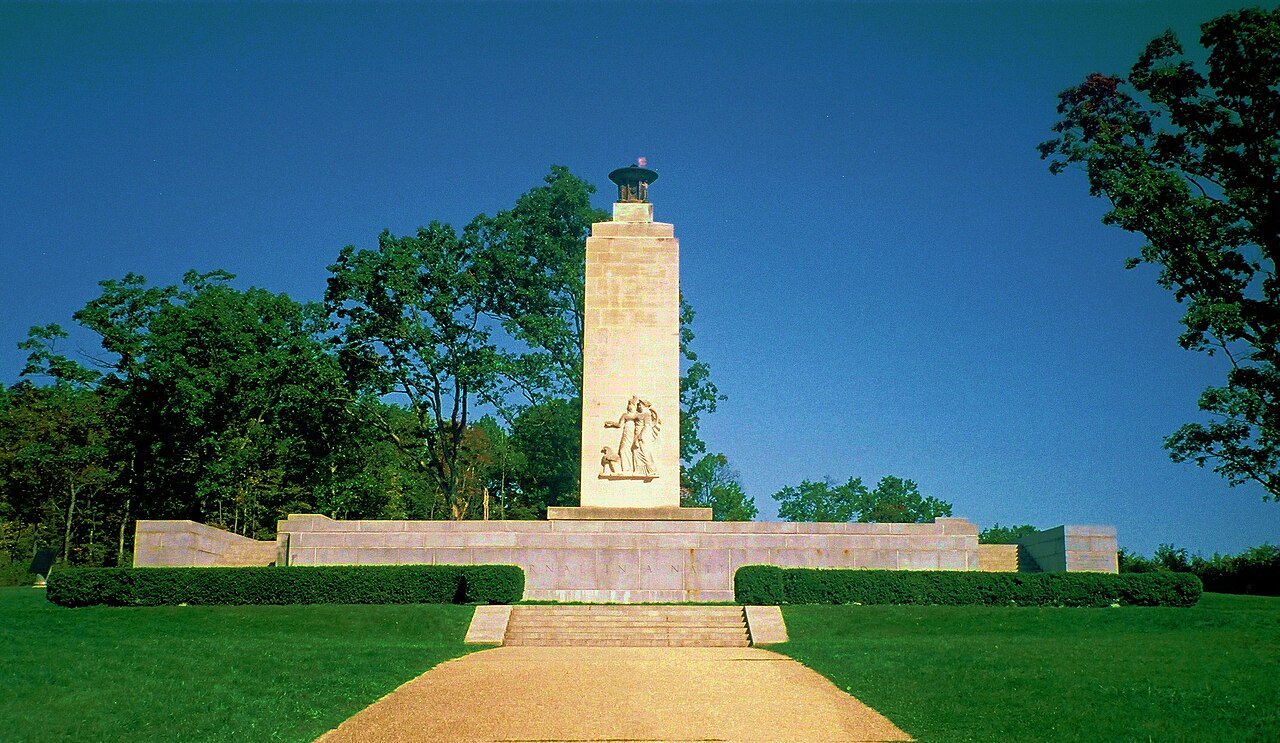
1938 — Roosevelt Dedicates Peace Memorial at Gettysburg on 75th Anniversary
Roosevelt dedicates memorial as 25 veterans, average age 94, attend.
GETTYSBURG, Pa., July 3 — Seventy-five years after the guns fell silent, President Franklin D. Roosevelt today dedicated the Eternal Light Peace Memorial on the battlefield, addressing the assembled thousands in a reunion speech before drawing aside the veil. The memorial, with its observation deck 75 feet above Big Round Top and a flame burning 30 feet higher, stood as a symbol of reconciliation. But the day's most moving sight was the 25 veterans of the battle, their average age 94, who attended — all that remain of the 8,000 living comrades of 1863.
President Franklin D. Roosevelt delivered a July 3 reunion address before unveiling the Eternal Light Peace Memorial.
A newsreel with part of Roosevelt's address was included in the Westinghouse Time Capsule for the 1939 New York World's Fair.
The memorial plan included an observation deck 75 feet above the Big Round Top summit and a flame 30 feet higher.
Approximately 25 veterans of the Battle of Gettysburg attended the 75th anniversary reunion, out of 8,000 living veterans.
The attending veterans averaged 94 years of age.
Pop Music Desk
1973 — Bowie Retires Ziggy Stardust in London Farewell
Surprise announcement shocks Hammersmith Odeon crowd — 17-month tour ends.
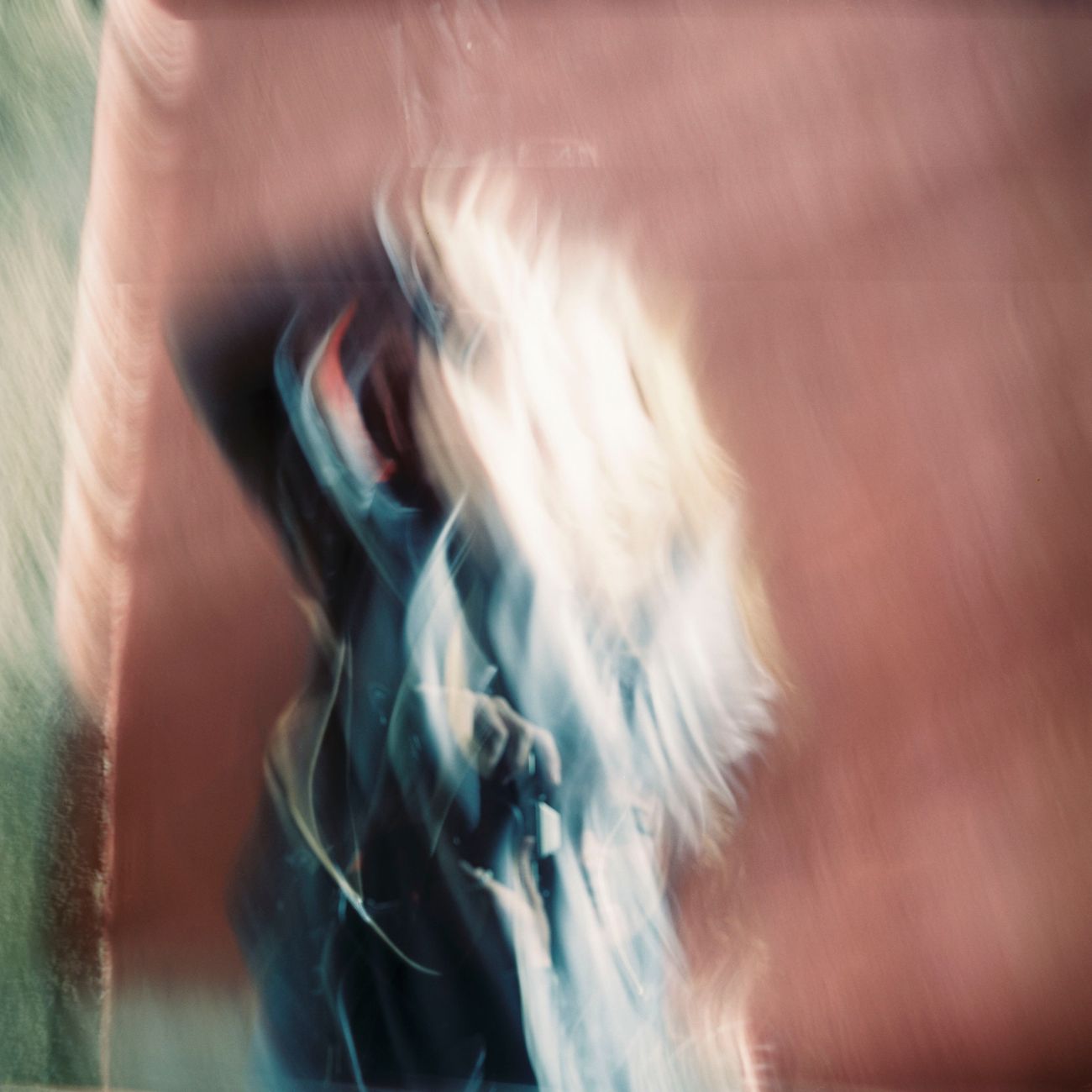
David Bowie performs his final concert as Ziggy Stardust — Efe Ersoy
LONDON, July 3 — David Bowie retired his stage persona Ziggy Stardust in a surprise announcement tonight at the Hammersmith Odeon, bringing a 17-month tour to a close. The audience, which had packed the theater for the final British concert, was shocked when the singer told them the character would appear no more.
David Bowie retired his Ziggy Stardust persona on July 3, 1973, at the Hammersmith Odeon in London.
The audience at the Hammersmith Odeon was shocked by Bowie's announcement.
Bowie's retirement of Ziggy Stardust occurred at the end of his British tour.
Affairs of the Colonies
1754 — Washington Surrenders Fort Necessity to French
Colonel yields after daylong fight — allowed to withdraw with arms.
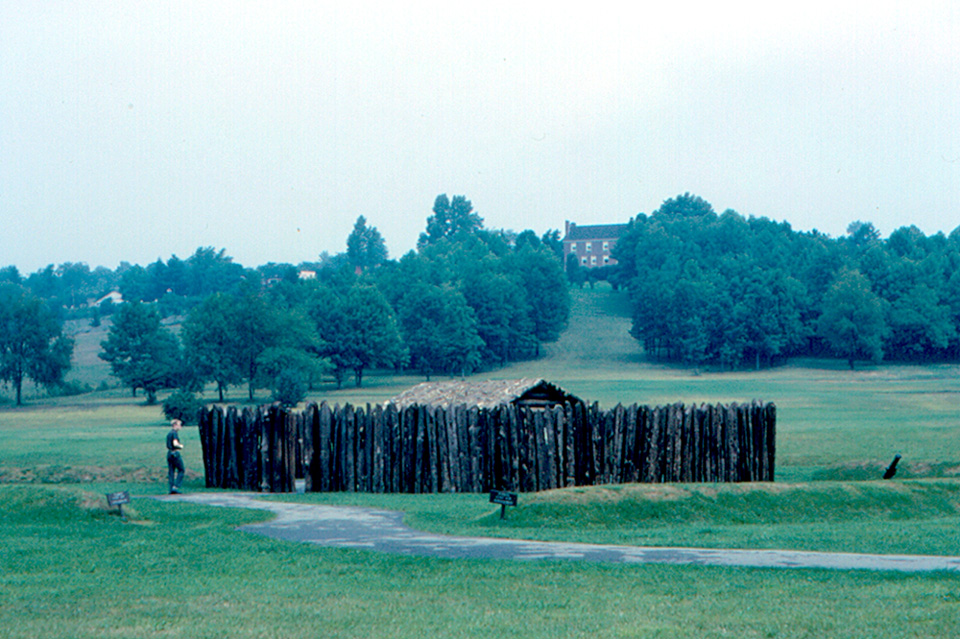
The reconstructed Fort Necessity, site of George Washington's only military surrender in 1754 — roger4336
GREAT MEADOWS, July 3 — The stockade at Fort Necessity stands silent tonight, its flag lowered, as Colonel George Washington has surrendered the post to a Canadian force led by the brother of the French officer slain in the May ambush.
Washington surrendered at Fort Necessity on July 3, 1754, and negotiated a withdrawal under arms.
The attacking Canadian force was led by Jumonville's brother, the brother of the French officer killed in the May ambush.
Shawnee, Delaware, and Mingo warriors accompanied the Canadian force at the Battle of Fort Necessity.
Naval War Desk
1940 — Royal Navy Sinks French Battleship at Mers El Kébir
British strike sinks a French battleship and damages five other vessels, killing 1,297 servicemen.
LONDON, July 3 — The Royal Navy's stroke at Mers El Kébir has shattered the French fleet's power in the Mediterranean, with 1,297 French servicemen killed and a battleship sent to the bottom. Admiral James Somerville, commanding Force H from Gibraltar, delivered an ultimatum to Admiral Marcel-Bruno Gensoul; when it was refused, his ships opened fire, part of Operation Catapult. Five other French vessels were damaged. British losses were five aircraft and two crewmen. Vichy France severed diplomatic relations with Britain on July 3.
The attack killed 1,297 French servicemen and sank a battleship, damaging five other ships.
British losses were five aircraft shot down and two crewmen killed.
The attack was part of Operation Catapult, a British plan to neutralize French ships after the French armistice with Germany.
Admiral James Somerville, commander of Force H based in Gibraltar, delivered an ultimatum to French Admiral Marcel-Bruno Gensoul.
Vichy France severed diplomatic relations with the United Kingdom on 8 July 1940 following the attack.
Maritime Engineering
1952 — SS United States Wins Blue Riband on Maiden Voyage
American liner sets record Atlantic crossing — speed title remains uncontested.
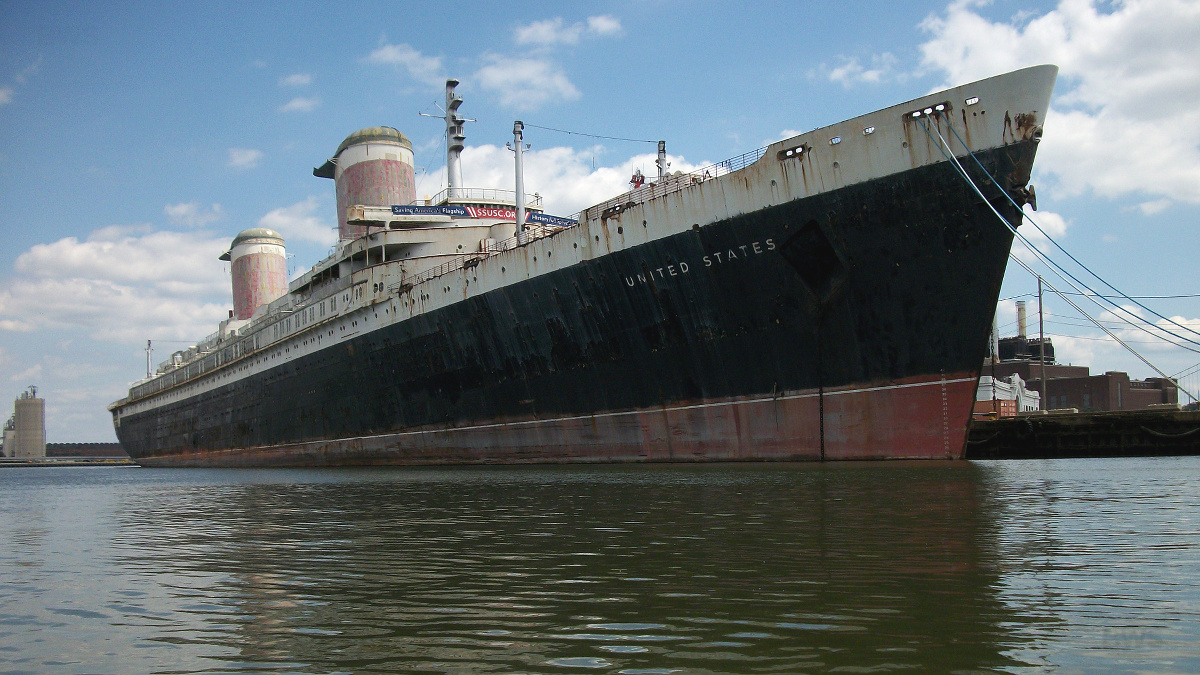
The SS United States, the record-breaking ocean liner that captured the Blue Riband — Brian W. Schaller
NEW YORK, July 3 — In the annals of the Atlantic passage, no ship has matched the performance of the SS United States, which on her maiden voyage earned the Blue Riband for the highest average speed, a title that remains uncontested. Designed by William Francis Gibbs, she could be converted into a troopship for the Navy. Her construction cost $71.08 million, of which US Lines paid $25 million and the government $45 million.
SS United States earned the Blue Riband for the highest average speed on her maiden voyage in 1952, a title that remains uncontested.
The ship was designed by American naval architect William Francis Gibbs and could have been converted into a troopship if required by the US Navy.
Her construction cost was $71.08 million, with US Lines contributing $25 million and the US government $45 million.
The ship's funnels, standing 55 feet tall and 60 feet wide, were the largest ever put to sea and made of lightweight aluminum.
SS United States was the largest ocean liner entirely constructed in the United States and the first built in a dry dock.
Persian Gulf Watch
1988 — Vincennes Downs Iranian Airliner, 290 Dead
Missiles fired at 10:24 a.m. — 66 children among victims as warship mistakes Airbus for F-14.
ABOARD USS VINCENNES, July 3 — The cruiser Vincennes fired two SM-2MR missiles at 10:24 a.m. and shot down Iran Air Flight 655, killing all 290 people aboard. The airliner, an Airbus A300 registered EP-IBU, was flying from Bandar Abbas to Dubai when the crew misidentified it as an attacking F-14 Tomcat. Among the dead are 66 children and a family of 16. The United States has since paid $61.8 million on an ex gratia basis to the victims' families and provided two Airbus A300s to Iran. Pentagon officials said the crew mistook the airliner for an Iranian F-14 at close range. Iran has demanded a formal apology.
USS Vincennes fired two SM-2MR surface-to-air missiles at 10:24 a.m., shooting down Iran Air Flight 655.
All 290 passengers and crew on board were killed, including 66 children and a family of 16.
The aircraft was an Airbus A300, registered as EP-IBU, flying from Bandar Abbas to Dubai.
Vincennes misidentified the civilian airliner as an attacking F-14 Tomcat fighter jet.
The United States paid US$61.8 million on an ex gratia basis to the victims' families and two Airbus A300s to Iran.
Frontier Chronicle
1778 — Butler's Rangers, Iroquois Slay 300 Patriots in Wyoming Valley
Colonel Denison counted 302 killed in the thirty-minute battle, while Major Butler reported 227 scalps and five prisoners.
WYOMING VALLEY, July 3 — Over 300 Patriots lie dead here after Loyalists and Iroquois swept through the valley in a thirty-minute battle. Major Butler, commanding 110 Butler's Rangers and 464 Seneca and Cayuga warriors led by Sayenqueraghta and Cornplanter, met the Patriot force of roughly 375 men sallied from Forty Fort. Major Butler reported 227 scalps and five prisoners, while Colonel Denison counted 302 killed.
The battle took place in the Wyoming Valley of Pennsylvania on July 3, 1778, in what is now Luzerne County.
Major Butler commanded 110 Butler's Rangers and 464 Indigenous warriors, mostly Seneca and Cayuga led by Sayenqueraghta and Cornplanter.
The Patriot force of roughly 375 men sallied from Forty Fort and the battle lasted about 30 minutes.
Major Butler reported his Indigenous allies took 227 scalps and five prisoners, while Colonel Denison informed him 302 had been killed.
Major Butler claimed his force burned 1,000 houses and drove off 1,000 cattle as well as many sheep and hogs.
Imperial Despatches
324 — Constantine Smashes Licinius at Adrianople; Rival Flees to Asia
Outnumbered army marches under labarum — Goth auxiliaries fail — Caesar appointed in haste
ADRIANOPLE, July 3 — Constantine, Emperor of the West, has defeated his former colleague Licinius in a great battle before this city, and the vanquished sovereign has fled across the Bosphorus.
Constantine's army, though supposedly outnumbered, was fired by religious zeal and advanced under the labarum, the standard of the Christian monogram. Licinius, aided by Gothic mercenaries, saw the struggle no less in religious terms.
After the rout, Licinius appointed his bodyguard commander, Martius Martinianus, as Caesar, a desperate expedient to rally his cause.
Constantine's supposedly outnumbered army, fired by zeal, defeated Licinius at the Battle of Adrianople.
Constantine's army marched under the labarum, while Licinius was aided by Goth mercenaries.
Both sides saw the Battle of Adrianople in religious terms.
After his defeat at Adrianople, Licinius fled across the Bosphorus.
Licinius appointed his bodyguard commander Martius Martinianus as Caesar after the battle.
Cairo Bureau
2013 — Military Ousts Morsi, Suspends Constitution; Chief Justice Installed
General Sisi cites failure to meet demands — protests swelled after June 30 — interim rule begins
CAIRO, July 3 — The television screen flickered with the uniformed figure of General Abdel Fattah el-Sisi, and the capital held its breath.
The general announced that President Mohamed Morsi had "failed to meet the demands of the Egyptian people" and that the military was suspending the 2012 constitution.
Mass demonstrations on 30 June 2013 protested the policies of democratically-elected President Mohamed Morsi.
The Egyptian military issued a 48-hour ultimatum on television, giving political parties until 3 July to meet demands.
On 3 July 2013, Sisi announced on TV that Morsi had 'failed to meet the demands of the Egyptian people' and suspended the constitution.
The army installed Chief Justice Adly Mansour as interim head of state until a new president could be elected.
The dispersal of pro-Morsi sit-ins resulted in about 800 to 1,000 protesters killed and nearly 19,000 arrested.
National Security Desk
1979 — Carter Authorizes Covert Aid to Afghan Rebels
President Carter signs a finding on July 3 to aid Afghan rebels covertly.
WASHINGTON, July 3 — The United States has quietly entered the Afghan resistance. President Carter signed a presidential finding on July 3 authorizing covert operations to aid the mujahideen against the Soviet-backed Democratic Republic of Afghanistan.
On July 3, 1979, Carter signed the first presidential directive authorizing covert aid to Afghan mujahideen.
The aid was channeled through Pakistan's Inter-Services Intelligence to opponents of the pro-Soviet regime.
Carter authorized the covert assistance months before the Soviet invasion of Afghanistan in December 1979.
Europe Desk
2005 — Spain Legalizes Same-Sex Marriage
Law takes effect after parliamentary vote in Europe's third nation to do so
MADRID, July 3 — In a Europe that has moved fitfully toward equality, Spain has now taken its place at the vanguard. The Cortes Generales approved the measure 187–147 on June 30, making Spain the third nation worldwide to do so.
The law permitting same-sex marriage was passed by the Cortes Generales by a vote of 187–147 on June 30, 2005.
Spain became the third country in the world to legalize same-sex marriage nationwide, after the Netherlands and Belgium.
The first same-sex wedding took place eight days after the law took effect, in Tres Cantos, between Carlos Baturín and Emilio Menéndez.
Approximately 4,500 same-sex couples married in Spain during the first year of the law.
The law allows a Spanish citizen to marry a non-Spaniard regardless of whether that person's homeland recognizes the union.
Ulster Desk
1970 — 3,000 Troops Impose Falls Curfew
3,000 troops imposed a two-day curfew in Belfast's Lower Falls area, leaving four civilians dead.
LONDON, July 3 — The British Army, with 3,000 troops, imposed a two-day curfew on the nationalist Lower Falls area of Belfast, a weapons search that erupted into gun battles with the Official IRA and left four civilians dead.
3,000 British troops imposed a two-day curfew in the nationalist Lower Falls area of Belfast as part of a weapons search.
Four civilians were killed during the Falls Curfew in July 1970.
The British Army fired over 1,500 rounds of ammunition during the Falls Curfew operation.
The curfew was described at the time as 'an inflamed sectarian one, which is being deliberately exploited by the IRA and other extremists.'
The army faced sporadic riots and gun battles with the Official IRA during the curfew.
What the papers printed that morning
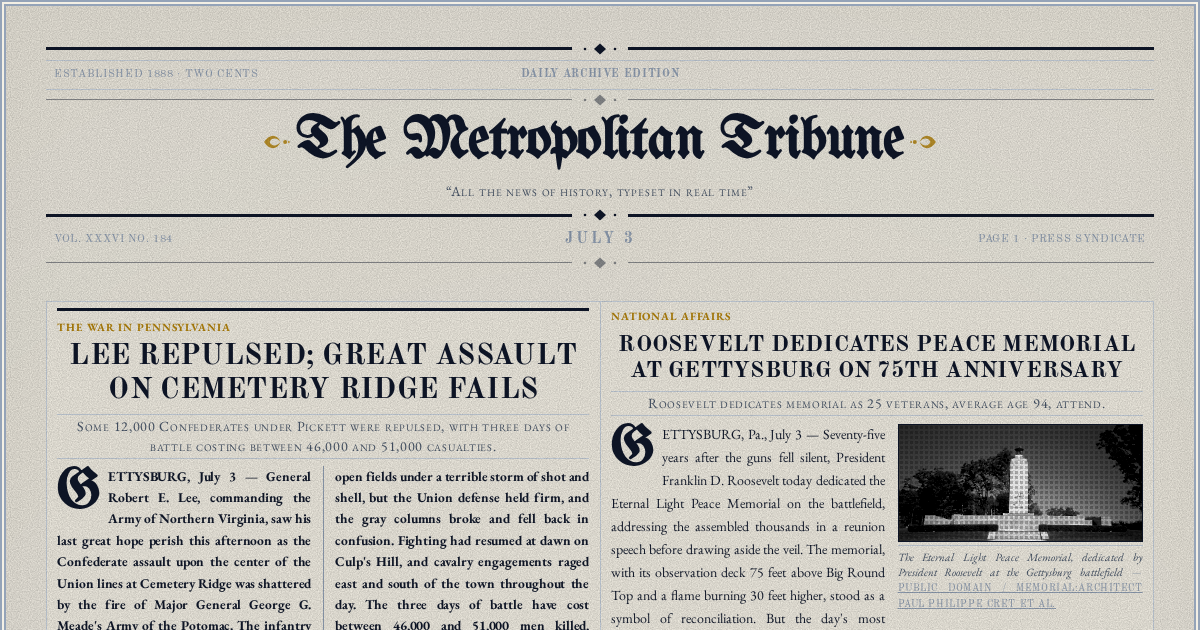
Real front pages from 3 July 1863, scanned by the Library of Congress. These are archival documents, not our work.
The President's Daughter, Bill Clinton and James Patterson
Famous birthdays on July 3
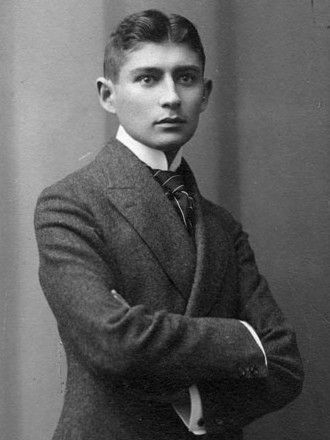
1883Franz KafkaFranz Kafka was a German-language Jewish Czech writer and novelist born in Prague, in the Austro-Hungarian Empire.
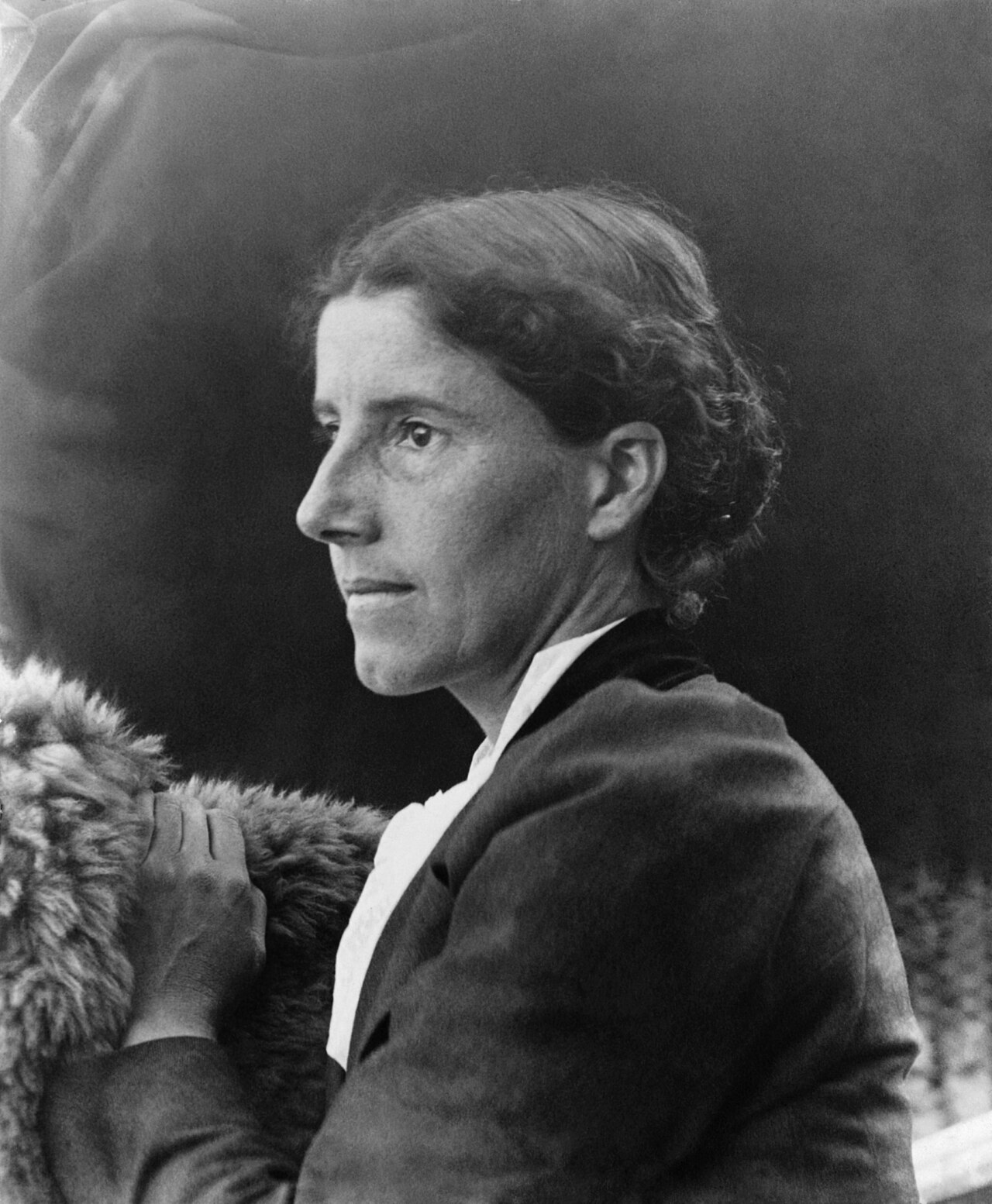
1860Charlotte Perkins GilmanCharlotte Anna Perkins Gilman, also known by her first married name Charlotte Perkins Stetson, was an American humanist, novelist, writer, lecturer, early sociologist, and advocate for social reform.
1970Teemu Selänne(56 this year)Teemu Ilmari Selänne is a Finnish former professional ice hockey player.
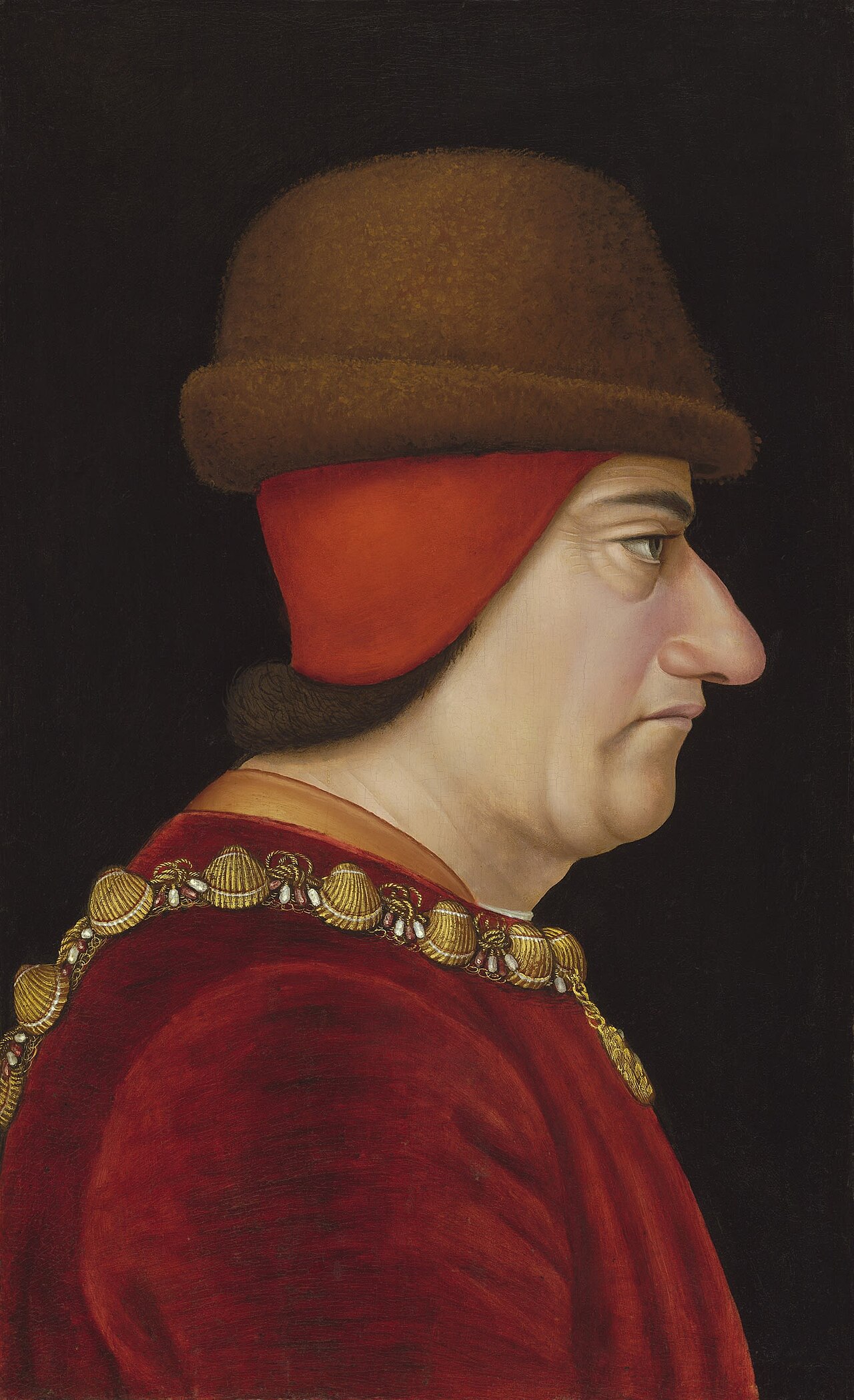
1423Louis XILouis XI, called the Prudent, was King of France from 1461 to 1483.
1738John Singleton CopleyJohn Singleton Copley was an American-born British painter active in both the Thirteen Colonies and England.
1906George SandersGeorge Henry Sanders was a Russian-born British actor and singer whose career spanned over 40 years.
1908M. F. K. FisherMary Frances Kennedy Fisher Parrish Friede, writing as M.F.K. Fisher, was an American food writer.
1685Sir Robert RichField Marshal Sir Robert Rich, 4th Baronet was a British Army officer and politician.
1778Carl Ludvig EngelCarl Ludvig Engel or Johann Carl Ludwig Engel was a German architect and the first internationally renowned architect to work in Finland.
1823Ahmed Vefik PashaAhmed Vefik Pasha was an Ottoman statesman, diplomat, scholar, playwright, and translator during the Tanzimat and First Constitutional Era periods.
1879Alfred KorzybskiAlfred Habdank Skarbek Korzybski was a Polish-American philosopher and independent scholar who developed a field called general semantics, which he viewed as both distinct from, and more encompassing than, the field of semantics.
1903Ace BaileyIrvine Wallace "Ace" Bailey was a Canadian professional ice hockey player.
1913Dorothy KilgallenDorothy Mae Kilgallen was an American columnist, journalist, and television game show panelist.
1916John KundlaJohn Albert Kundla was an American college and professional basketball coach.
1924S. R. NathanSellapan Ramanathan, often known as S. R. Nathan, was a Singaporean civil servant, diplomat and politician who served as the sixth president of Singapore between 1999 and 2011.
1925Terry MoriartyTerrence Brian "Terry" Moriarty was an Australian rules footballer who played with the Perth Football Club in the West Australian National Football League (WANFL).
1930Carlos KleiberCarlos Kleiber was a German-born Austrian conductor, who is widely regarded as among the greatest conductors of all time.
1936Anthony LesterAnthony Paul Lester, Baron Lester of Herne Hill, QC was a British barrister and member of the House of Lords.
1937Tom StoppardSir Tom Stoppard was a British playwright and screenwriter.
1943Kurtwood Smith(83 this year)Kurtwood Larson Smith is an American actor.
1950James Hahn(76 this year)James Kenneth Hahn is a Los Angeles Superior Court judge and an American former lawyer and politician.
1951Jean-Claude DuvalierJean-Claude Duvalier, nicknamed "Baby Doc", was a Haitian dictator who held the presidency of Haiti from 1971 until he was overthrown by a popular uprising in February 1986.
1952Amit Kumar(74 this year)Amit Kumar is an Indian playback singer, music composer and actor.
1956Montel Williams(70 this year)Montel Brian Anthony Williams is an American television host and actor.
1958Aaron Tippin(68 this year)Aaron Dupree Tippin is an American country music singer, songwriter and record producer.
Quote of the Day
“I celebrate myself, and sing myself.” — Walt Whitman, Leaves of Grass
July 3 History Quiz
Which battle ended on July 3, 1863, with a Confederate defeat?
Battle of Gettysburg
What was the name of the passenger jet shot down by USS Vincennes on July 3, 1988?
Iran Air Flight 655
Which country legalized same-sex marriage on July 3, 2005?
Every event on this page was picked by hand from the historical record, written up as a news report, and checked against its source. Photographs are matched to the event they illustrate and verified before they are used. Sources are linked on each story.

![Front page of New-York daily tribune, New-York [N.Y.], 3 July 1863](https://tile.loc.gov/image-services/iiif/service:ndnp:dlc:batch_dlc_basic_ver02:data:sn83030213:00206530741:1863070301:0405/full/pct:50/0/default.jpg)


 The Agony and the Ecstasy, Irving Stone
 The Passions of the Mind, Irving Stone
 “Don't You Want Me”,
  The Parsifal Mosaic, Robert Ludlum
 The Bridges of Madison County, Robert James Waller
 “Burn”,
  Song of Susannah, Stephen King
 “California Gurls”,
  “Butter”,
  The President's Daughter, Bill Clinton and James Patterson