Our front page for July 14 — written and set by The Yesterday Times from the events below. Not an archival document.
Day of the year
195
Days left in 2026
170
In 2026 it falls on a
Tuesday
Star sign
Cancer
Birthstone
Ruby
On July 14 in 1789, 237 years ago, Bastille Falls to the People of Paris. This page reports 10 stories from the date, 25 people born on this day.
The stories in full
City Intelligence
1789 — Bastille Falls to the People of Paris
After four hours of combat and 94 deaths, the insurgents enter the fortress — the governor and several of the garrison are slain after surrendering — the prison yields but seven inmates.
PARIS, July 14 — In the annals of this capital, few days have borne so great a weight as this, when the ancient fortress of the Bastille, long the emblem of royal authority, was taken by the people of Paris. After four hours of desperate fighting, in which 94 persons lost their lives, the insurgents forced their way within the walls. The governor, Bernard-René Jourdan de Launay, and several of the garrison, having surrendered, were slain by the enraged multitude. Within the prison were found but seven inmates, a meagre company for so formidable a citadel.
The storming of the Bastille occurred in Paris, France, on 14 July 1789.
After four hours of fighting and 94 deaths, the insurgents entered the Bastille.
Governor Bernard-René Jourdan de Launay and several garrison members were killed after surrendering.
The prison contained only seven inmates at the time of its storming.
Alpine Intelligence
1865 — Whymper's Triumph and Tragedy on the Matterhorn
Whymper reaches the summit at 1:40 p.m., but Hadow's slip on the descent kills four, and an inquiry clears the survivors of cutting the rope.
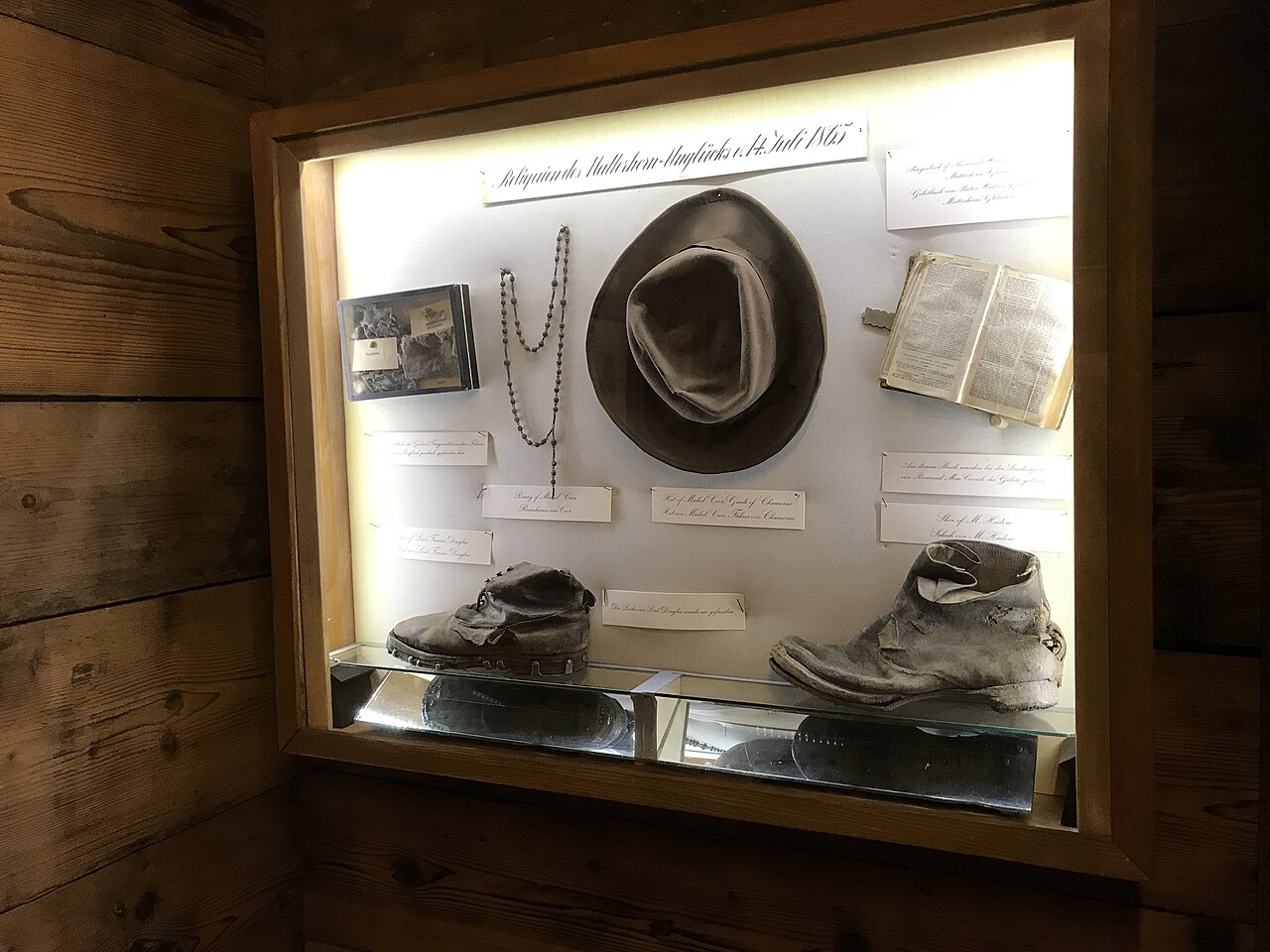
Relics from the 1865 Matterhorn expedition, displayed at the Zermatt Matterhorn Museum — Adrian Michael
ZERMATT, July 14 — Edward Whymper, the English mountaineer, has achieved the first ascent of the Matterhorn, but the triumph is shadowed by a catastrophe that has cost the lives of four of his companions. Whymper, with Lord Francis Douglas, Charles Hudson, Douglas Hadow, the guide Michel Croz, and the two Taugwalder guides, stood upon the summit at 1:40 p.m., finding no foot traces, and descried the rival Jean-Antoine Carrel 200 meters below on the Italian side. The descent, however, proved fatal: Hadow slipped, dragging Douglas, Hudson, and Croz down the north face to their deaths. Whymper and the Taugwalders, surviving, were acquitted after an inquiry found no evidence they cut the rope to save themselves. The Matterhorn, 4,478 meters above sea level, was the last great Alpine peak, and its conquest closes the golden age of alpinism. Relics of the expedition are preserved at the Zermatt Matterhorn Museum, and the disaster has since been portrayed in several films. The Italian rival Carrel, the story of the Matterhorn now belongs to the English. The bodies of the fallen have not yet been recovered from the glacier.
Edward Whymper, Lord Francis Douglas, Charles Hudson, Douglas Hadow, Michel Croz, and two Zermatt guides made the first ascent on 14 July 1865.
Four climbers—Douglas, Hudson, Hadow, and Croz—were killed on the descent when Hadow slipped and pulled the others down the north face.
Whymper and the Taugwalder guides were acquitted after an inquiry found no evidence they cut the rope to save themselves.
Whymper and Croz reached the summit at 1:40 p.m., finding no foot traces, and saw rival Jean-Antoine Carrel 200 meters below on the Italian side.
The Matterhorn, 4,478 meters above sea level, was the last great Alpine peak climbed, marking the end of the golden age of alpinism.
Western Despatches
1881 — Billy the Kid Slain by Sheriff Garrett
The outlaw, aged 21, is shot and killed in Fort Sumner — he had escaped from jail on April 28, killing two deputies, and was under sentence of death for the murder of Sheriff Brady.
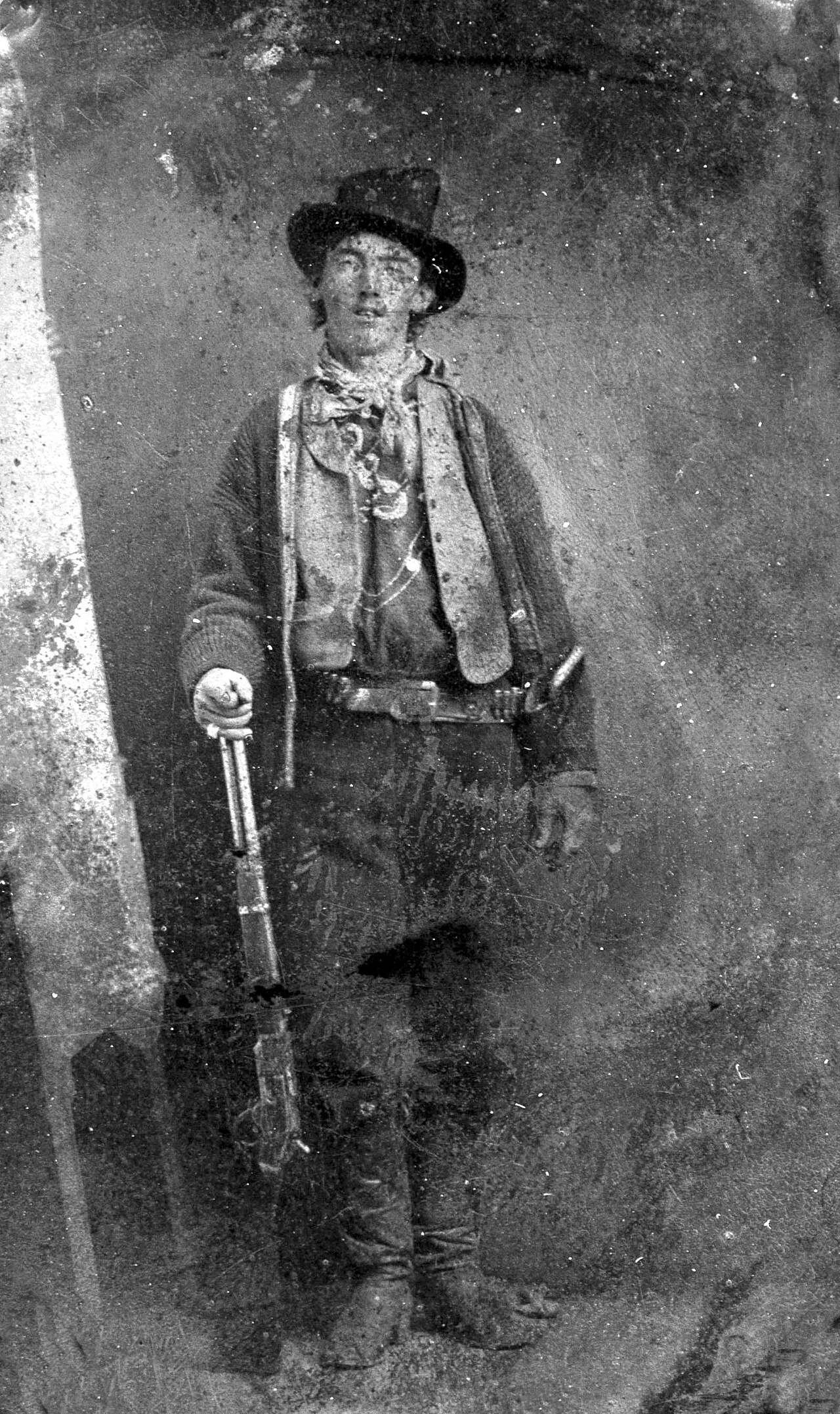
The outlaw, aged 21, is shot and killed in Fort Sumner — he had escaped from jail on April 28, killing two deputies, and was under sentence of death for the murder of Sheriff Brady. — Ben Wittick (1845–1903)
FORT SUMNER, New Mexico, July 14 — William H. Bonney, known throughout the territories as Billy the Kid, was shot and killed last night by Sheriff Pat Garrett. The desperado, aged 21, had been a fugitive since his escape from jail on April 28, during which he slew two sheriff's deputies. He was under sentence of death for the murder of Sheriff William J. Brady, having been convicted in May. Garrett, who had tracked him to a friend’s house, fired the fatal shot in the dark without warning.
Sheriff Pat Garrett shot and killed Billy the Kid in Fort Sumner on July 14, 1881.
Billy the Kid, aged 21, had escaped from jail on April 28, 1881, killing two sheriff's deputies.
Garrett wrote a biography of Billy the Kid, published in 1882, to correct 'thousand false statements' in newspapers.
Billy the Kid was convicted of murdering Lincoln County Sheriff William J. Brady and sentenced to hang in May 1881.
The Las Vegas Gazette and The Sun in New York City carried stories about Billy the Kid's crimes in December 1880.
Peruvian Explorations
1902 — Lizarraga Discovers Inca City of Machu Picchu
The Peruvian explorer, with three companions, finds stone walls after hours of trekking through undergrowth — he inscribes his name on the Temple of the Three Windows.
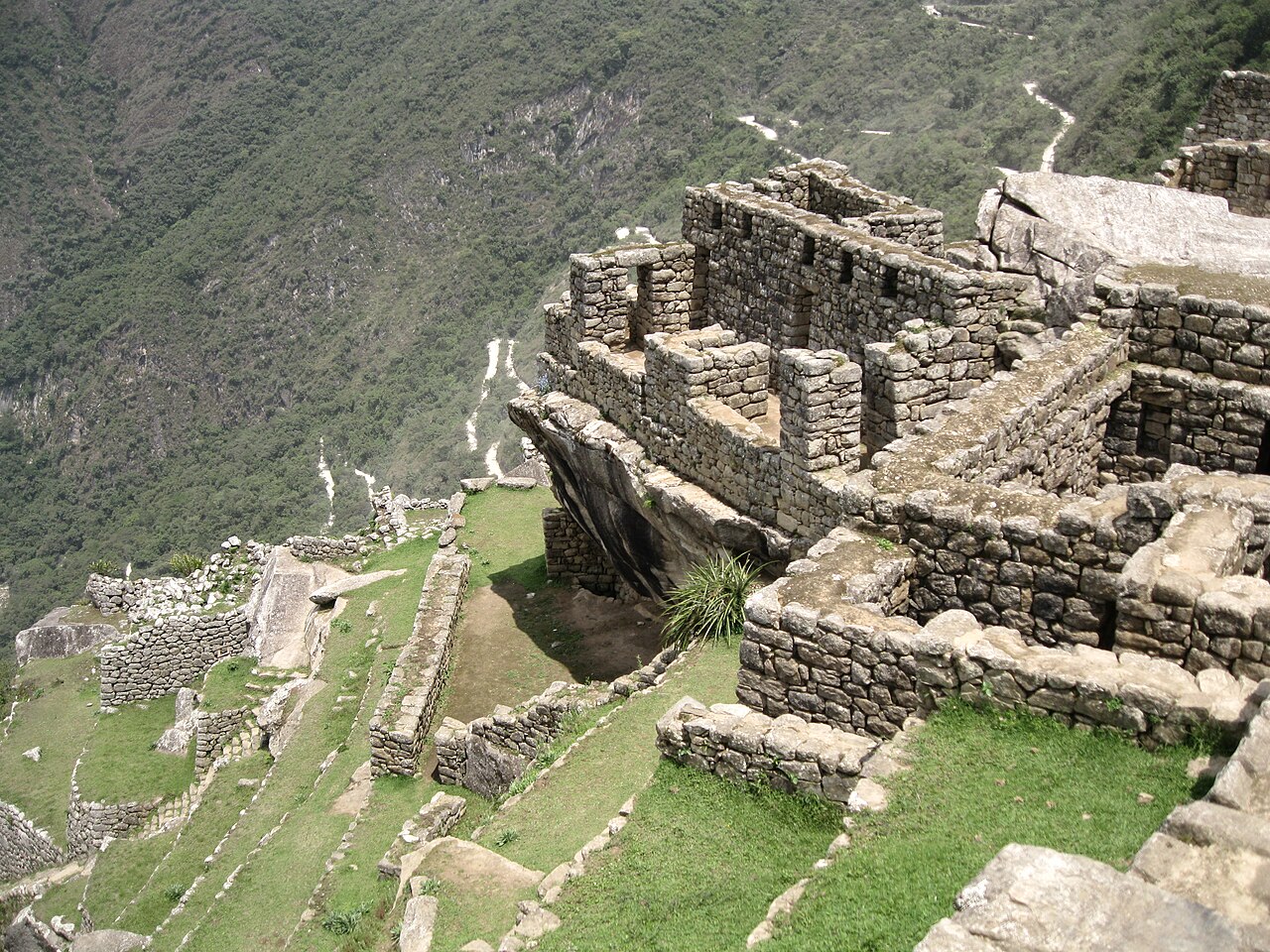
The Incan citadel of Machu Picchu, discovered by Peruvian explorer Agustin Lizarraga — Rodrigo.Argenton
CUSCO, July 14 — Agustín Lizárraga, a Peruvian explorer and farmer, leading an expedition from the hacienda Collpani, has discovered the ancient Inca city of Machu Picchu. Accompanied by Enrique Palma, Toribio Recharte, and Gabino Sánchez, Lizárraga, after hours of walking through undergrowth, came upon stone walls and inscribed "A. Lizárraga 1902" with charcoal on a stone of the Temple of the Three Windows.
Agustín Lizárraga led an expedition to Machu Picchu on 14 July 1902, accompanied by workers from the hacienda Collpani.
Lizárraga, with Enrique Palma, Toribio Recharte, and Gabino Sánchez, discovered stone walls after hours of walking through undergrowth.
He inscribed "A. Lizárraga 1902" with charcoal on a stone of the Temple of the Three Windows.
American explorer Hiram Bingham later discovered Lizárraga's inscription in 1911 and ordered its removal for preservation.
In 2002, former Mayor of Cusco Daniel Estrada sought official recognition of Lizárraga and others as discoverers of Machu Picchu.
National Security Desk
2003 — CIA Officer's Identity Revealed by Columnist
Washington columnist Robert Novak names a covert CIA officer in print — the leak draws scrutiny from the Justice Department and threatens a diplomatic row over Iraq intelligence.
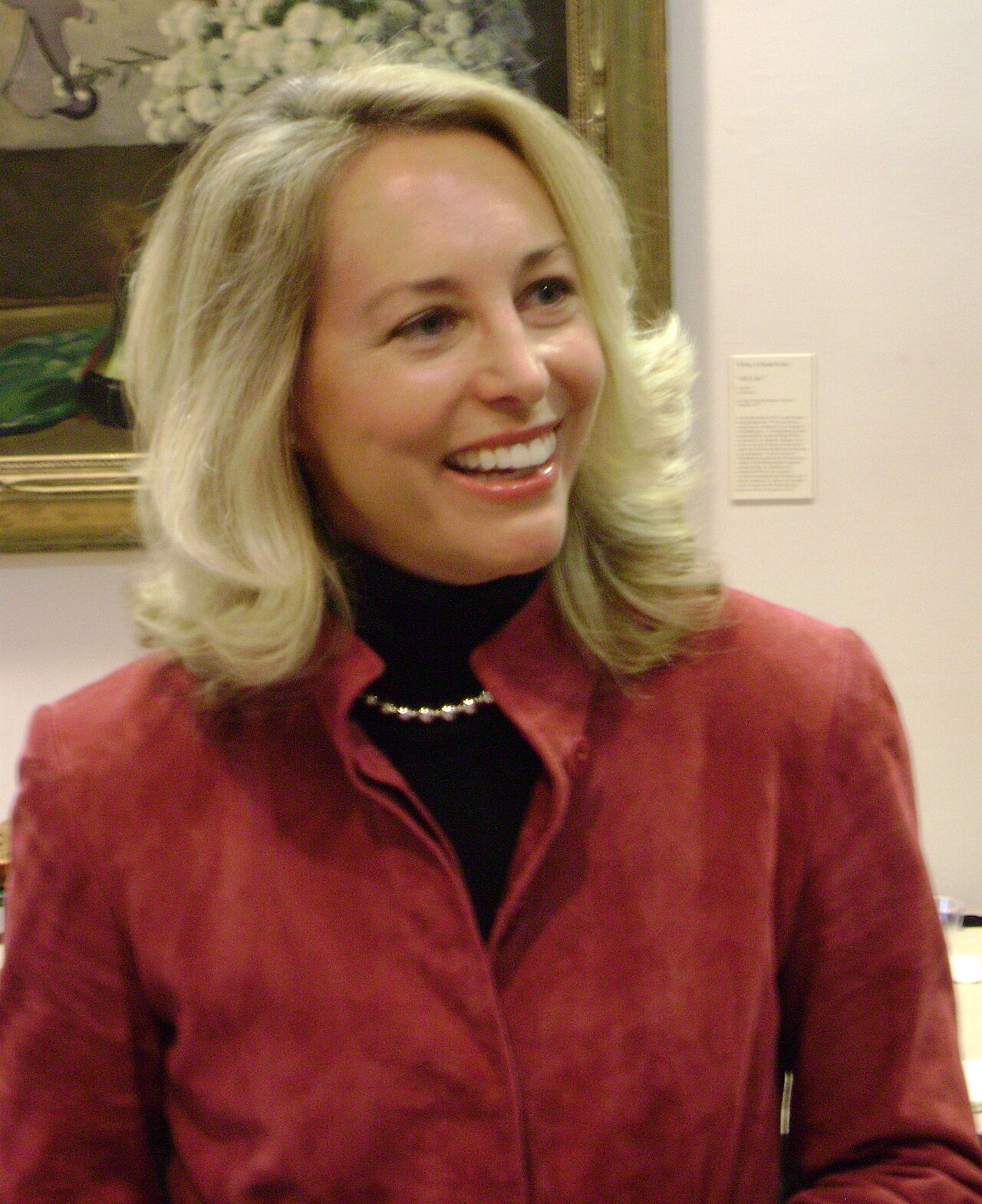
Washington columnist Robert Novak names a covert CIA officer in print — the leak draws scrutiny from the Justice Department and threatens a diplomatic row over Iraq intelligence. — Hunter Kahn
WASHINGTON, July 14 — In a column published this morning, syndicated Washington Post columnist Robert Novak revealed the identity of Valerie Plame as a covert CIA officer, three days after her husband, former Ambassador Joseph Wilson, publicly challenged the administration's Iraq intelligence claims. Novak wrote that Plame's employment was disclosed to him by administration officials, whom he described as 'two senior administration officials' — information that has since prompted the Justice Department to open an inquiry into the leak.
Plame's status as a CIA operative was classified from January 2002 through July 2003, according to a statement from Special Counsel Patrick Fitzgerald, who was later appointed to investigate the disclosure. The leak, Fitzgerald said, was part of a plan to discredit Wilson, who had traveled to Niger in 2002 to investigate reports that Iraq sought uranium there; he found no evidence to support them.
Novak's column named Plame, saying she 'is an agency operative on weapons of mass destruction,' and noted that Wilson's wife had suggested him for the Niger trip. The disclosure has ignited a political firestorm, with Democrats accusing the White House of retaliating against a critic, and Republicans pointing to Wilson's own admissions that his wife recommended him.
State Department official Richard Armitage, White House political adviser Karl Rove, and Vice President Dick Cheney's chief of staff, I. Lewis 'Scooter' Libby, have all been identified in news reports as sources for Novak's column.
On July 14, 2003, Washington Post columnist Robert Novak revealed Valerie Plame's identity as a CIA operative.
Novak obtained the information from State Department official Richard Armitage, Karl Rove, and Scooter Libby.
Scooter Libby, Chief of Staff to Vice President Dick Cheney, was convicted of lying to investigators about the leak.
President George W. Bush commuted Libby's sentence; President Donald Trump later pardoned him in 2018.
Special Counsel Patrick Fitzgerald affirmed that Plame's CIA association was classified from January 2002 through July 2003.
Venice Chronicle
1902 — Venice's Ancient Campanile Falls; Cat Sole Victim
The great bell tower of St Mark's crashes down at nine in the morning, destroying the Loggetta and a corner of the Marciana Library — the communal council votes to rebuild it as before.
VENICE, July 14 — The heart of Venice was struck silent this morning when the venerable Campanile of St Mark's, which had stood for a thousand years as the city's watchtower and bell tower, collapsed into a heap of rubble at 9:53 o'clock. The disaster, which sent a cloud of dust over the Piazza, demolished the Loggetta del Sansovino at its base and shattered a corner of the Marciana Library. Miraculously, the only loss of life was the custodian's cat; the square had been nearly empty, and the few persons nearby fled in time.
At 9:53 AM on July 14, 1902, the entire St Mark's Campanile collapsed in Venice.
The sole fatality from the collapse was the custodian's cat.
The collapse completely demolished the loggetta and destroyed a corner of the Marciana Library.
That evening, Venice's communal council voted unanimously to rebuild the tower exactly as it had been.
The council approved an initial 500,000 lire for the reconstruction; the province added 200,000 lire on July 22.
From the Western Front
1916 — South Africans Storm Delville Wood in Somme Offensive
On the 15th, the 1st South African Infantry Brigade, in its first Western Front action, captures the wood east of Longueval during the Battle of Bazentin Ridge, which began on the 14th.
ON THE SOMME, July 14 — The great British offensive on the Somme, now in its second fortnight, has entered a new and bloody phase with the assault on Delville Wood, a dense tangle of beech and hornbeam east of the village of Longueval. There, on the morning of the 15th, the 1st South African Infantry Brigade, making its first appearance on the Western Front, carried the wood after a fierce engagement. The attack was part of the Battle of Bazentin Ridge, which opened on the 14th and has pressed the German line back toward the woods that crown the ridge.
The Battle of Delville Wood lasted from 15 July to 3 September 1916.
The 1st South African Infantry Brigade made its Western Front début and captured Delville Wood on 15 July.
The South Africans held the wood until 19 July, suffering casualties similar to those of many British brigades on 1 July.
Delville Wood was a thick tangle of beech and hornbeam trees east of Longueval.
The attack was part of the Battle of Bazentin Ridge (14–17 July), a British offensive on the Somme.
The flames, fanned by a hot prairie wind, sweep over 47 acres south of the Loop — the city resolves to reform its fire laws.
CHICAGO, July 14 — The fire that broke out at 4:29 this afternoon in a two-story frame building at No. 449 South Clark Street has, within a few hours, laid waste to 47 acres just south of the Loop, destroying 812 structures and taking 20 lives. The total loss is placed at $3,845,000, of which $2,200,000 was covered by insurance. The heat was oppressive, with the thermometer above 90 degrees.
The fire killed 20 people and destroyed 812 structures over 47 acres just south of the Loop.
The fire originated at 4:29 p.m. on July 14, 1874, in a two-story frame building at 449 South Clark Street.
Losses from the fire amounted to $3,845,000, with insurance coverage of $2,200,000.
The National Board of Underwriters demanded reforms, leading to a temporary cancellation of all fire insurance in Chicago in October 1874.
The fire displaced Jewish immigrants from Russia and Poland and middle-class African-American families to other Chicago neighborhoods.
Royal Court
1223 — Prince Louis Ascends Throne, Vows Crusade Against Heretics
Son of Philip Augustus crowned at Reims — Pope's letter urges action — Truce with England refused
REIMS, July 14 — A reign of three years, no more, is the lot of Louis VIII, who this day holds the French crown, the first of that name to rule. Crowned on the sixth of August, 1223, in the cathedral at Reims, the new king has already received a letter from Pope Honorius III, entreating him to move against the Albigensians.
Louis VIII was crowned king on 6 August 1223 in Reims cathedral.
On 1 November 1223, Louis issued an ordinance prohibiting officials from recording debts owed to Jews.
Louis refused to renew the truce with England on 5 May 1224 and attacked Angevin possessions.
Amalric of Montfort traded his claim on the county of Toulouse to Louis for the position of constable.
In 1223, Louis received a letter from Pope Honorius III entreating him to move against the Albigensians.
Far East Desk
1950 — Reds Attack 24th Division HQ at Taejon
North Koreans strike American command post — First unit in field bears brunt of assault
TAEJON, July 14 — North Korean troops attacked the headquarters of the American 24th Infantry Division here today, pressing their drive against the first unit to respond at the outbreak of the Korean War. The assault on the command post marked a grave new phase in the battle for this key city. The 24th has borne the enemy’s heaviest blows since the conflict began. The command post assault came as Chinese-speaking broadcasters warned of a fresh enemy push along the Kum River line. Fighting raged through the afternoon, with division officers said to have fallen back to secondary positions, leaving Taejon’s defense in doubt.
North Korean troops attacked the headquarters of the American 24th Infantry Division in present-day Daejeon, South Korea.
The 24th Infantry Division was the first division to respond at the outbreak of the Korean War.
For the first 18 months of the Korean War, the 24th Infantry Division suffered over 10,000 casualties.
Daejeon is South Korea's fifth-largest metropolis, with a population of nearly 1.5 million.
What the papers printed that morning
Real front pages from 14 July 1865, scanned by the Library of Congress. These are archival documents, not our work.
1862Gustav KlimtGustav Klimt was an Austrian symbolist painter and a founding member of the Vienna Secession movement.
1868Gertrude BellGertrude Margaret Lowthian Bell was an English writer, traveller, political officer, administrator, and archaeologist.
1960Angélique Kidjo(66 this year)Angélique Kpasseloko Hinto Hounsinou Kandjo Manta Zogbin Kidjo is a French-Beninese musician, actress, and activist.
1454PolizianoAgnolo Ambrogini, commonly known as Angelo Poliziano or simply Poliziano, anglicized as Politian, was an Italian classical scholar and poet of the Florentine Renaissance.
1610Ferdinando II de' MediciFerdinando II de' Medici was Grand Duke of Tuscany from 1621 to 1670.
1785Mordecai Manuel NoahMordecai Manuel Noah was an American sheriff, playwright, diplomat, journalist, and utopian.
1816Arthur de GobineauArthur de Gobineau, Count de Gobineau was a French writer and diplomat who is best known for helping introduce scientific race theory and "racial demography", and for developing the theory of the Aryan master race and Nordicism.
1825Georgiana HillGeorgina Hill was an English cookery book writer who wrote at least twenty-three works.
1862Florence BascomFlorence Bascom was a pioneer American woman geologist and educator.
1874Abbas II of EgyptAbbas Helmy II was the last Khedive of Egypt and the Sudan, ruling from 8 January 1892 to 19 December 1914.
1889Ante PavelićAnte Pavelić was a Croatian politician who founded and headed the Ustaše in 1929 and was dictator of the Independent State of Croatia (NDH), a fascist puppet state built out of parts of occupied Yugoslavia by the authorities of Nazi Germany and Fascist Italy, from 1941 to 1945.
1893Clarence J. BrownClarence James Brown Sr. was an American politician; he represented Ohio as a Republican in the United States House of Representatives from 1939 until his death in Bethesda, Maryland, in 1965.
1897Plaek PhibunsongkhramPlaek Phibunsongkhram, commonly known in English language sources as Phibun and as Chomphon Por in Thai, was a Thai military officer and politician who served as the third prime minister of Thailand from 1938 to 1944 and again from 1948 to 1957.
1918Fred BaurFredric John Baur Jr. was an American organic chemist and food storage scientist notable for designing the Pringles packaging.
1921Sixto Durán BallénSixto Alfonso Durán-Ballén Cordovez was an Ecuadorian political figure and architect who served as the 37th president of Ecuador from 1992 to 1996.
1923Dale RobertsonDayle Lymoine Robertson was an American actor best known for his starring roles on television.
1926Harry Dean StantonHarry Dean Stanton was an American actor and musician.
1927Mike EspositoMichael "Mike" Esposito, who sometimes used the pseudonyms Mickey Demeo, Mickey Dee, Michael Dee, and Joe Gaudioso, was an American comic book artist whose work for DC Comics, Marvel Comics and others spanned the 1950s to the 2000s. As a comic book inker teamed with his childhood friend Ross Andru, he drew for such major titles as The Amazing Spider-Man and Wonder Woman.
1930Polly BergenPolly Bergen was an American actress and singer.
1932Del ReevesFranklin Delano Reeves was an American country music singer, best known for his "girl-watching" novelty songs of the 1960s including "Girl on the Billboard" and "The Belles of Southern Bell".
1934Lee Friedlander(92 this year)Lee Friedlander is an American photographer and artist.
1938Moshe Safdie(88 this year)Moshe Safdie is an architect, urban planner, educator, and author, who is a citizen of Canada, Israel, and the United States.
1938Jerry RubinJerry Clyde Rubin was an American social activist, anti-war leader, and counterculture icon during the 1960s and early 1970s. Despite being known for holding radical views when he was a political activist, he ceased holding his more extreme views at some point in the 1970s and instead opted for a successful career as a businessman.
1942Javier Solana(84 this year)Francisco Javier Solana de Madariaga CYC is a Spanish physicist and PSOE politician.
1961Jackie Earle Haley(65 this year)Jack Earle Haley is an American actor.
Quote of the Day
“All that we see or seem is but a dream within a dream.” — Edgar Allan Poe, The Raven and Other Poems
July 14 History Quiz
On July 14, 1789, which French fortress was stormed, marking the start of the French Revolution?
Bastille
Who made the first successful ascent of the Matterhorn on July 14, 1865?
Edward Whymper
Billy the Kid was shot and killed on July 14, 1881. Who was the sheriff who did it?
Pat Garrett
The ancient city of Machu Picchu was brought to world attention after being 'discovered' on July 14, 1911. Who was the explorer who made it famous?
Hiram Bingham
July 14 leans City Intelligence: 2 of the 10 events we hold for this date come from it.
Every event on this page was picked by hand from the historical record, written up as a news report, and checked against its source. Photographs are matched to the event they illustrate and verified before they are used. Sources are linked on each story.


![Front page of New-York daily tribune, New-York [N.Y.], 14 July 1865](https://tile.loc.gov/image-services/iiif/service:ndnp:dlc:batch_dlc_cobol_ver02:data:sn83030213:00206530807:1865071401:0513/full/pct:50/0/default.jpg)

 “Roses Are Red (My Love)”,
 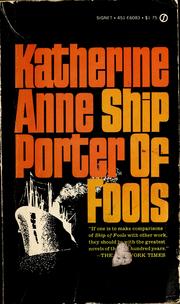 Ship of Fools, Katherine Anne Porter
 Breakfast of Champions, Kurt Vonnegut
 ...And Ladies of the Club, Helen Hooven Santmyer
 “Step By Step”,
 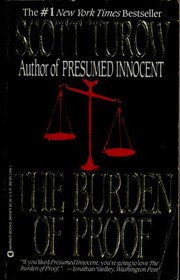 The Burden of Proof, Scott Turow
 “U Remind Me”,
 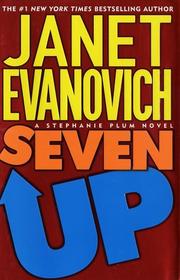 Seven Up, Janet Evanovich
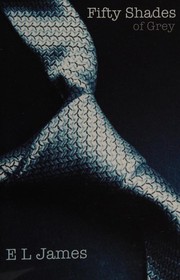 Fifty Shades of Grey, E. L. James


