Our front page for July 16 — written and set by The Yesterday Times from the events below. Not an archival document.
Day of the year
197
Days left in 2026
168
In 2026 it falls on a
Thursday
Star sign
Cancer
Birthstone
Ruby
On July 16 in 1945, 81 years ago, U.S. Detonates First Atomic Bomb in New Mexico Desert. This page reports 8 stories from the date, 25 people born on this day.
The stories in full
National Defense
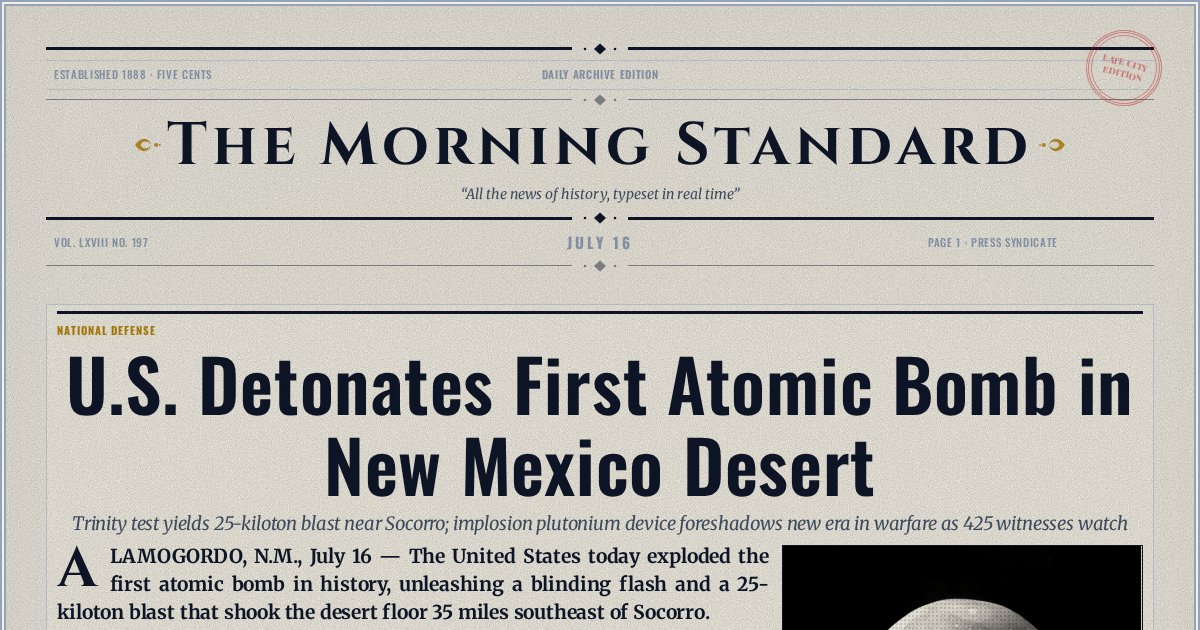
1945 — U.S. Detonates First Atomic Bomb in New Mexico Desert
Trinity test yields 25-kiloton blast near Socorro; implosion plutonium device foreshadows new era in warfare as 425 witnesses watch
ALAMOGORDO, N.M., July 16 — The United States today exploded the first atomic bomb in history, unleashing a blinding flash and a 25-kiloton blast that shook the desert floor 35 miles southeast of Socorro.
The detonation came at 5:29 a.m. Mountain War Time in the Jornada del Muerto, a barren waste whose name means "Journey of the Dead Man." The device, an implosion-design plutonium bomb of the same type as the "Fat Man" weapon later dropped on Nagasaki, produced energy equal to 25,000 tons of TNT, plus or minus 2,000 tons.
Some 425 persons were present for the weekend test, including Dr. J. Robert Oppenheimer, the scientific director, and Enrico Fermi, the Nobel Prize physicist. The code name "Trinity" was chosen by Oppenheimer, who is said to have been inspired by the poetry of John Donne.
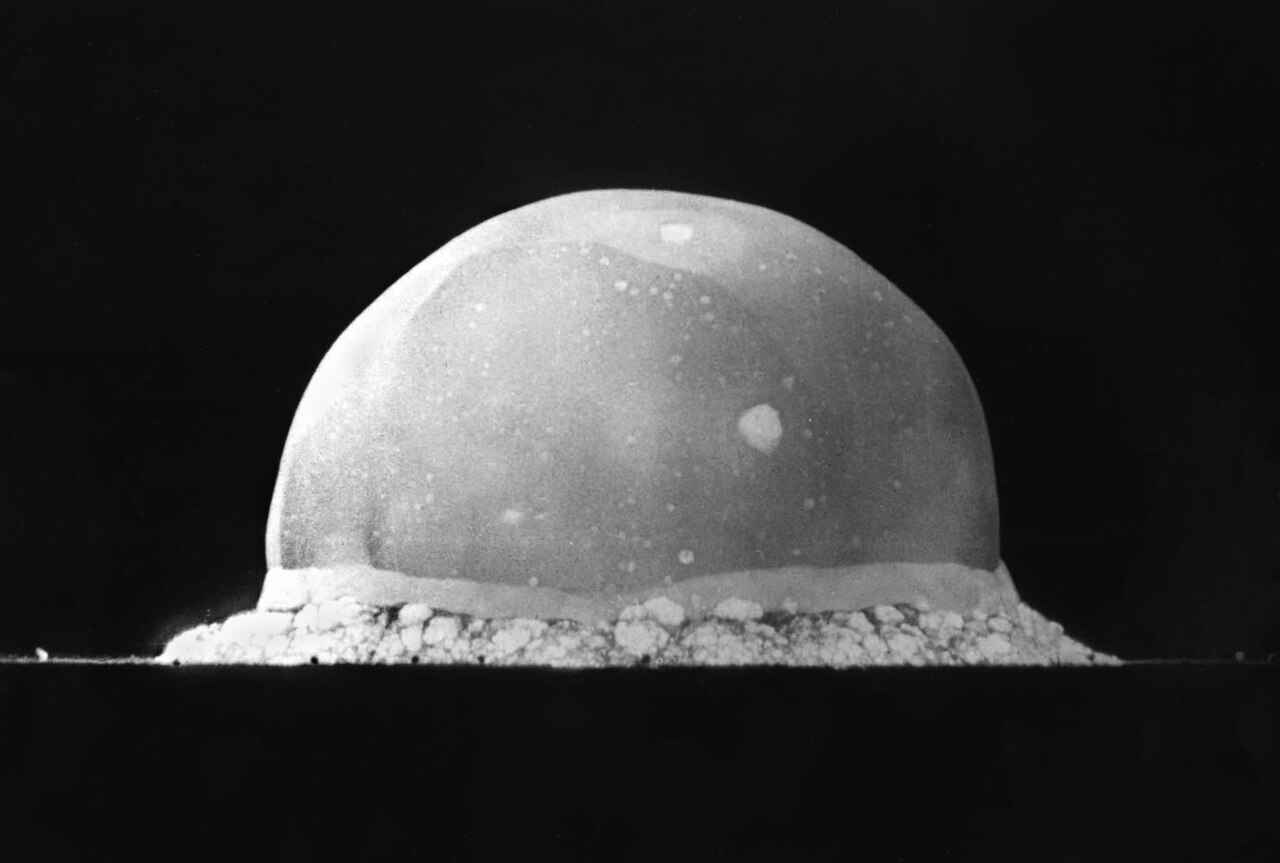
Observers reported a fireball brighter than the sun and a mushroom cloud rising to 40,000 feet. The blast wave was felt 100 miles away, and windows rattled in Gallup, 180 miles distant. Army officials described the test as a complete success, but released no details of the weapon's construction.
Scientists have long warned that the atomic bomb could end the war quickly, but also that it might open a new and terrible chapter in human history.
The Trinity test was conducted at 5:29 a.m. Mountain War Time on July 16, 1945.
The test took place in the Jornada del Muerto desert about 35 miles southeast of Socorro, New Mexico.
The bomb released explosive energy of 25 kilotons of TNT, plus or minus 2 kilotons.
425 people were present on the weekend of the Trinity test, including J. Robert Oppenheimer and Enrico Fermi.
The test was of an implosion-design plutonium bomb, the same design as the Fat Man bomb later detonated over Nagasaki.
Astronomy
1994 — Jupiter Hit by First Fragment of Comet Shoemaker-Levy 9
Fragment A struck Jupiter on July 16 at 20:13 UTC, with a fireball peaking at 24,000 kelvin, while other fragments, including one up to 2 kilometers wide, are expected to hit by July 22.
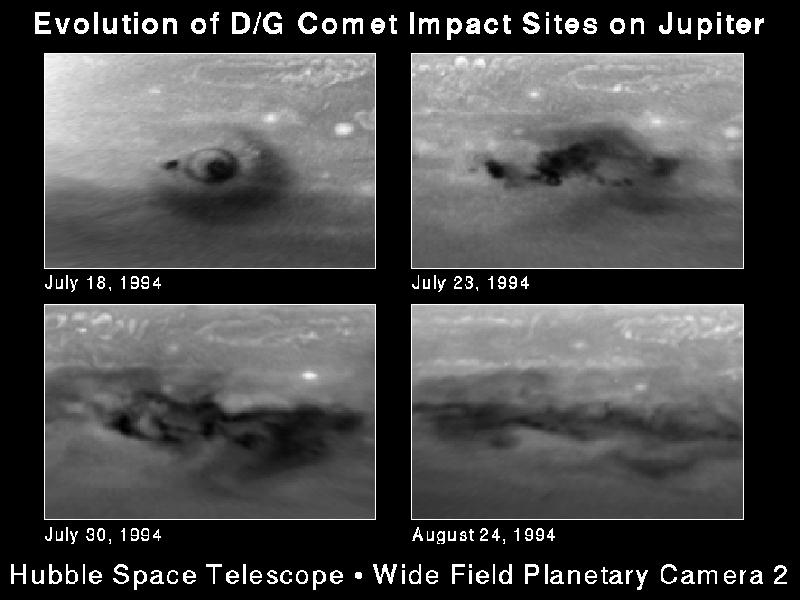
Impact scars from Comet Shoemaker–Levy 9 visible on the surface of Jupiter — H. Hammel, MIT and NASA
PASADENA, July 16 — The first fragment of Comet Shoemaker-Levy 9 slammed into Jupiter today at 20:13 UTC, producing a fireball that reached a peak temperature of about 24,000 kelvin, according to instruments on the Galileo spacecraft.
The impact, from fragment A, struck the planet's southern hemisphere at approximately 60 kilometers per second, or 216,000 kilometers per hour. Galileo, now en route to Jupiter, detected the fireball as it rose above the planet's limb.
Astronomers expect more strikes in coming days, as the comet's remaining fragments, some up to 2 kilometers in diameter, follow the same path. The largest fragment, designated G, is scheduled to hit July 18 and may create a dark spot more than 12,000 kilometers across, with energy equivalent to six million megatons of TNT.
Ground-based telescopes have already recorded bright flashes and expanding plumes. The impact scars, scientists say, could be visible for months and may even outshine the Great Red Spot.
Researchers caution that the full effects will not be known until the fragments finish hitting, expected by July 22.
The first impact of fragment A occurred at 20:13 UTC on July 16, 1994, slamming into Jupiter's southern hemisphere at about 60 km/s.
Instruments on Galileo detected a fireball from the first impact that reached a peak temperature of about 24,000 K.
The largest impact, from fragment G on July 18 at 07:33 UTC, created a dark spot over 12,000 km across and released energy equivalent to six million megatons of TNT.
Over six days, 21 distinct impacts were observed, with the final fragment W striking Jupiter on July 22, 1994.
The comet's fragments, ranging up to 2 km in diameter, collided with Jupiter at approximately 60 km/s, or 216,000 km/h.
Melamine-tainted powder sickens thousands; six deaths reported as families shun dairy
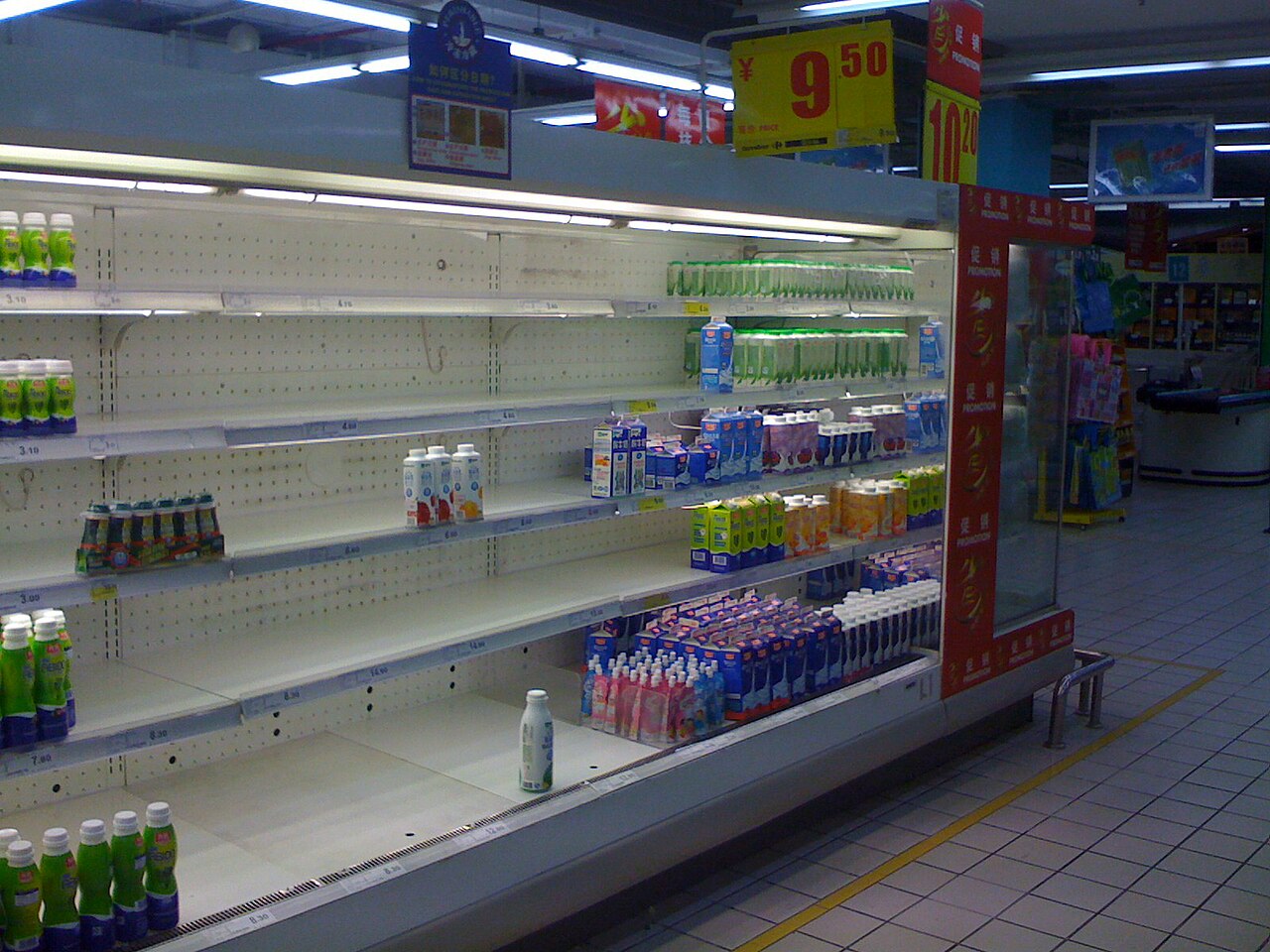
Chinese consumers avoid dairy products following the 2008 melamine-tainted milk powder scandal — Marc van der Chijs
BEIJING, July 16 — In markets across China, dairy shelves stand nearly empty as worried parents avoid milk powder amid a widening scandal that has sickened thousands of infants.
The tainted milk scandal, which broke July 16, has grown to involve an estimated 300,000 victims, the vast majority of them babies. Health officials say 54,000 have been hospitalized with kidney problems, and six have died.
The contamination has been traced to melamine, a chemical added to fake higher protein content. Authorities have arrested several people, but questions remain about how the tainted powder reached store shelves.
State media reported that dairy companies, including some major brands, have issued recalls. Parents, though, are skeptical. Many say they will not buy any Chinese-made formula until they are certain it is safe.
The scandal has cast a shadow over China's booming dairy industry, which had become a symbol of the country's rapid modernization.
The tainted milk scandal broke in China on July 16, 2008.
Federal City
1790 — Washington Signs Act to Build Capital on Potomac
President George Washington signs the Residence Act on July 16.
NEW YORK, July 16 — The seat of the national government will move to a new city on the Potomac River, President George Washington having signed the Residence Act today. Philadelphia will serve as temporary capital until the new federal city is ready.
President George Washington signed the Residence Act on July 16, 1790.
The act designated a site along the Potomac River for the permanent capital, with a deadline of December 1800.
Philadelphia was designated as the temporary capital while the new seat of government was built.
The Residence Act passed the Senate by a vote of 14 to 12 on July 1, 1790, and the House by 31 to 29 on July 9.
The act was part of the Compromise of 1790, brokered among James Madison, Thomas Jefferson, and Alexander Hamilton.
Pacific Desk
2007 — Niigata Quake Kills 11, Leaks Radiaoctive Gas
A 6.6-magnitude earthquake killed 11 and caused a radioactive gas leak at a nuclear plant.
TOKYO, July 16 — The 6.6-magnitude earthquake that tore through Niigata Prefecture at 10:13 a.m. local time has claimed at least 11 lives and injured more than 1,000, while a leak of radioactive gases from the Kashiwazaki-Kariwa Nuclear Power Plant has raised new safety concerns.
A magnitude 6.6 earthquake struck Niigata Prefecture, Japan, at 10:13 local time on July 16, 2007.
Kashiwazaki city and the villages of Iizuna and Kariwa registered the highest seismic intensity of a strong 6 on Japan's shindo scale.
The earthquake was felt as far away as Tokyo, 11 deaths and at least 1,000 injuries were reported.
342 buildings, mostly older wooden structures, were completely destroyed by the quake.
Prime Minister Shinzō Abe broke off his election campaign to visit Kashiwazaki and promised rescue and restoration efforts.
Books Desk
1951 — Salinger's 'Catcher in the Rye' Published Today
J. D. Salinger's novel about alienated youth Holden Caulfield is published today in New York, July 16.
NEW YORK, July 16 — Holden Caulfield, the disaffected prep-school dropout, steps into the bookshops of America today as J. D. Salinger's novel, "The Catcher in the Rye," is published. The book, issued by Little, Brown and Company, first appeared in part as a 1945 serial. Originally aimed at adults, it has become a staple for younger readers.
The novel was partially published in serial form in 1945–46 before being novelized in 1951.
Originally intended for adults, it is often read by adolescents for its themes of angst and alienation.
About one million copies are sold each year, with total sales exceeding 65 million books.
The Catcher in the Rye will enter the American public domain on January 1, 2047.
Sports Extra
1950 — Uruguay Shocks Brazil 2-1; Wins World Cup at Maracana
Before 173,850 fans, the largest ever for a football match, Uruguay defeats Brazil and captures the title in a stunning upset.
RIO DE JANEIRO, July 16 — Alcides Ghiggia scored with eleven minutes remaining to give Uruguay a stunning 2-1 victory over Brazil in the decisive match of the World Cup before an officially recorded 173,850 people at the Maracana Stadium, the largest crowd ever to watch a football match. The win, which secured Uruguay's second world title, came in a match that had seemed a mere formality for the hosts, who had entered the final round needing only a draw. The shock defeat plunged the stadium into silence and gave the football world its most famous upset, now known as the Maracanaço. Before the game, Uruguayan captain Obdulio Varela had bought copies of a Brazilian newspaper that had prematurely declared Brazil champions and had his teammates spit on them.
Uruguay defeated Brazil 2–1 at the Maracanã Stadium in Rio de Janeiro on 16 July 1950.
The officially recorded crowd of 173,850 people at the Maracanã Stadium is an all-time high for a football match.
Alcides Ghiggia scored the winning goal for Uruguay with eleven minutes remaining.
The match is considered one of the biggest upsets in football history, known as the Maracanaço or Maracanazo.
Uruguay captain Obdulio Varela bought copies of a Brazilian newspaper declaring Brazil champions and had his teammates spit on them.
City Desk
2004 — Chicago Opens Millennium Park, Four Years Late
At a final cost of $475 million, the park opened to the public today, far beyond the original $150 million budget.
CHICAGO, July 16 — Millennium Park, one of the world's largest rooftop gardens, opened to the public today, four years behind schedule and at a final cost of $475 million, far beyond the originally proposed budget of $150 million.
The three-day opening celebrations were attended by some 300,000 people and included an inaugural concert by the Grant Park Orchestra and Chorus.
The park opened on July 16, 2004, four years behind schedule.
The final cost of $475 million far exceeded the originally proposed budget of $150 million.
The opening ceremony was sponsored by J.P. Morgan Chase & Co.
What the papers printed that morning
Real front pages from 16 July 1945, scanned by the Library of Congress. These are archival documents, not our work.
1968Larry Sanger(58 this year)Lawrence Mark Sanger is an American Internet project developer and philosopher who co-founded Wikipedia with Jimmy Wales.
1990Wizkid(36 this year)Ayodeji Ibrahim Balogun, known professionally as Wizkid, is a Nigerian singer and songwriter.
1887Shoeless Joe JacksonJoseph Jefferson Jackson, nicknamed "Shoeless Joe", was an American professional baseball outfielder who played in Major League Baseball (MLB) in the early 20th century.
1948Rubén Blades(78 this year)Rubén Blades Bellido de Luna, known professionally as Rubén Blades, is a Panamanian musician, singer, composer, actor, activist, and politician, performing musically most often in the salsa, and Latin jazz genres.
1958Michael Flatley(68 this year)Michael Ryan Flatley is an American and Irish former professional performer and choreographer of Irish dance.
1723Joshua ReynoldsSir Joshua Reynolds was an English painter who specialised in portraits.
1731Samuel HuntingtonSamuel Huntington was a Founding Father of the United States and a lawyer, jurist, statesman, and Patriot in the American Revolution from Connecticut.
1880Kathleen NorrisKathleen Thompson Norris was an American novelist and newspaper columnist.
1902Alexander LuriaAlexander Romanovich Luria was a Soviet neuropsychologist, often credited as the father of modern neuropsychology.
1910Stan McCabeStanley Joseph McCabe was an Australian cricketer who played 39 Test matches for Australia from 1930 to 1938.
1910Gordon PrangeGordon William Prange was the author of several World War II historical manuscripts which were published by his co-workers after his death in 1980.
1918Denis Edward ArnoldDenis Edward Arnold MC was a British Army officer of the Second World War who won the Military Cross in 1944 for an opportunistic attack on a Japanese force while serving with the Chindits in Burma.
1925Walid KhalidiWalid Khalidi was a Palestinian historian who wrote extensively on the Palestinian exodus.
1929Sheri S. TepperSheri Stewart Tepper was an American writer of science fiction, horror and mystery novels.
1939Ruth PerryRuth Sando Fahnbulleh Perry was a Liberian politician.
1941Sir George Young(85 this year)George Samuel Knatchbull Young, Baron Young of Cookham,, known as Sir George Young, 6th Baronet from 1960 to 2015, is a British Conservative Party politician who served as a Member of Parliament (MP) from 1974 to 2015, having represented Ealing Acton from 1974 to 1997 and North West Hampshire from 1997.
1947Assata ShakurAssata Olugbala Shakur was a Black American political activist, revolutionary, and fugitive who was a member of the Black Panther Party, and later the Black Liberation Army.
1950Gary IndianaGary Hoisington, known as Gary Indiana, was an American writer, actor, artist, and cultural critic.
1956Tony Kushner(70 this year)Anthony Robert Kushner is an American author, playwright, and screenwriter.
1964Phil Hellmuth(62 this year)Phillip Jerome Hellmuth Jr. is an American professional poker player who has won a record seventeen World Series of Poker bracelets, the majority in no-limit hold'em.
1965Claude LemieuxClaude Percy Lemieux was a Canadian professional ice hockey player.
1966Jyrki Lumme(60 this year)Jyrki Olavi Lumme is a Finnish former professional ice hockey defenceman who played in the National Hockey League (NHL) and SM-liiga.
1967Will Ferrell(59 this year)John William Ferrell is an American actor, comedian, writer, and producer.
1968Barry Sanders(58 this year)Barry David Sanders is an American former professional football running back who played for the Detroit Lions of the National Football League (NFL) for 10 seasons.
1968Robert Sherman(58 this year)Robert Jason Sherman, known as Robbie Sherman, is an American songwriter based in London.
Quote of the Day
“The supreme art of war is to subdue the enemy without fighting.” — Sun Tzu (trans. Lionel Giles), The Art of War
July 16 History Quiz
On July 16, 1945, which U.S. test site hosted the first nuclear explosion?
Trinity
Which country hosted the 1950 FIFA World Cup final, where Uruguay won?
Every event on this page was picked by hand from the historical record, written up as a news report, and checked against its source. Photographs are matched to the event they illustrate and verified before they are used. Sources are linked on each story.


 “Hanky Panky”,
  Valley of the Dolls, Jacqueline Susann
 “Da Doo Ron Ron”,
  The Thorn Birds, Colleen McCullough
 “Every Breath You Take”,
  “I Swear”,
 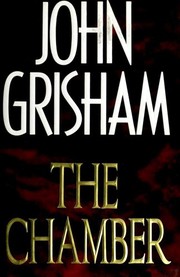 The Chamber, John Grisham
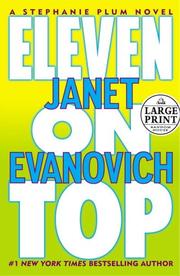 Eleven on Top, Janet Evanovich
 “Party Rock Anthem”,
 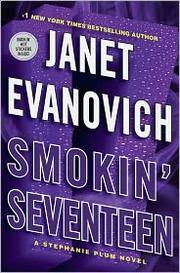 Smokin' Seventeen, Janet Evanovich
 Where the Crawdads Sing, Delia Owens


