Our front page for July 17 — written and set by The Yesterday Times from the events below. Not an archival document.
Day of the year
198
Days left in 2026
167
In 2026 it falls on a
Friday
Star sign
Cancer
Birthstone
Ruby
On July 17 in 2014, 12 years ago, Malaysia Jet Downed Over Ukraine. This page reports 9 stories from the date, 25 people born on this day.
The stories in full
World Desk
2014 — Malaysia Jet Downed Over Ukraine
A Malaysia Airlines Boeing 777 was shot down near the Russia border, killing all 298 aboard — and drawing world attention to the Ukraine conflict.
A Malaysia Airlines Boeing 777-200ER was shot down over eastern Ukraine on Thursday, killing all 298 people on board — 283 passengers and 15 crew. The aircraft, Flight 17, was flying 50 kilometers from the Ukraine–Russia border when contact was lost, and wreckage landed near the village of Hrabove. Ukrainian officials said the plane was hit by a surface-to-air missile; Russia denied involvement. Among the dead were delegates to the 20th International AIDS Conference, including former president of the International AIDS Society, Joep Lange. The disaster is the second fatal loss of a Malaysia Airlines jet this year, after Flight 370 disappeared in March. Investigators are working to recover flight recorders as international pressure mounts for a credible inquiry. The Dutch-led team is expected to lead the probe, given the large number of Dutch passengers. No group has claimed responsibility, and the exact missile type remains unconfirmed. The downing has heightened tensions in the region, where separatists have been battling Ukrainian forces for months.
All 283 passengers and 15 crew were killed when the Boeing 777-200ER was shot down.
The Dutch-led joint investigation team reported in 2016 that the Buk missile originated from Russia's 53rd Anti-Aircraft Missile Brigade.
On 17 November 2022, a Dutch court convicted two Russians and a Ukrainian separatist of murdering all 298 people on board.
The aircraft was flying 50 kilometers from the Ukraine–Russia border when contact was lost, and wreckage landed near Hrabove.
Among the passengers were delegates to the 20th International AIDS Conference, including former IAS president Joep Lange.
Latin America Desk
2007 — TAM Jet Crashes in São Paulo; 199 Dead
The Airbus A320 overran a wet runway in São Paulo, killing 187 aboard and 12 on the ground — Brazil's deadliest air disaster.
The wreckage of an Airbus A320 lies in a burned-out warehouse at Congonhas Airport, where TAM Airlines Flight 3054 crashed during moderate rain on Tuesday evening. The jet overran runway 35L after touching down and slammed into a TAM Express building, killing all 187 passengers and crew aboard and 12 people on the ground. Twenty-seven others were injured in the warehouse. The runway had been resurfaced in June but lacked water-channeling grooves, which were not completed until September. The aircraft's starboard thrust reverser was deactivated due to a jam, but TAM said that did not jeopardize landings.
The Airbus A320 overran runway 35L at Congonhas Airport after touching down during moderate rain and crashed into a TAM Express warehouse.
All 187 passengers and crew on board and 12 people on the ground were killed, with 27 others injured in the warehouse.
The runway had been resurfaced in June 2007 but lacked water-channeling grooves, which were not completed until September 2007.
The aircraft's starboard thrust reverser was deactivated due to a jam, though TAM stated this did not jeopardize landings.
The accident remains the deadliest aviation disaster in Brazilian and South American history.
Pacific Coast Desk
1944 — Port Chicago Blast Kills 320 in Bay Area
Munitions ships explode at the Port Chicago Naval Magazine in California, killing 320 and injuring 400.
The deadliest home-front disaster of the war struck the Port Chicago Naval Magazine in California on Monday night, when two ships loaded with munitions exploded, killing 320 sailors and civilians and injuring more than 400. Most victims were Black sailors loading ordnance without formal training, said Navy officials.
The explosion of the SS E. A. Bryan killed 320 sailors and civilians and injured at least 390 others.
The SS E. A. Bryan was a five-month-old ship operated by Oliver J. Olson & Company for the War Shipping Administration.
The ship's No. 1 winch brakes were found stuck in the 'off' position on July 13, 1944, when it docked at Port Chicago.
No enlisted man at Port Chicago had received formal training in handling and loading explosives into ships.
The average loading rate at Port Chicago in the months before July 1944 was 8.2 short tons per hatch per hour.
National Desk
1996 — TWA Flight 800 Explodes Off Long Island; 230 Dead
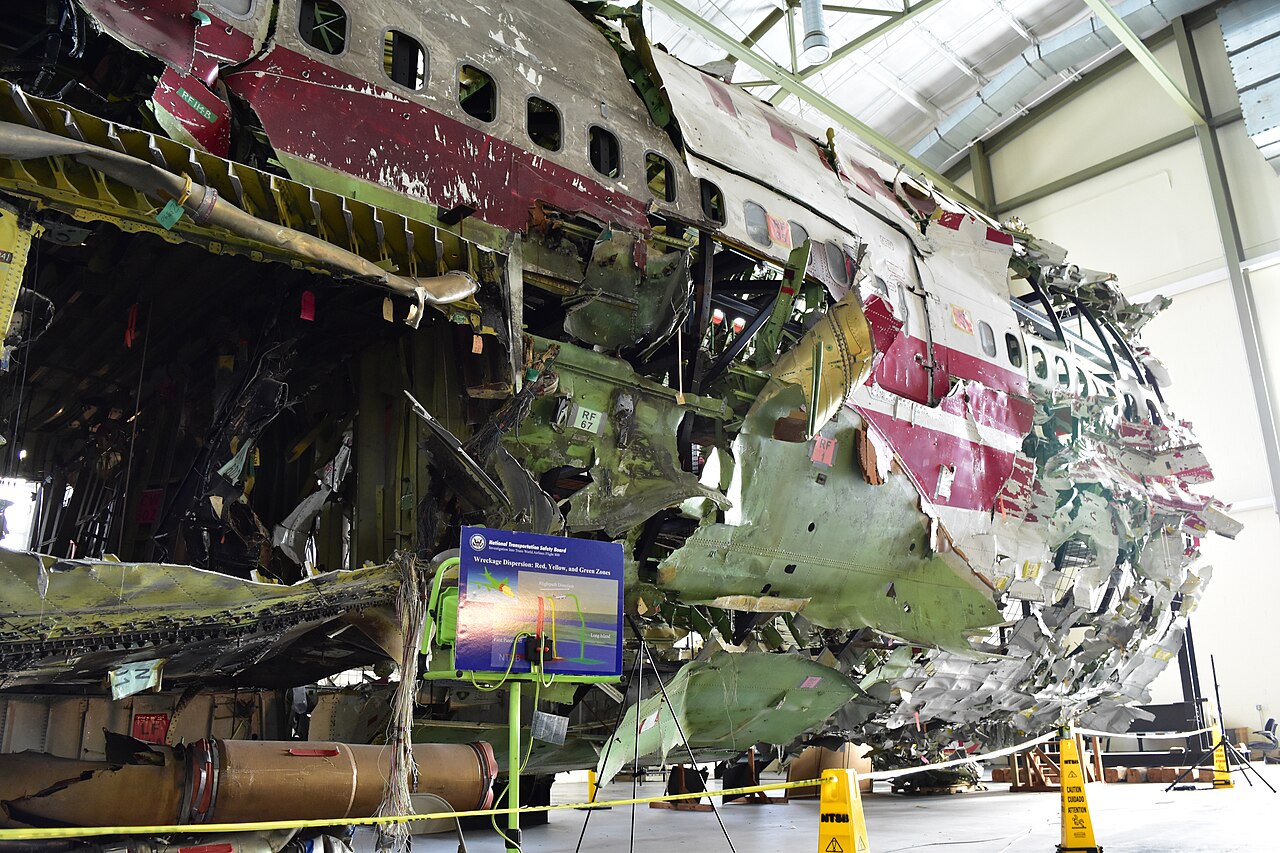
In 1996, TWA Flight 800 exploded over the Atlantic, killing all 230 aboard.
Reconstructed wreckage of TWA Flight 800, which exploded over the Atlantic in 1996 — NTSBgov
In the summer of 1996, the skies over Long Island became a scene of tragedy when TWA Flight 800 exploded in mid-air and plunged into the Atlantic Ocean near East Moriches, New York, killing all 230 people on board. The crash, the third-deadliest in U.S. history, prompted the most extensive and costly investigation ever conducted by the National Transportation Safety Board.
All 230 people on board were killed, making it the third-deadliest aviation accident in U.S. history.
The NTSB concluded the probable cause was explosion of flammable fuel vapors in the center fuel tank, likely ignited by a short circuit.
The captain remarked about 'crazy' readings from the fuel quantity indication system about 2 minutes 30 seconds before the explosion.
The investigation became the most extensive, complex, and costly air disaster investigation in U.S. history up to that time.
The crash prompted Congress to pass the Aviation Disaster Family Assistance Act of 1996, giving NTSB responsibility for coordinating family services.
William Cranch Bond and John Adams Whipple have taken a daguerreotype of the star Vega, marking the first image of a star other than the Sun. The achievement, made at the observatory, opens a new field in celestial photography. The plate shows the star's brilliant point with remarkable distinctness, a triumph of American skill and science.
The first daguerreotype image of a star from America was of Vega, taken in 1850.
William Cranch Bond and John Adams Whipple pioneered astrophotography by photographing Vega in 1850.
William Cranch Bond and John Adams Whipple took the first daguerreotype image of a star, Vega, in 1850.
Maritime War Losses
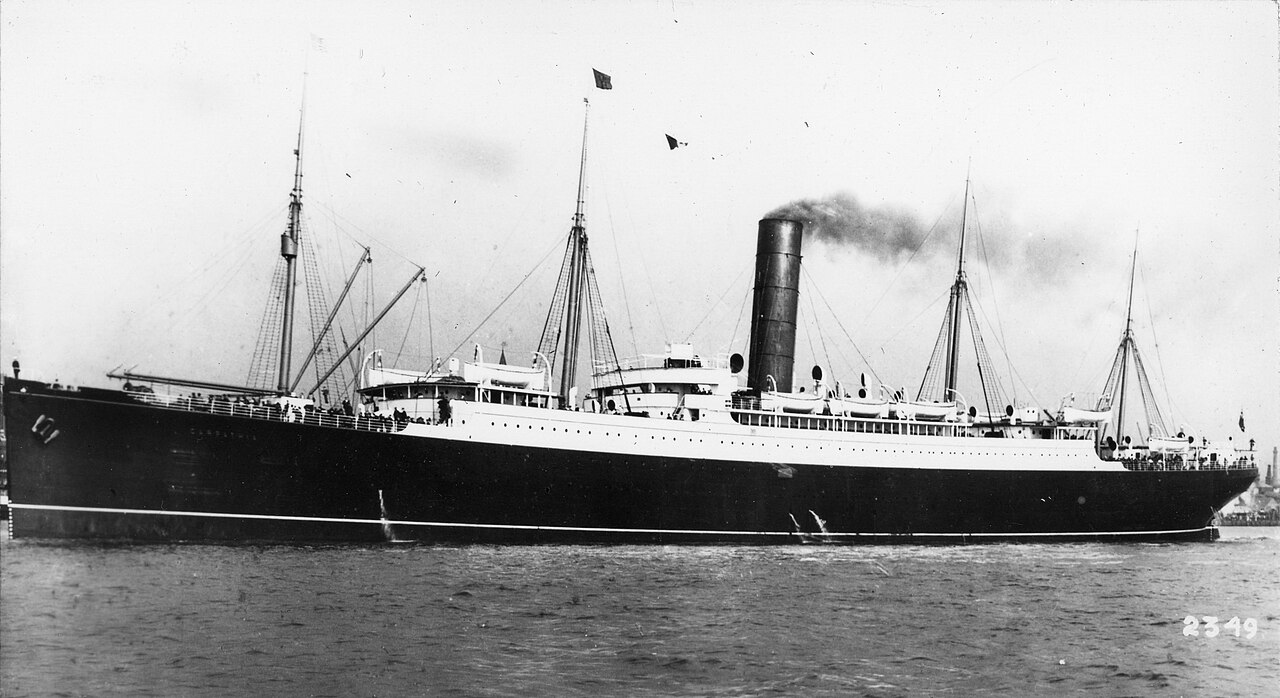
1918 — Carpathia, Titanic Rescuer, Sunk by U-boat
Five crew dead as torpedoes send famed liner down off Irish coast.
RMS Carpathia, the ocean liner that rescued Titanic survivors, before its wartime sinking — Wikimedia Commons
Five crewmen of the Cunard liner Carpathia, famed for rescuing Titanic's survivors in 1912, are dead after the vessel was torpedoed three times by the German submarine U-55 off the southern Irish coast on Wednesday. A torpedo striking the engine room killed three firemen and two trimmers. Captain William Prothero, with the wireless disabled, ordered rockets fired and flags flown for help.
RMS Carpathia was sunk on 17 July 1918 after being torpedoed three times by German submarine U-55 off the southern Irish coast.
Five crew members died when a torpedo struck the engine room, killing three firemen and two trimmers.
Captain William Prothero ordered rockets fired and flags used to signal for help after the torpedo attack disabled the wireless.
Carpathia had departed Liverpool on 15 July 1918 with 57 passengers and 166 crew, bound for Boston in a convoy.
The remaining convoy ships steamed away at full speed to evade the German submarine after Carpathia was hit.
Russian Revolution Desk
1918 — Bolsheviks Murder the Czar and His Family at Ekaterinburg
Nicholas II, the czarina, and their five children are shot by the Reds.
The Bolsheviks murdered Czar Nicholas II and his family at Ekaterinburg on the night of July 16, according to reports reaching Petrograd. The deposed sovereign, the Czarnia, and their five children were shot by the Reds in the house where they were imprisoned. The family had been moved to Ekaterinburg in April and May of this year as the looming civil war made their previous place of confinement unsafe. Since the Bolsheviks seized power in October of last year, the conditions of their imprisonment grew steadily stricter.
The Bolsheviks murdered Tsar Nicholas II and his family on 16 July 1918.
In April and May 1918, the looming civil war led the Bolsheviks to move the family to Yekaterinburg.
After the Bolsheviks came to power in October 1917, conditions of the Romanovs' imprisonment grew stricter.
In August 1917, the Provisional Government evacuated the Romanovs from Tsarskoye Selo to Tobolsk in the Urals.
Chronicle of Wars
1453 — English Routed at Castillon; War Ends
On July 17, a complete English rout at Castillon killed John Talbot and his son as 300 French guns tore through the ranks.
The smoke of French guns still hung over the field when the last of the English banners fell at Castillon. The battle, fought on July 17, was the final engagement of the Hundred Years' War, and it ended in a complete English rout. John Talbot, Earl of Shrewsbury, was killed alongside his son, Viscount Lisle, as French artillery, numbering up to 300 guns, tore through the advancing ranks, each shot reportedly slaying six men. A thousand-strong Breton cavalry force under Peter II, Duke of Brittany, crashed into the English right flank, sealing the disaster.
The Battle of Castillon was the first major European battle won through extensive use of field artillery.
English commander John Talbot, 1st Earl of Shrewsbury, was killed in the battle along with his son John, Viscount Lisle.
French artillery, with up to 300 guns, destroyed advancing English soldiers, each shot reportedly killing six men at a time.
The battle ended an English rout after a thousand-strong Breton cavalry force led by Peter II, Duke of Brittany, crashed into their right flank.
The English lost nearly all holdings in France, except the Pale of Calais and the Channel Islands, after the battle.
World Cup Desk
1994 — Brazil Wins Fourth World Cup on Penalties as Baggio Fires Wide
Brazil beat Italy 3–2 on penalties after a 0–0 draw to claim a record fourth World Cup title at the Rose Bowl.
Brazil is champion of the world again, a then-record fourth time, after a nerve-shredding penalty shootout against Italy ended 3–2 in Brazil's favor. The 0–0 scoreline after extra time at the Rose Bowl left everything to the spot, and it was Italy's Roberto Baggio who cracked, sending his final kick over the bar.
Franco Baresi led a stubborn Italian defense through the searing Pasadena heat, but he too missed from the spot. Romário and Bebeto led the Brazilian attack, with Dunga anchoring the midfield, and their persistence finally paid off as the trophy returned to South America. Mazinho converted the decisive attempt for Brazil after Daniele Massaro and Baresi had failed for Italy. Goalkeeper Taffarel made one save, tipping Massaro's kick wide, before Baggio's miss sealed the title.
Brazil defeated Italy in the 1994 FIFA World Cup final on penalties after a 0-0 draw at the Rose Bowl in Pasadena.
The match was played in searing heat and ended goalless after extra time, with Italy's Franco Baresi leading the defense.
Roberto Baggio missed Italy's final penalty kick, giving Brazil the victory and a then-record fourth World Cup title.
Brazil's 1994 World Cup team, led by Romário and Bebeto in attack and Dunga in midfield, won the tournament for the fourth time.
What the papers printed that morning
Real front pages from 17 July 1944, scanned by the Library of Congress. These are archival documents, not our work.
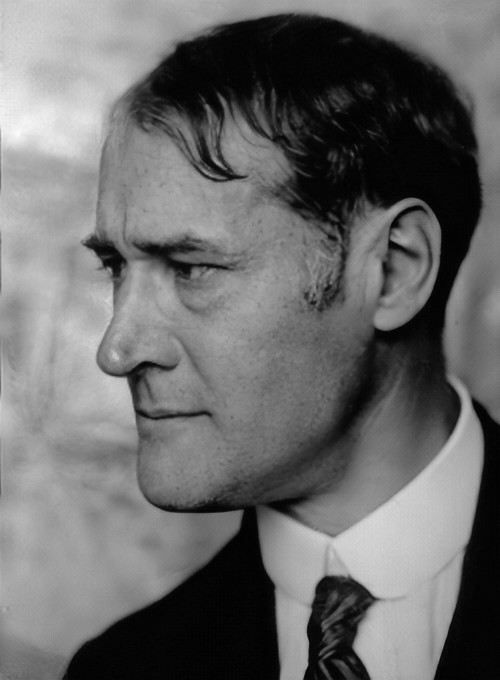
1871Lyonel FeiningerLyonel Charles Adrian Feininger was a German-American painter, and a leading exponent of Expressionism.
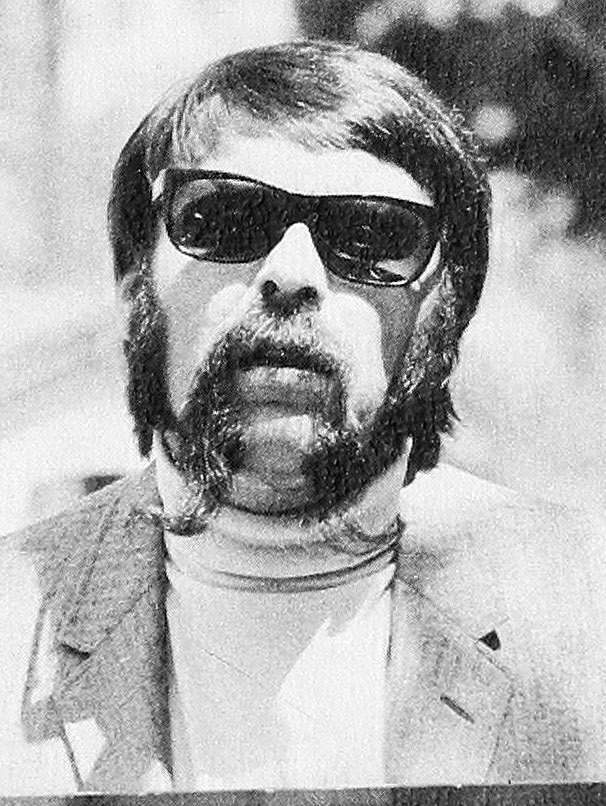
1928Vince GuaraldiVincent Anthony Guaraldi was an American jazz pianist who composed music for animated television adaptations of the Peanuts comic strip.
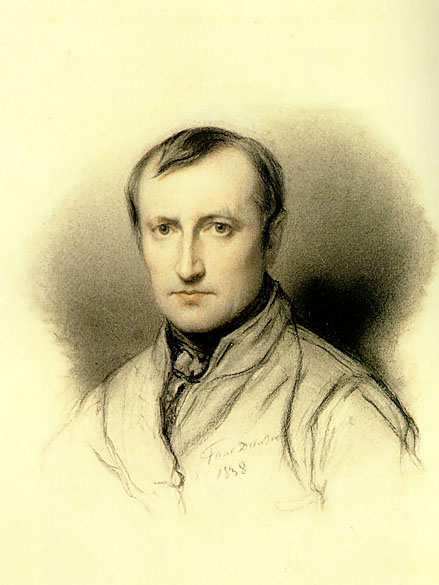
1797Paul DelarocheHippolyte-Paul Delaroche was a French painter known for his depiction of scenes from English and French history.
1948Ron AshetonRonald Franklin Asheton was an American musician, best known as the guitarist, bassist, and co-songwriter for the rock band the Stooges.
1942Connie HawkinsCornelius Lance "Connie" Hawkins was an American professional basketball player.
1975Darude(51 this year)Toni-Ville Henrik Virtanen, better known by his stage name Darude, is a Finnish DJ and record producer from Eura, Satakunta.
1980Ryan Miller(46 this year)Ryan Dean Miller is an American former professional ice hockey player.
1882James SomervilleAdmiral of the Fleet Sir James Fownes Somerville was a Royal Navy admiral.
1894Georges LemaîtreGeorges Henri Joseph Édouard Lemaître was a Belgian Catholic priest, theoretical physicist, and mathematician who made major contributions to cosmology and astrophysics.
1905William GarganWilliam Dennis Gargan was an American film, television and radio actor.
1910Frank OlsonFrank Rudolph Emmanuel Olson was an American bacteriologist, biological warfare scientist, and an employee of the United States Army Biological Warfare Laboratories (USBWL) who worked at Camp Detrick in Maryland.
1916Eleanor HadleyEleanor Martha Hadley was an American economist and policymaker.
1917Christiane RochefortChristiane Rochefort was a French feminist writer.
1921Toni StoneToni Stone, born as Marcenia Lyle Stone, was an American female professional baseball player who played in predominantly male leagues.
1921George BarnesGeorge Warren Barnes was an American jazz guitarist.
1928Joe MorelloJoseph Albert Morello was an American jazz drummer best known for serving as the drummer for pianist Dave Brubeck, as part of the Dave Brubeck Quartet, from 1957 to 1972, including during the quartet's "classic lineup" from 1958 to 1968, which also included alto saxophonist Paul Desmond and bassist Eugene Wright.
1941Bob Taylor(85 this year)Robert William Taylor MBE is an English former cricketer who played as wicket-keeper for Derbyshire between 1961 and 1984 and for England between 1971 and 1984.
1944Carlos Alberto TorresCarlos Alberto "Capita" Torres, also known as "o Capitão do Tri", was a Brazilian football player and manager who played as an attacking right-sided full-back or wing-back.
1945Alexander(81 this year)Alexander, Crown Prince of Yugoslavia, is the head of the House of Karađorđević, the former royal house of the defunct Kingdom of Yugoslavia and its predecessor the Kingdom of Serbia.
1946Ted SampleyTheodore Lane Sampley was an American Vietnam War veteran and activist.
1950Phoebe SnowPhoebe Snow was an American roots music singer-songwriter and guitarist, known for her hit 1974 and 1975 songs "Poetry Man" and "Harpo's Blues", and her credited guest vocals on Paul Simon’s "Gone at Last".
1952David Hasselhoff(74 this year)David Michael Hasselhoff, nicknamed "the Hoff", is an American actor, singer, and television personality.
1957Wendy Freedman(69 this year)Wendy Laurel Freedman is a Canadian-American astronomer, best known for her measurement of the Hubble constant, and as director of the Carnegie Observatories in Pasadena, California, and Las Campanas, Chile.
1960Robin Shou(66 this year)Shou Wan-por, known professionally as Robin Shou, is a Hong Kong-American actor, martial artist and stuntman.
1963Regina Belle(63 this year)Regina Belle is an American singer-songwriter who started her career in the mid-1980s. Known for her singles "Baby Come to Me" (1989) and "Make It Like It Was" (1990), Belle is most notable for three hit duets, all with Peabo Bryson: "Without You", the love theme from the comedy film Leonard Part 6, recorded in 1987; "A Whole New World", the main theme of the Disney's animated feature film Aladdin recorded in 1992, with which Belle and Bryson won a Grammy Award; and "I Just Can't Imagine".
Quote of the Day
“Christmas won't be Christmas without any presents.” — Louisa May Alcott, Little Women
July 17 History Quiz
Which aircraft type was Malaysia Airlines Flight 17, shot down on July 17, 2014?
Boeing 777
Which country won the 2014 FIFA World Cup, defeating Argentina on penalties?
Germany
The Battle of Castillon, which ended the Hundred Years' War, was fought primarily between which two kingdoms?
England and France
TWA Flight 800, which crashed on July 17, 1996, was bound for which destination?
Every event on this page was picked by hand from the historical record, written up as a news report, and checked against its source. Photographs are matched to the event they illustrate and verified before they are used. Sources are linked on each story.



 The Agony and the Ecstasy, Irving Stone
 The Passions of the Mind, Irving Stone
 “Don't You Want Me”,
 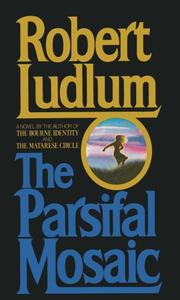 The Parsifal Mosaic, Robert Ludlum
 “Weak”,
  The Bridges of Madison County, Robert James Waller
 “Burn”,
  “California Gurls”,
  Sizzling Sixteen, Janet Evanovich
 “Butter”,
 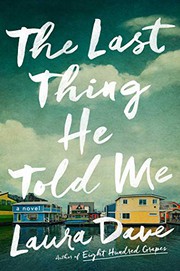 The Last Thing He Told Me, Laura Dave