Our front page for July 30 — written and set by The Yesterday Times from the events below. Not an archival document.
Day of the year
211
Days left in 2026
154
In 2026 it falls on a
Thursday
Star sign
Leo
Birthstone
Ruby
On July 30 in 1930, 96 years ago, Uruguay Wins First World Cup Final, 4–2. This page reports 11 stories from the date, 25 people born on this day.
The stories in full
Football
1930 — Uruguay Wins First World Cup Final, 4–2
93,000 see hosts beat Argentina in Montevideo — national holiday declared
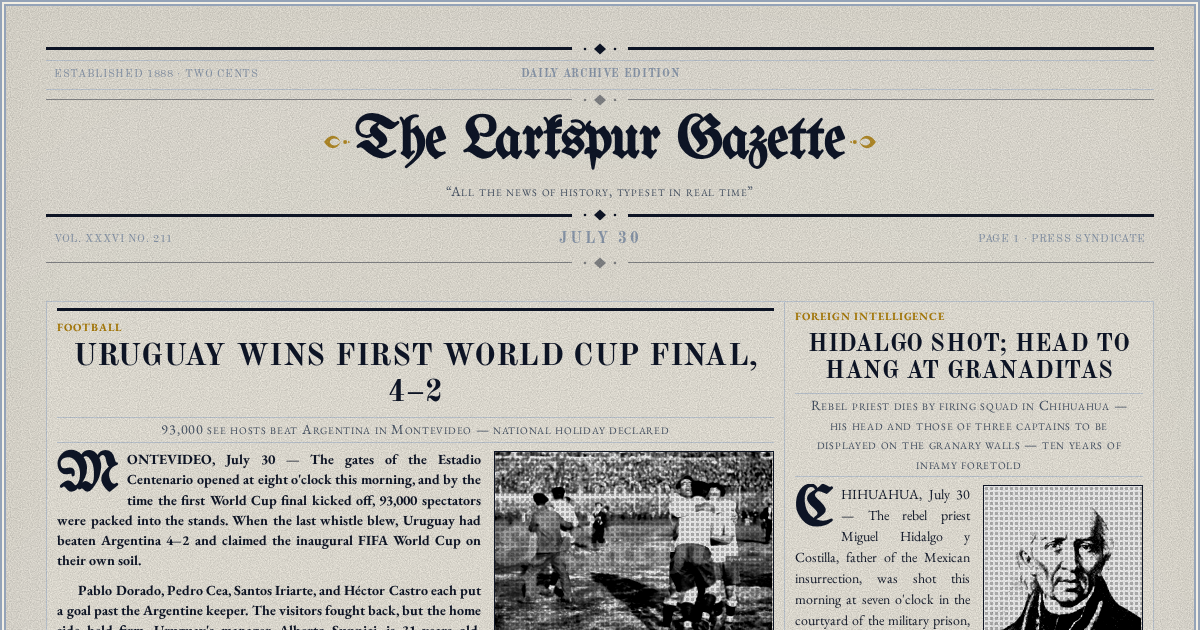
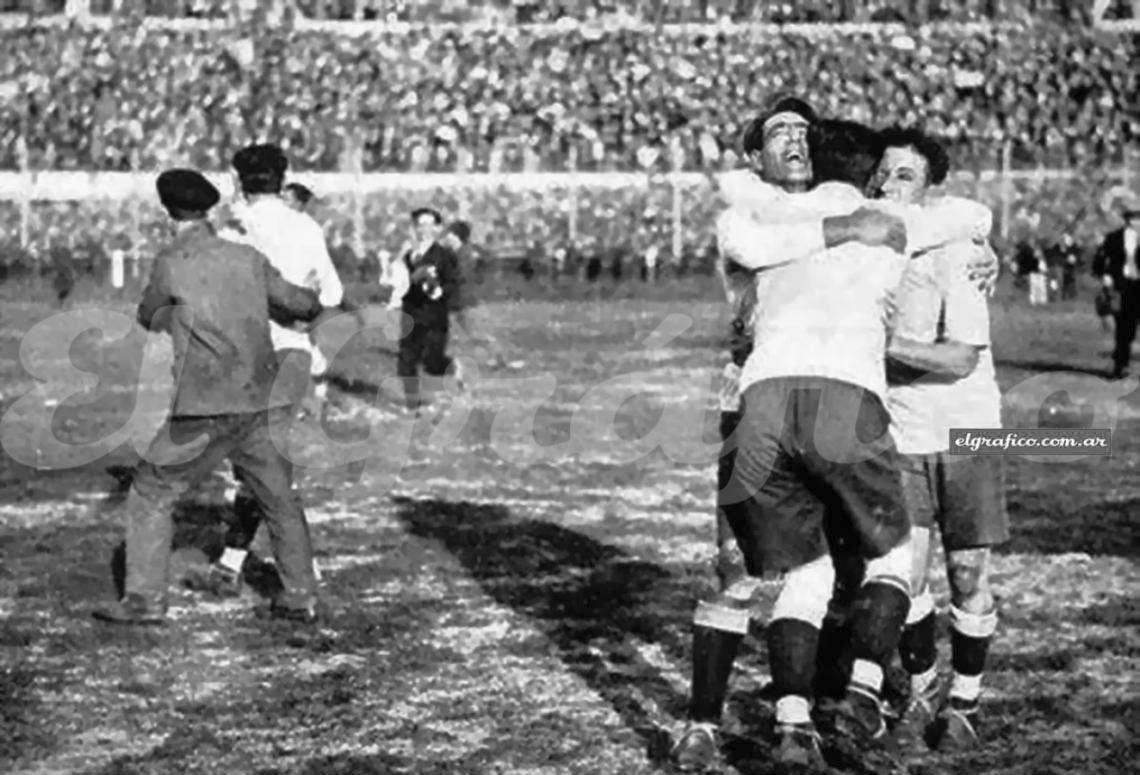
The Uruguay national football team celebrates winning the inaugural 1930 FIFA World Cup final — Wikimedia Commons
MONTEVIDEO, July 30 — The gates of the Estadio Centenario opened at eight o'clock this morning, and by the time the first World Cup final kicked off, 93,000 spectators were packed into the stands. When the last whistle blew, Uruguay had beaten Argentina 4–2 and claimed the inaugural FIFA World Cup on their own soil.
Pablo Dorado, Pedro Cea, Santos Iriarte, and Héctor Castro each put a goal past the Argentine keeper. The visitors fought back, but the home side held firm. Uruguay's manager, Alberto Suppici, is 31 years old, making him the youngest coach ever to win a World Cup. FIFA president Jules Rimet himself presented the trophy, later to bear his name, to the jubilant Uruguayans.
The victory touched off celebrations across the country, and the following day has been declared a national holiday. In Buenos Aires, however, the mood was darker — a mob threw stones at the Uruguayan consulate, and Argentine papers mourned the loss with bitter headlines. The team picture shows the eleven in their sky-blue shirts, grinning amid the confetti. The tournament, the first of its kind, drew teams from Europe and the Americas, and the final was the crowning match of a fortnight of football that has gripped the continent.
The final was played at the Estadio Centenario in Montevideo, Uruguay, on 30 July 1930.
Uruguay beat Argentina 4–2 in the final, with goals from Pablo Dorado, Pedro Cea, Santos Iriarte, and Héctor Castro.
The match was played before 93,000 spectators, with the stadium gates opening at eight in the morning.
Uruguay manager Alberto Suppici was 31 years old, the youngest coach of a FIFA World Cup winning team.
FIFA president Jules Rimet presented Uruguay with the World Cup Trophy, later named after him.
Sporting Life
1966 — Hurst Hat-Trick Wins the Cup for England
32.30 million watch Wembley final — first hat-trick in a World Cup final
LONDON, July 30 — England are champions of the world. The 4–2 victory over West Germany after extra time at Wembley Stadium, before a television audience of 32.30 million, the largest ever for British television, has given the country its first World Cup.
Geoff Hurst scored three goals, the first hat-trick in a World Cup final, including the decisive strikes in extra time. His second of those, England's third goal, will be argued over for years — replays show only 50 per cent of the ball crossed the line. The match was the last World Cup final to be broadcast entirely in black and white.
The road to the final had its own drama. The Jules Rimet Trophy was stolen before the tournament and recovered by a dog named Pickles, who found it wrapped in newspaper under a hedge. Hurst's hat-trick, and the victory, have ended years of near-misses for English football.
England defeated West Germany 4–2 after extra time at Wembley Stadium in London.
Geoff Hurst scored a hat-trick, the first ever in a World Cup final.
The final was watched by 32.30 million viewers, the most ever on British television as of July 2021.
England's third goal, scored by Hurst in extra time, remains controversial as replays showed only 50% of the ball crossed the line.
The Jules Rimet Trophy was stolen before the tournament and recovered by a dog named Pickles.
Church Music
1724 — Bach's New Cantata Rings Out in Leipzig
Wo Gott der Herr nicht bei uns hält, after Psalm 124, first heard — cycle of forty planned
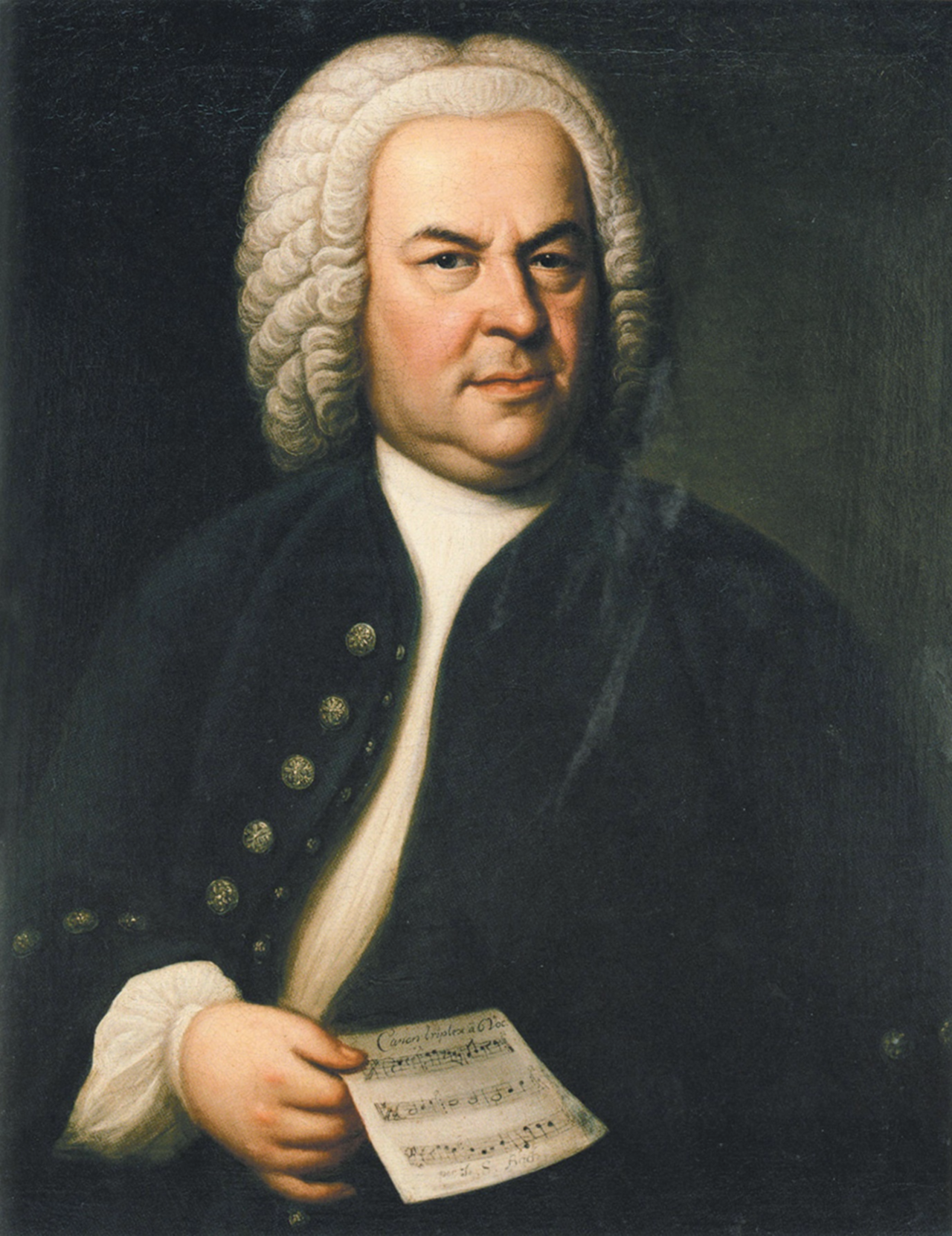
Johann Sebastian Bach, composer of the chorale cantata first performed in Leipzig — Elias Gottlob Haussmann
LEIPZIG, July 30 — The churches of Leipzig, long accustomed to the learned strains of their cantor, heard this Sunday a new work in an old form, as Johann Sebastian Bach presented his chorale cantata Wo Gott der Herr nicht bei uns hält, a paraphrase of Psalm 124 based on the hymn by Justus Jonas from 1524. The piece, performed in the Thomaskirche, is part of a grand undertaking begun after Trinity Sunday on 4 June 1724, a cycle of at least forty such works composed during Bach's second year in the city.
The design is fixed. The opening movement is a chorale fantasia on the first stanza, with the tune carried as cantus firmus, while the closing movement sets the final stanza as a simple four-part harmonisation for the choir. Between these, the inner stanzas are rephrased by an unknown author into recitatives and arias.
The first four cantatas of the cycle have given the cantus firmus to each voice in turn—soprano, alto, tenor, and bass—an ingenuity that has not escaped notice among the city's musical connoisseurs. The congregation, accustomed to Bach's regular productions, received the new work with evident approval. The cantata is but one of many that will follow, each Sunday bringing a fresh setting of a familiar hymn.
Bach's chorale cantata cycle began after Trinity Sunday on 4 June 1724.
The chorale cantata cycle includes at least 40 chorale cantatas composed during Bach's second year in Leipzig.
The opening movement of Bach's chorale cantatas is a chorale fantasia on the first hymn stanza, with the tune as cantus firmus.
The last movement of Bach's chorale cantatas is a four-part harmonisation of the chorale tune for the choir.
The text of inner movements in Bach's 1724-1725 chorale cantatas is a rephrasing of the hymn's inner stanzas by an unknown author.
Labor Desk
1975 — Hoffa Disappears Near Detroit
Last seen outside a restaurant — feared slain in Mafia hit
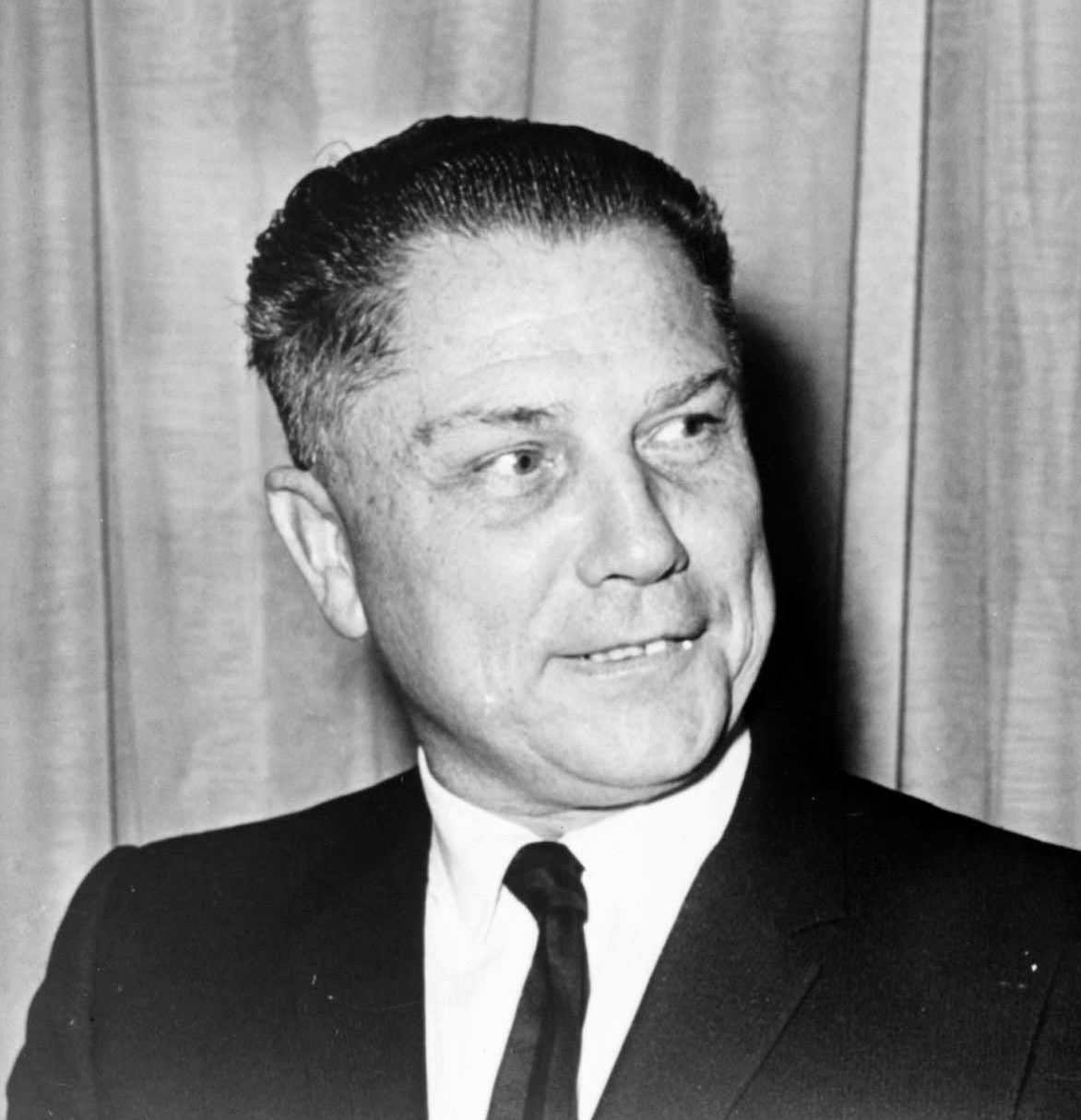
Labor leader Jimmy Hoffa, who disappeared under mysterious circumstances near Detroit in 1975 — Garam
DETROIT, July 30 — Jimmy Hoffa, the once-powerful labor leader, vanished today after being last seen outside a restaurant near this city. Federal authorities suspect the former Teamsters president was the victim of a Mafia hit, carried out with the cooperation of Detroit's mob, which has long exerted influence over the city's unions.
Hoffa, 62, had been free since 1971, when President Nixon commuted his sentence for jury tampering, attempted bribery, conspiracy, and mail and wire fraud. He had resigned as Teamsters president in mid-1971 as part of that deal. He was declared legally dead in 1982. His disappearance has become one of the great mysteries of American labor.
Hoffa disappeared on July 30, 1975, and is thought to have been murdered in a Mafia hit.
He was declared legally dead on July 30, 1982.
Hoffa was convicted of jury tampering, attempted bribery, conspiracy, mail and wire fraud in 1964 and sentenced to 13 years in prison.
He resigned as Teamsters president in mid-1971 as part of a commutation agreement with President Richard Nixon.
The Detroit Partnership, a Mafia crime family, maintained substantial influence over Detroit's labor unions during Zerilli's reign until 1977.
Foreign Intelligence
1811 — Hidalgo Shot; Head to Hang at Granaditas
Rebel priest dies by firing squad in Chihuahua — his head and those of three captains to be displayed on the granary walls — ten years of infamy foretold
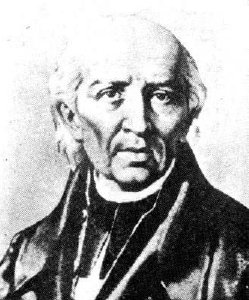
Miguel Hidalgo y Costilla, the revolutionary leader executed by Spanish forces in 1811 — Wikimedia Commons
CHIHUAHUA, July 30 — The rebel priest Miguel Hidalgo y Costilla, father of the Mexican insurrection, was shot this morning at seven o'clock in the courtyard of the military prison, a firing squad of Spanish infantry ending his eleven-month revolt. Before the volley, Hidalgo thanked his jailers, soldiers Ortega and Melchor, for their humane treatment, and declared: "Though I may die, I shall be remembered forever; you all will soon be forgotten."
The priest's body, with those of the captured captains Allende, Aldama, and Jiménez, has been decapitated by order of the viceroy; the four heads are to be nailed to the four corners of the Alhóndiga de Granaditas, the great granary of Guanajuato, as a warning to all who would take up arms against the crown. The severed heads are to remain there for ten years, until the insurrection is utterly extinguished and the peace of New Spain restored.
Hidalgo, a learned creole of Dolores, raised his cry of independence last September and gathered an army of Indians and mestizos that sacked Guanajuato before his defeat at Calderón Bridge in January.
Miguel Hidalgo was executed by firing squad on 30 July 1811 in Chihuahua.
Before his execution, Hidalgo thanked his jailers, soldiers Ortega and Melchor, for their humane treatment.
Hidalgo declared at his execution: 'Though I may die, I shall be remembered forever; you all will soon be forgotten.'
His body and those of Allende, Aldama, and Jiménez were decapitated and heads displayed on the four corners of the Alhóndiga de Granaditas.
The severed heads remained on display for ten years until the end of the Mexican War of Independence.
Home Affairs
1990 — IRA Bomb Kills Eastbourne MP Ian Gow at Home
Car bomb planted by the Provisional IRA kills Conservative MP at his East Sussex home.
LONDON, July 30 — Ian Gow, the Conservative member of Parliament for Eastbourne, was killed today when a car bomb planted by the Provisional IRA exploded outside his home in East Sussex. Gow, 53, had served as a Treasury minister until resigning in 1985 over the Anglo-Irish Agreement.
Ian Gow was killed outside his home in East Sussex by a car bomb planted by the Provisional Irish Republican Army.
Gow was a Conservative MP for Eastbourne since 1974 and served as parliamentary private secretary to Prime Minister Margaret Thatcher from 1979 to 1983.
Gow resigned as Minister of State at the Treasury in 1985 over the Anglo-Irish Agreement, which he opposed.
Gow delivered the first televised speech in the House of Commons on 21 November 1989, making self-deprecating jokes about his baldness.
Gow left his telephone number and home address in the local telephone directory and Who's Who, despite knowing he was a potential IRA target.
South Asia Desk
2014 — Landslide Buries Sleeping Village in Maharashtra; 150 Feared
Torrential rain loosens hillside above Malin — homes crushed in the night — rescue teams fight mud and rain to reach survivors
MALIN, India, July 30 — The hillside above this village in Pune district gave way at about 3 a.m., sending a wall of mud and rock over homes while residents slept. Heavy rain and quarrying had loosened the slope, officials said, as rescue teams struggled through mud to reach survivors.
The landslide struck Malin village in Pune district, Maharashtra, early on July 30, 2014, while residents slept.
At least 151 people died; the final death toll was confirmed on August 7 after rescue operations ended.
The village received 108 mm of rain on July 29, and deforestation, dam construction, and stone quarrying were blamed for the hillside instability.
Rescue efforts involved 378 personnel from the National Disaster Response Force and were hampered by continuing rain and poor roads.
By August 4, the death toll stood at 134, with 50 men, 64 women, and 20 children among the recovered bodies.
Local Disaster
1871 — Fatal Boiler Burst on Staten Island Ferry; 45 Dead
Boiler burst kills 45 at South Ferry this morning
NEW YORK, July 30 — The bursting of the boiler of the Staten Island ferryboat Westfield II has thrown the city into mourning, with at least 45 lives lost and scores more wounded when the vessel exploded in her slip at South Ferry this morning. The injured included Antonio Meucci, an Italian inventor at work on a telephone. Jacob Vanderbilt faced murder charges in the blast.
On July 30, 1871, the Westfield II's boiler exploded while sitting in its slip at South Ferry in Manhattan.
Death toll estimates ranged from 45 to 91, with injured figures from 78 to 208, varying among New York newspapers.
Among the injured was Antonio Meucci, an Italian immigrant developing the first telephone at the time.
Jacob Vanderbilt was arrested for murder after the explosion but escaped conviction.
The disaster adversely affected the railroad's finances, leading to receivership of the railway and ferry in 1872.
POLAND DESK
1981 — 50,000 March in Lodz Hunger Protest
In deepening twilight of Poland's economic crisis, the hungry took to the streets in numbers unseen before.
LODZ, July 30 — In the deepening twilight of Poland's economic crisis, the hungry took to the streets here in numbers unseen before. Bishop Józef Rozwadowski blessed the throng; women and children led, men flanking. Placards demanded bread.
Up to 50,000 people participated in the Łódź hunger demonstration on July 30, 1981.
Bishop Józef Rozwadowski blessed the demonstration as it passed through the city.
The protest was organized by Solidarity activists including Andrzej Slowik, Grzegorz Palka, Jerzy Kropiwnicki, and Janina Kończak.
Most demonstrators were women and their children, with men walking on the sides to protect them.
Participants carried placards stating "Bread, Hunger, Who Wants to Starve Us?" and "How Do You Eat Ration Coupons? With a Knife and Fork?"
MARINE INTELLIGENCE
1865 — Steamer Brother Jonathan Lost Off Crescent City
Vessel strikes uncharted rock near Point St. George — 225 souls perish — gold coin cargo remains unrecovered
SAN FRANCISCO, July 30 — The steamer Brother Jonathan, a paddle-wheel vessel of large tonnage, has been wrecked off the coast of Crescent City, striking an uncharted rock near Point St. George and sinking with the loss of 225 persons. The vessel carried a considerable cargo of gold coins, which, with the ship, lies at the bottom of the sea. The fatal rock was not laid down on any chart, and the steamer, proceeding on her course, came upon it suddenly. The loss of life is reported as very great, and the particulars of the disaster are awaited with anxiety.
The paddle steamer Brother Jonathan crashed on an uncharted rock near Point St. George, off Crescent City, on July 30, 1865.
MIDEAST BUREAU
2006 — Israeli Strike Kills 28 in Qana; 16 Are Children
An Israeli airstrike killed at least 28 civilians, 16 of them children, after 1 a.m., and Lebanon halted Rice talks.
BEIRUT, July 30 — An Israeli airstrike on a three-story building near the village of Qana killed at least 28 civilians, 16 of them children, in the deadliest single incident of the Lebanon war. The attack came after 1 a.m., when two bombs, at least one precision-guided, flattened the structure. The dead ranged from nine months to 75 years old, among them members of the Shalhoub and Hashem families. Lebanese Prime Minister Fouad Siniora accused Israel of war crimes and canceled talks with U.S. Secretary of State Condoleezza Rice.
The airstrike killed 28 civilians, 16 of whom were children.
Israel halted airstrikes for 48 hours following the attack amid calls for a ceasefire.
The attack was carried out using two bombs, at least one precision-guided, dropped after 1 a.m. on July 30.
Lebanese Prime Minister Fouad Siniora accused Israel of war crimes and canceled talks with U.S. Secretary of State Condoleezza Rice.
The dead ranged in age from nine months to 75 years, with victims from the Shalhoub and Hashem families.
What the papers printed that morning
Real front pages from 30 July 1930, scanned by the Library of Congress. These are archival documents, not our work.
1974Hilary Swank(52 this year)Hilary Ann Swank is an American actress and film producer.
1981Hope Solo(45 this year)Hope Amelia Stevens is an American former soccer goalkeeper who represented the United States from 2000 to 2016.
1968Terry Crews(58 this year)Terry Alan Crews is an American actor, television host, and former professional football player.
1969Simon Baker(57 this year)Simon Lucas Baker is an Australian actor and director.
1973Sonu Nigam(53 this year)Sonu Nigam is an Indian playback singer, music director, dubbing artist and actor.
1934Bud Selig(92 this year)Allan Huber "Bud" Selig is an American baseball executive who currently serves as the commissioner emeritus of baseball.
1971Tom Green(55 this year)Michael Thomas Green is a Canadian-American comedian, television personality, actor, podcaster, singer, songwriter, and rapper.
1511Giorgio VasariGiorgio Vasari was an Italian Renaissance painter, architect, art historian, and biographer known for his work Lives of the Most Excellent Painters, Sculptors, and Architects, considered the ideological foundation of Western art-historical writing, and still much cited in modern biographies of the many Italian Renaissance artists he covers, including Leonardo da Vinci and Michelangelo, although he is since regarded as including many factual errors, especially when covering artists from before he was born.
1549Ferdinando I de' MediciFerdinando I de' Medici, Grand Duke of Tuscany was Grand Duke of Tuscany from 1587 to 1609, having succeeded his older brother Francesco I. He expanded the culture of Tuscany, which included presenting the opera Euridice by Jacopo Peri.
1751Maria Anna MozartMaria Anna Walburga Ignatia "Marianne" Mozart, also known by her nickname Nannerl, was a distinguished musician from Salzburg.
1763Samuel RogersSamuel Rogers was an English poet, during his lifetime one of the most celebrated, although his fame has long since been eclipsed by his Romantic colleagues and friends Wordsworth, Coleridge and Byron.
1872Princess Clémentine of BelgiumPrincess Clémentine of Belgium was the third daughter of King Leopold II of Belgium, and Marie Henriette of Austria.
1881Smedley ButlerMajor General Smedley Darlington Butler was a United States Marine Corps officer and, later, an anti-war advocate.
1927Richard JohnsonRichard Keith Johnson was an English stage and screen actor, writer and producer.
1928Sulochana LatkarSulochana Latkar, better known by her screen name Sulochana, was an Indian actress of Marathi and Hindi cinema, who acted in 50 films in Marathi and around 250 films in Hindi.
1929Sid KrofftCydus Yolas and Moshopopoulos Yolas, known professionally as Sid and Marty Krofft or the Krofft Brothers, were a Canadian sibling team of television creators, writers, and puppeteers.
1944Jimmy CliffJames Ezekiel Chambers, known professionally as Jimmy Cliff, was a Jamaican ska, rocksteady, reggae and soul musician.
1945David SanbornDavid William Sanborn was an American alto saxophonist.
1946Neil BonnettLawrence Neil Bonnett was an American NASCAR driver who compiled 18 victories and 20 poles over his 18-year career.
1947Françoise Barré-Sinoussi(79 this year)Françoise Barré-Sinoussi is a French virologist and Director of the Regulation of Retroviral Infections Division and Professor at the Institut Pasteur in Paris.
1950Harriet Harman(76 this year)Harriet Ruth Harman, Baroness Harman is a British politician and solicitor who served as Deputy Leader of the Labour Party and Chair of the Labour Party from 2007 to 2015 and Leader of the House of Commons and Lord Keeper of the Privy Seal from 2007 to 2010.
1950Frank Stallone(76 this year)Francesco Stallone Jr. is an American actor and musician.
1952Stephen Blackmore(74 this year)Stephen Blackmore CBE FRSE FRSB FLS is a British botanist, who was educated at St. George's School, Hong Kong and the University of Reading where he completed his PhD in 1976 on the "Palynology and Systematics of the Cichorieae".
1954Ken Olin(72 this year)Kenneth Edward Olin is an American actor, television director, and producer.
1956Réal Cloutier(70 this year)Réal Cloutier is a Canadian former professional ice hockey player.
Quote of the Day
“Call me Ishmael.” — Herman Melville, Moby-Dick; or, The Whale
July 30 History Quiz
Which two nations contested the first FIFA World Cup final on July 30, 1930?
Argentina and Uruguay
What was the name of the Bach cantata first performed on July 30, 1732?
Jesu, meine Freude
Which British MP was killed by an IRA car bomb on July 30, 1990?
Every event on this page was picked by hand from the historical record, written up as a news report, and checked against its source. Photographs are matched to the event they illustrate and verified before they are used. Sources are linked on each story.


 “Wild Thing”,
  Valley of the Dolls, Jacqueline Susann
 “I Just Want To Be Your Everything”,
  The Thorn Birds, Colleen McCullough
 “Every Breath You Take”,
  “I Swear”,
  The Chamber, John Grisham
 Eleven on Top, Janet Evanovich
 “Party Rock Anthem”,
  Now You See Her, James Patterson and Michael Ledwidge
 “About Damn Time”,
  Where the Crawdads Sing, Delia Owens


