Our front page for July 8 — written and set by The Yesterday Times from the events below. Not an archival document.
Day of the year
189
Days left in 2026
176
In 2026 it falls on a
Wednesday
Star sign
Cancer
Birthstone
Ruby
On July 8 in 2022, 4 years ago, Abe Assassinated During Campaign Speech in Nara. This page reports 8 stories from the date, 25 people born on this day.
The stories in full
National Desk
2022 — Abe Assassinated During Campaign Speech in Nara
Former Japanese prime minister Shinzo Abe, 67, was shot and killed while addressing a crowd near Yamato-Saidaiji Station — an attack that sent shockwaves through a nation unaccustomed to political violence.
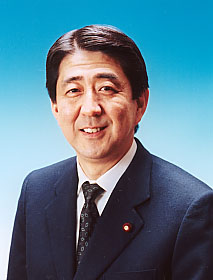
Former Japanese Prime Minister Shinzo Abe, who was assassinated in 2022 — 内閣官房内閣広報室
Japan's post-war political calm was shattered on Friday when a lone gunman cut down the nation's longest-serving prime minister in the middle of a campaign speech, a killing that recalled the darkest days of the 1930s. Shinzo Abe, 67, was shot from behind as he addressed a small crowd outside Yamato-Saidaiji Station in Nara City, and was pronounced dead hours later.
The suspected assassin, 41-year-old Tetsuya Yamagami, was arrested at the scene. He told investigators he acted out of resentment against the Unification Church, saying his mother's 2002 bankruptcy drove him to blame the religious group for ruining his family. He used an improvised firearm, a crude homemade weapon, according to police.
Abe was the first former Japanese prime minister to be assassinated since Saitō Makoto and Takahashi Korekiyo were killed in the February 26 incident of 1936, when mutinous army officers seized the capital. The attack during a routine political stop, with no visible security cordon, has raised urgent questions about the protection afforded to former leaders.
Prime Minister Fumio Kishida, visibly shaken, announced that a state funeral for Abe would be held on 27 September. The decision, made within hours of the killing, drew mixed reactions from a public that had watched Abe dominate politics for two decades as the architect of his 'Abenomics' program and a tireless advocate for revising the pacifist constitution.
Shinzo Abe was assassinated on 8 July 2022 while delivering a campaign speech outside Yamato-Saidaiji Station in Nara City.
The assassin, 41-year-old Tetsuya Yamagami, used an improvised firearm and was arrested at the scene.
Abe was the first former Japanese prime minister assassinated since Saitō Makoto and Takahashi Korekiyo in the 1936 February 26 incident.
Yamagami told investigators he shot Abe due to a grudge against the Unification Church over his mother's 2002 bankruptcy.
Prime Minister Fumio Kishida decided to hold a state funeral for Abe on 27 September 2022.
From the Provinces
1776 — Declaration Read Aloud in Philadelphia and Beyond
Colonel John Nixon read the Declaration of Independence to a gathered crowd at the State House yard in Philadelphia, while simultaneous readings took place in Trenton and Easton.
Colonel John Nixon, standing in the yard of the State House, raised the printed sheet and read aloud the words that severed the American colonies from the British Crown, his voice carrying over the assembled citizens of Philadelphia. The reading came at noon, and it was the first formal public proclamation of the Declaration of Independence, two days after the Congress at that same State House had given its unanimous assent to the document on the fourth of July.
The Declaration had already been set in type by the Pennsylvania Evening Post, which published it on the sixth, and copies were dispatched to the several colonies. But for the people of Philadelphia, this was the moment of hearing, not reading. Nixon, a colonel of the city's associators and a man of known patriotic zeal, was chosen to give voice to the text, and he did so with a deliberation that matched the gravity of the occasion.
At the very same hour, according to accounts from the neighboring provinces, the Declaration was read aloud in Trenton, New Jersey, and in Easton, Pennsylvania, so that the news might spread as rapidly as the post and the rider could carry it.
The first public readings of the Declaration occurred simultaneously on July 8, 1776, at noon, at three locations: Trenton, New Jersey; Easton, Pennsylvania; and Philadelphia.
Two days after its ratification, on July 6, 1776, the Declaration was published by The Pennsylvania Evening Post.
The Declaration was adopted unanimously by the Second Continental Congress on July 4, 1776, at the Pennsylvania State House in Philadelphia.
The Declaration was printed as the Dunlap broadside and two original copies are preserved at the Library of Congress in Washington, D.C.
Auction House
2021 — Leonardo Bear Drawing Fetches Record £8.8m
A small silverpoint drawing of a bear's head, one of only eight Leonardo drawings in private hands, sold in London for £8.8 million including fees.
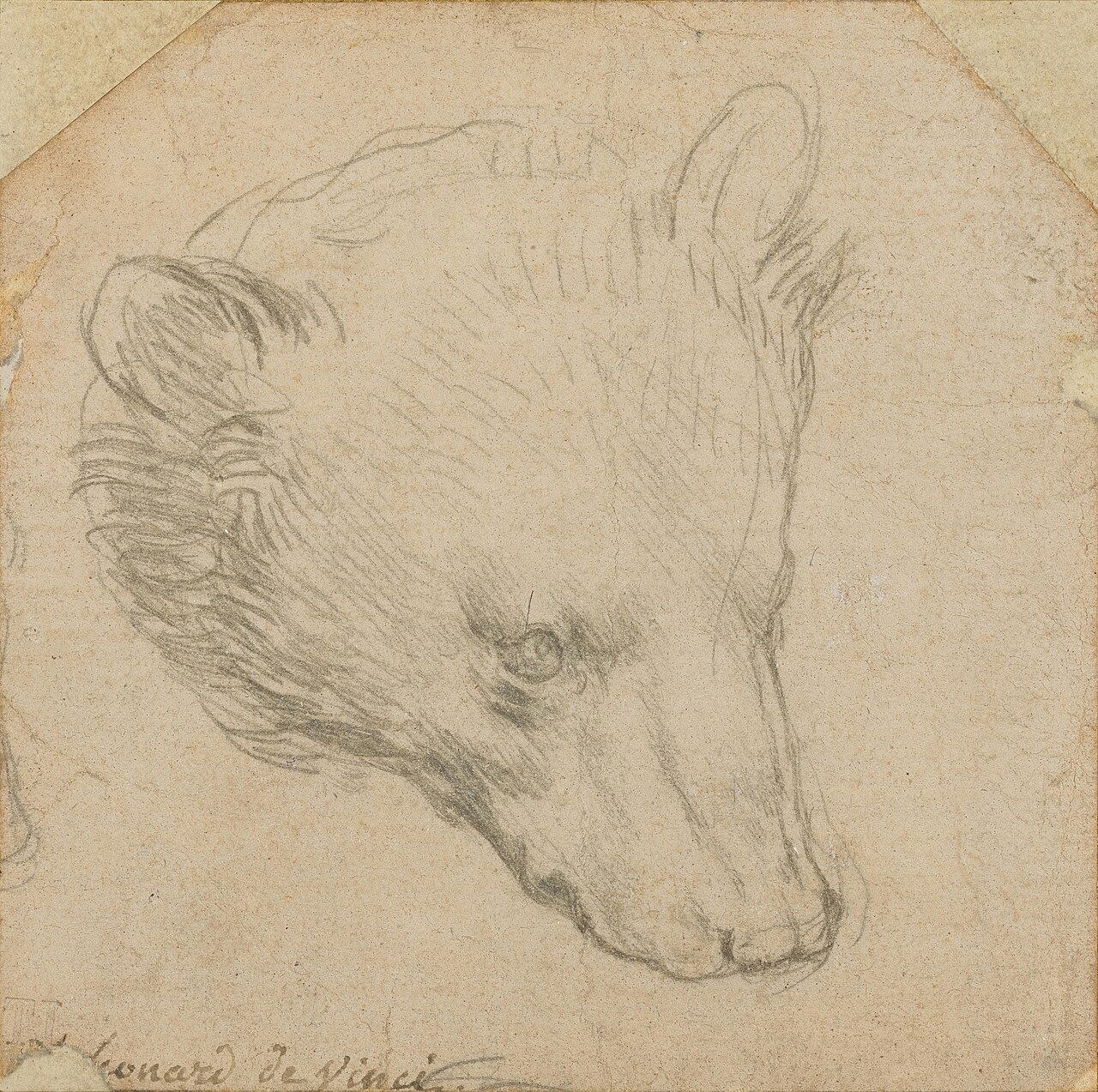
Leonardo da Vinci's Head of a Bear, which sold for a record £8.8 million — Leonardo da Vinci
£8.8 million. That is the sum a collector paid in London for Leonardo da Vinci's Head of a Bear, a small silverpoint drawing that set a record for any work on paper by the Renaissance master. The hammer fell at £7.5 million, and with the buyer's premium the total reached £8.8 million.
The sale was notable not only for the price but for the bidding. The drawing attracted a single bid, placed in person by a young American man and woman seated in the auction room. The same pair also bought an autographed manuscript by Sir Isaac Newton for £1.7 million, according to the auction house.
The previous record for a Leonardo drawing stood at £8.1 million, paid in 2001 for Horse and Rider. The Head of a Bear, executed in silverpoint on prepared paper, is among the most celebrated of Leonardo's animal studies, showing the artist's mastery of line and his close observation of the natural world.
The drawing sold for £7.5 million hammer price, totalling £8.8 million with fees.
It attracted only one bid, placed in person by a young American man and woman.
The bidders also purchased an autographed Sir Isaac Newton manuscript for £1.7 million.
The sale set a new record for a Leonardo drawing, surpassing the £8.1 million paid for "Horse and Rider" in 2001.
The drawing is one of only eight known Leonardo drawings in private hands.
Sports Desk
1990 — Brehme Penalty Gives West Germany World Cup
Andreas Brehme converted an 85th-minute penalty to give West Germany a 1-0 victory over Argentina in Rome, making Franz Beckenbauer the first man to win the trophy as player and coach.
West Germany won the World Cup for the third time on Sunday, beating defending champions Argentina 1-0 in Rome on an 85th-minute penalty by Andreas Brehme. The match at the Stadio Olimpico, watched by a crowd of more than 73,000, was a tense, physical affair that turned on a single spot kick.
Brehme, the left back, sent the ball past Argentine goalkeeper Sergio Goycochea, who had guessed correctly but could not reach the shot. It was the only goal of the game, and it secured the title for the Germans, who had lost the 1986 final to Argentina in Mexico City.
The match was the first rematch of a World Cup final, and it is the only time such a rematch has occurred in consecutive tournaments. Argentina, meanwhile, became the first team to fail to score in a World Cup final, a sobering statistic for a side that had been expected to mount a sterner challenge.
Pedro Monzón of Argentina became the first player to be sent off in a World Cup final, receiving a straight red card in the second half for a foul on Jürgen Klinsmann.
Andreas Brehme scored the game's only goal on a penalty kick in the 85th minute.
The match was the first rematch of a World Cup final and the only back-to-back rematch.
Argentina became the first team to fail to score in a World Cup final.
Pedro Monzón was the first player sent off in a World Cup final, receiving a straight red card.
West Germany became the first team to play in three consecutive World Cup finals (1982, 1986, 1990).
World Cup Desk
2014 — Germany Stuns Brazil 7-1 in Semi-Final, Sets Records
Germany led 5-0 within 29 minutes, a record semi-final margin, ending Brazil's 62-match home streak.
The Mineirão fell silent as Germany ran over Brazil 7-1 in the World Cup semi-final, shattering records and ending the host nation's hopes. Germany led 5-0 within 29 minutes, scoring four goals in a six-minute span. Miroslav Klose scored his 16th career World Cup goal, surpassing Brazil's Ronaldo as the all-time leading scorer. The loss broke Brazil's 62-match unbeaten streak at home in competitive matches, dating to the 1975 Copa América. It was the largest margin of victory in a World Cup semi-final. Germany also overtook Brazil as the highest-scoring team in tournament history. Brazil were without Neymar, out with a fractured vertebra, and captain Thiago Silva, suspended on yellow cards. The defeat left the host nation reeling, with many fans in tears as the final whistle approached.
Germany led 5–0 within 29 minutes, with four goals scored in a six-minute span.
Miroslav Klose scored his 16th career World Cup goal, surpassing Brazil's Ronaldo as the all-time record goalscorer.
Brazil's loss broke their 62-match unbeaten streak at home in competitive matches, dating to the 1975 Copa América.
The match was the largest margin of victory in a FIFA World Cup semi-final.
Germany overtook Brazil as the highest-scoring team in World Cup tournament history.
European Affairs
1709 — Poltava Victory Reshapes Northern War; Charles XII Flees
Russia's decisive win at Poltava destroyed the Swedish army and drove Charles XII into exile, reviving the anti-Swedish coalition.
The balance of the Great Northern War has shifted decisively. On July 8, 1709, Russian troops under Peter the Great destroyed the main Swedish army at Poltava, forcing King Charles XII to flee to Bender in the Ottoman Empire.
The main Swedish army was destroyed at the decisive Battle of Poltava on July 8, 1709.
The battle forced Charles XII into exile in the Ottoman town of Bender.
Denmark–Norway and Saxony re-entered the war against Sweden after the defeat at Poltava.
Augustus the Strong regained the Polish throne following the Swedish defeat at Poltava.
Peter the Great and Augustus the Strong allied again in the Treaty of Thorn after the battle.
Far East War Desk
1950 — U.S. Forces Pull Back From Cheonan After Heavy Losses
American troops withdrew from Cheonan on July 8, 1950, following heavy casualties inflicted by a North Korean attack.
The summer of 1950 has brought hard retreats for United Nations forces in Korea. American troops withdrew from Cheonan on July 8, 1950, after suffering heavy casualties from a North Korean attack. The town, a rail junction south of Seoul, fell as the North Korean army pressed its offensive.
American troops withdrew from Cheonan on July 8, 1950, after suffering heavy casualties from a North Korean attack.
Southwest Military Affairs
1947 — Army Says Crashed 'Disc' Was a Weather Balloon
Major Walter Haut’s July 8 press release said the military recovered a 'flying disc' near Roswell, but the army retracted it, saying the crashed object was a conventional weather balloon.
Major Walter Haut, public information officer at Roswell Army Air Field, issued a press release July 8 stating the military had recovered a 'flying disc' near Roswell, New Mexico. The announcement made international headlines. Within a day, however, the army retracted it, saying the crashed object was a conventional weather balloon. Debris found by rancher W. W. 'Mac' Brazel consisted of tinfoil, rubber, tape, and thin wooden beams. A demonstration of weather balloon usage for the press is expected later this week. The swift reversal has left many questions unanswered, but the army insists there is nothing unusual about the wreckage.
On July 8, 1947, RAAF public information officer Walter Haut issued a press release stating the military had recovered a 'flying disc' near Roswell.
The announcement made international headlines but was retracted within a day.
The debris was actually from a top-secret Project Mogul balloon train launched on June 4, 1947 from Alamogordo Army Air Field.
To obscure the purpose and source of the debris, the army reported it was merely a conventional weather balloon.
Four officers gave a false demonstration of weather balloon usage to the press on July 10, 1947.
What the papers printed that morning
Real front pages from 8 July 1950, scanned by the Library of Congress. These are archival documents, not our work.
1839John D. RockefellerJohn Davison Rockefeller Sr. was an American businessman and philanthropist.
1593Artemisia GentileschiArtemisia Lomi Gentileschi was an Italian Baroque painter.
1857Alfred BinetAlfred Binet, born Alfredo Binetti, was a French psychologist who together with Théodore Simon invented the first practical intelligence test, the Binet–Simon Intelligence Test.
1906Philip JohnsonPhilip Cortelyou Johnson was an American architect who designed modern and postmodern architecture.
1914Billy EckstineWilliam Clarence Eckstine was an American jazz and pop singer and a bandleader during the swing and bebop eras.
1545CarlosDon Carlos, Prince of Asturias, was the eldest son and heir apparent of King Philip II of Spain.
1838Eli LillyEli Lilly was an American Union Army officer, pharmacist, chemist, and businessman who founded Eli Lilly and Company.
1882Percy GraingerPercy Aldridge Grainger was an Australian-born composer, arranger and pianist who moved to the United States in 1914 and became an American citizen in 1918.
1892Richard AldingtonRichard Aldington was an English writer and poet.
1900George AntheilGeorge Johann Carl Antheil was an American avant-garde composer, pianist, author, and inventor whose modernist musical compositions explored the sounds – musical, industrial, and mechanical – of the early 20th century.
1907George W. RomneyGeorge Wilcken Romney was an American businessman and politician.
1910Carlos Betances RamírezThe 65th Infantry Regiment, nicknamed "The Borinqueneers" during the Korean War for the original Arawak Native Taino name for Puerto Rico (Borinquen), is a Puerto Rican regiment of the United States Army.
1914Jyoti BasuJyoti Basu was an Indian Marxist theorist, communist activist, and politician.
1920Godtfred Kirk ChristiansenGodtfred Kirk Christiansen was a Danish businessman who was the managing director of the Lego Group from 1957 to 1973.
1921John MoneyJohn William Money was a New Zealand American psychologist, sexologist and professor at Johns Hopkins University known for his research on human sexual behavior and gender.
1923Val BettinValentine John Bettin was an American actor, known for using an English accent in all of his roles.
1935Steve LawrenceSteve Lawrence was an American singer, comedian, and actor.
1940Joe B. MauldinJoseph Benson Mauldin Jr. was an American bassist, songwriter, and audio engineer who was best known as the bassist for the early rock and roll group the Crickets.
1944Jeffrey Tambor(82 this year)Jeffrey Michael Tambor is an American actor.
1948Raffi(78 this year)Raffi Cavoukian, known professionally by the mononym Raffi, is an Armenian-Canadian singer-lyricist and author.
1952Marianne Williamson(74 this year)Marianne Deborah Williamson is an American self-help author, speaker, and political activist.
1952Jack Lambert(74 this year)John Harold Lambert is an American former professional football player who was a linebacker for his entire 11-year career for Pittsburgh Steelers of the National Football League (NFL).
1958Tzipi Livni(68 this year)Tziporah Malka "Tzipi" Livni is an Israeli politician, diplomat and lawyer.
1962Joan Osborne(64 this year)Joan Elizabeth Osborne is an American singer-songwriter.
1973Kathleen Robertson(53 this year)Kathleen Robertson is a Canadian actress.
Quote of the Day
“There is nothing either good or bad, but thinking makes it so.” — William Shakespeare, Hamlet
July 8 History Quiz
On July 8, 2022, which former Prime Minister was assassinated while giving a campaign speech?
Shinzo Abe
In 1776, the Declaration of Independence received its first public reading in which city?
Philadelphia
In the 1990 FIFA World Cup final, West Germany defeated which team?
Every event on this page was picked by hand from the historical record, written up as a news report, and checked against its source. Photographs are matched to the event they illustrate and verified before they are used. Sources are linked on each story.


![Front page of St. Croix avis, Christiansted, St. Croix [V.I.], 8 July 1950](https://tile.loc.gov/image-services/iiif/service:ndnp:vnstcsc:batch_vnstcsc_canaan_ver01:data:sn84037526:00513681264:1950070801:0573/full/pct:50/0/default.jpg)
 “Windy”,
  The Arrangement, Elia Kazan
 “Lean On Me”,
  “Good Thing”,
 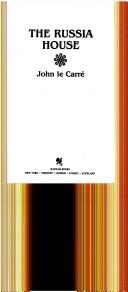 The Russia House, John le Carré
 The Rainmaker, John Grisham
 “Be With You”,
 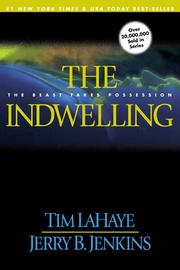 The Indwelling, Tim LaHaye and Jerry B. Jenkins
 “Despacito”,
 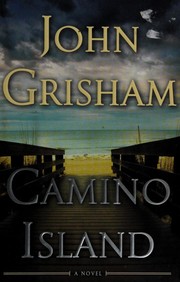 Camino Island, John Grisham
 “Last Night”,
  The Five-Star Weekend, Elin Hilderbrand


