Our front page for November 11 — written and set by The Yesterday Times from the events below. Not an archival document.
Day of the year
315
Days left in 2026
50
In 2026 it falls on a
Wednesday
Star sign
Scorpio
Birthstone
Topaz
On November 11 in 1918, 108 years ago, Marshal Foch Accepts German Surrender at Compiègne. This page reports 9 stories from the date, 25 people born on this day.
The stories in full
The Western Front
1918 — Marshal Foch Accepts German Surrender at Compiègne
Armistice signed at dawn in railway carriage — fighting halts at eleven o'clock this morning after four years of slaughter — Germany to yield fleet, guns, and Rhineland
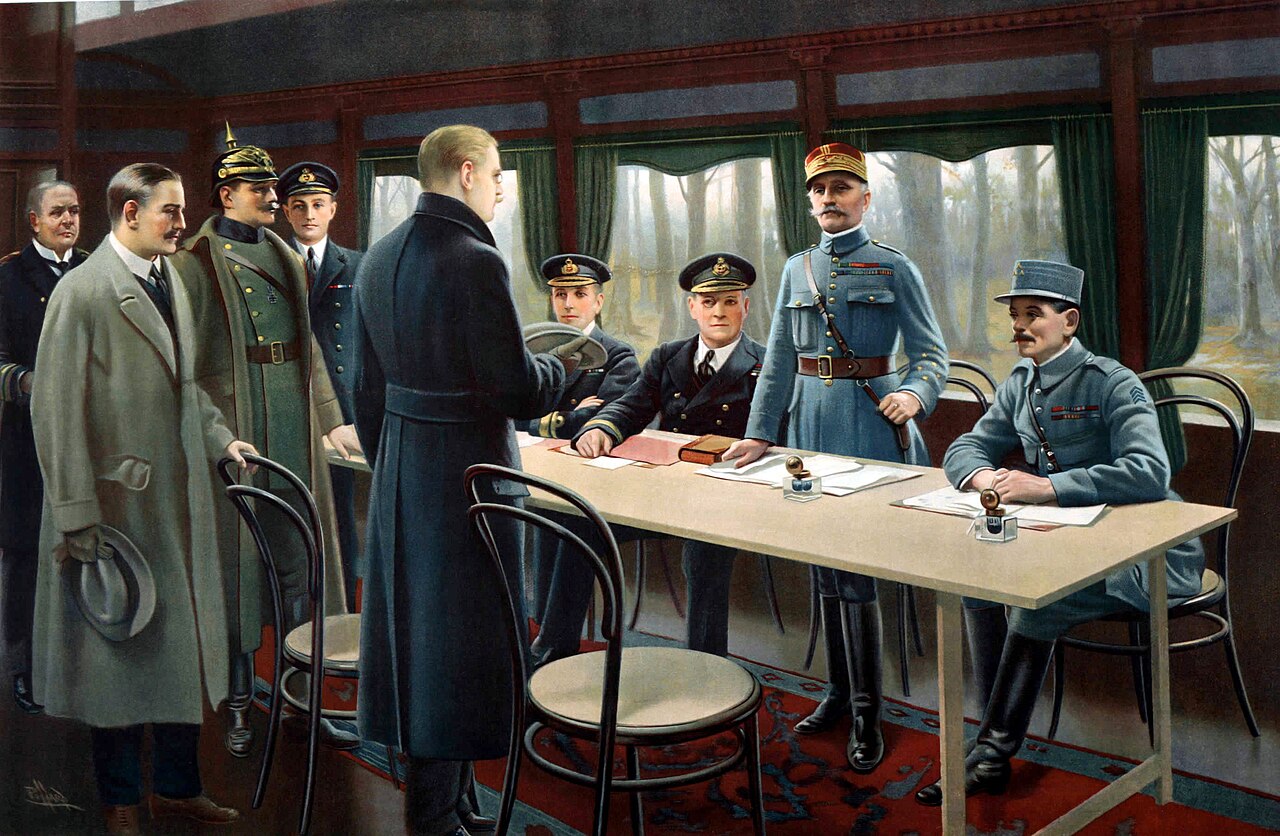
German and Allied officers sign the armistice in a railway carriage at Compiègne — Maurice Pillard Verneuil
COMPIÈGNE, France, Nov. 11 — Marshal Ferdinand Foch, Supreme Commander of the Allied Armies, received the German delegation at five o'clock this morning in his private railway carriage in the Forest of Compiègne and dictated the terms that end the Great War.
The armistice, signed by German Secretary of State Matthias Erzberger, comes into force at eleven o'clock Paris time, though word reached the front only after 2,738 men had perished in final actions this morning. The German envoys, who departed Berlin November 6, found Foch immovable: total cessation of hostilities, withdrawal of all German forces west of the Rhine, and surrender of aircraft, warships, and military materiel.
The scene in the forest clearing was tense.
The armistice was signed in a railway carriage in the Forest of Compiègne, near the town of Compiègne, France.
The armistice was agreed at 5:00 a.m. by Allied Supreme Commander Marshal Ferdinand Foch and came into force at 11:00 a.m. Paris Time on 11 November 1918.
Fighting continued until 11 a.m. on 11 November 1918, with 2,738 men dying on the last day of the war.
The German delegation was led by Matthias Erzberger, who departed for France on 6 November 1918.
The armistice terms included the cessation of hostilities, withdrawal of German forces west of the Rhine, and surrender of aircraft, warships, and military materiel.
1920 — King Unveils Cenotaph as Unknown Warrior Laid to Rest
More than a million mourners thronged the temporary monument in 1919 — now Portland stone replaces wood and plaster for the nation's permanent shrine.
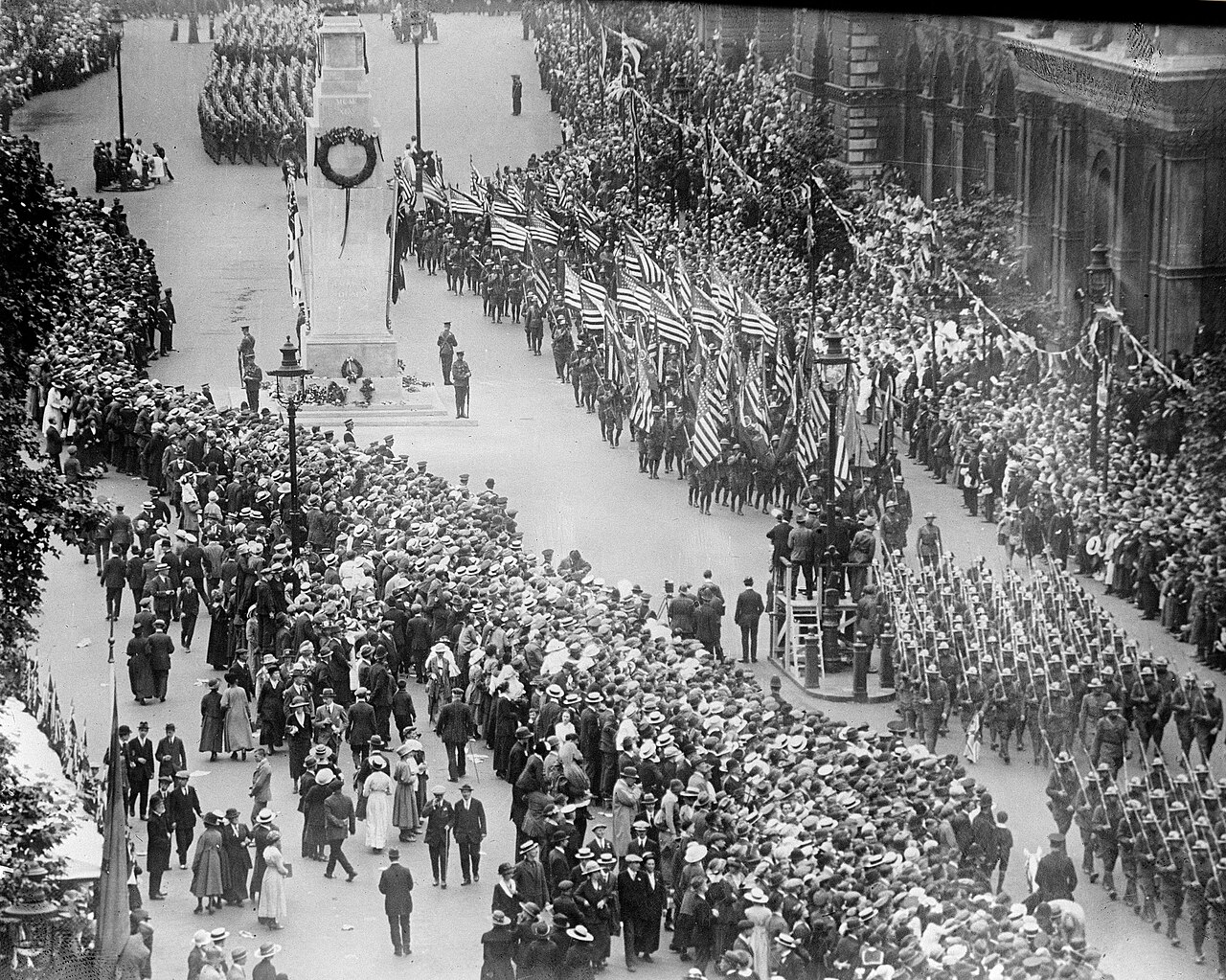
Troops march past the Cenotaph as crowds line Whitehall — Agence Rol
King George V unveiled Sir Edwin Lutyens's permanent Cenotaph in Whitehall this morning as the Unknown Warrior was borne through immense crowds to Westminster Abbey. France buried her own unknown soldier beneath the Arc de Triomphe the same hour. Railway Van No.132, which had carried Edith Cavell and Charles Fryatt, brought the casket to London. Six black horses of the Royal Horse Artillery drew the gun carriage through streets where no voice rose.
The Unknown Warrior was buried on 11 November 1920, simultaneously with a similar interment of a French unknown soldier at the Arc de Triomphe.
The Cenotaph, designed by Sir Edwin Lutyens and built from Portland stone, was unveiled by King George V on 11 November 1920.
The coffin of the Unknown Warrior was carried to London in South Eastern and Chatham Railway General Utility Van No.132, which had previously carried the bodies of Edith Cavell and Charles Fryatt.
The casket was placed onto a gun carriage of the Royal Horse Artillery and drawn by six black horses through immense and silent crowds.
The grave was capped with a black Belgian marble stone, the only tombstone in Westminster Abbey on which it is forbidden to walk.
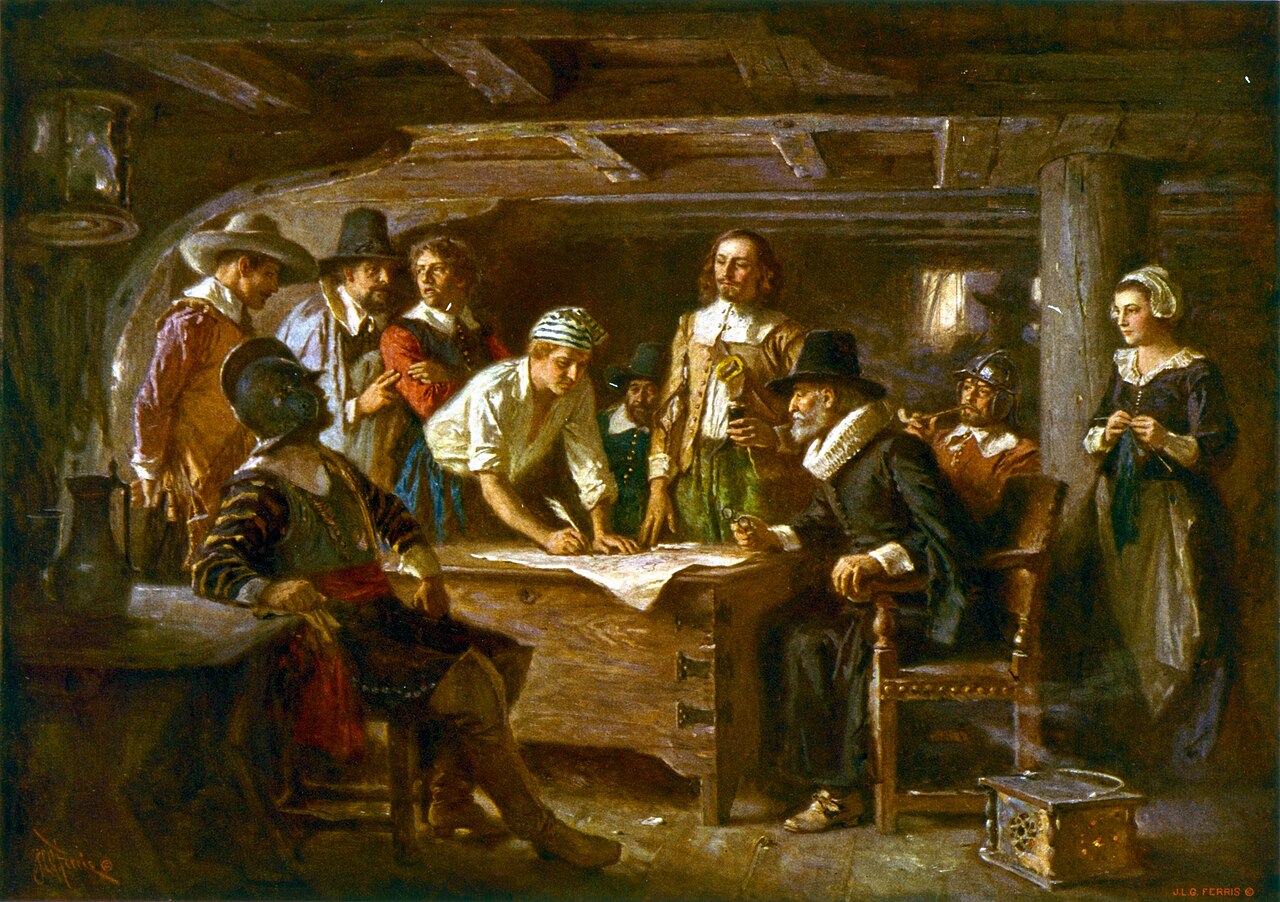
AT ANCHOR IN CAPE COD HARBOR, Nov. 11 — In the great cabin of the Mayflower, where the beams stand scarce five feet above the deck, the ship's passengers gathered this day to affix their names to a compact binding themselves into a civil body politic before setting foot upon the land.
The Mayflower Compact is signed in what is now Provincetown Harbor near Cape Cod.
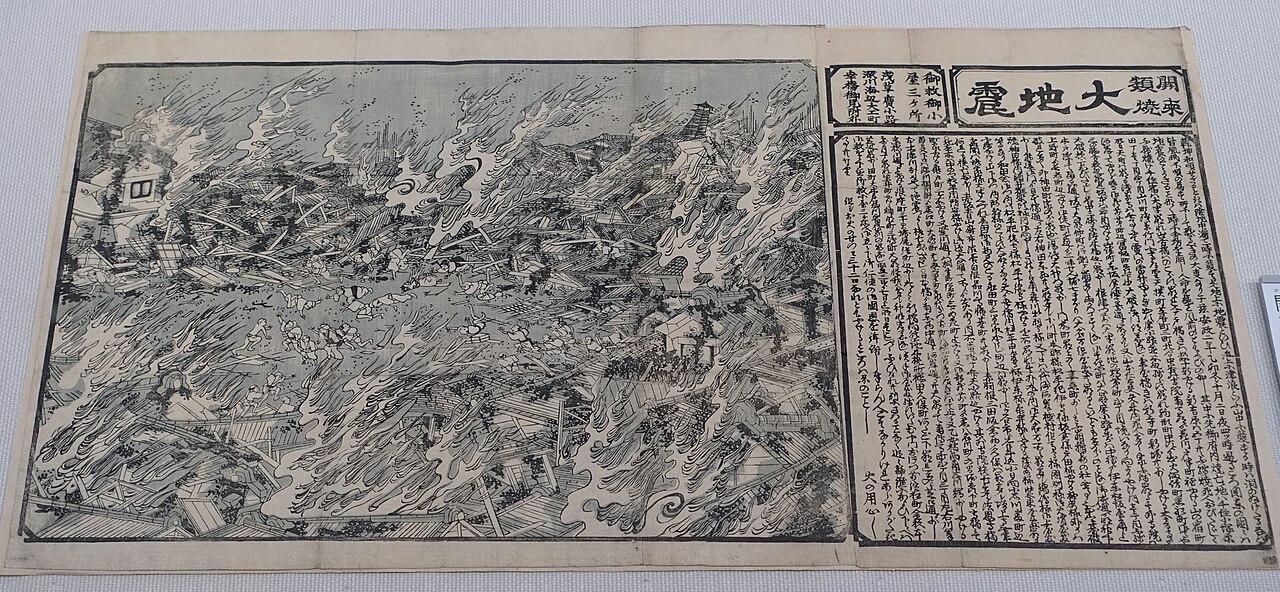
1855 — Edo Earthquake Kills Thousands, Razes 14,000 Houses
Seven to ten thousand perish in the Kantō — flames consume what the tremors spared — a disaster unmatched in memory
Flames and rubble fill the streets after the earthquake strikes Edo — Daderot
EDO, November 11 — The ancient capital of the Shōgun lies in ruins, and with it the fairest portion of the Kantō plain. A violent earthquake struck this city and its environs in the early hours, bringing down the timber houses of the common folk and kindling fires that raged unchecked through narrow lanes. The death toll stands between seven and ten thousand souls, and some fourteen thousand buildings have been destroyed.
A powerful earthquake occurs in Edo, Japan, causing considerable damage in the Kantō region from the shaking and subsequent fires. It had a death toll of 7,000–10,000 people and destroyed around 14,000 buildings.
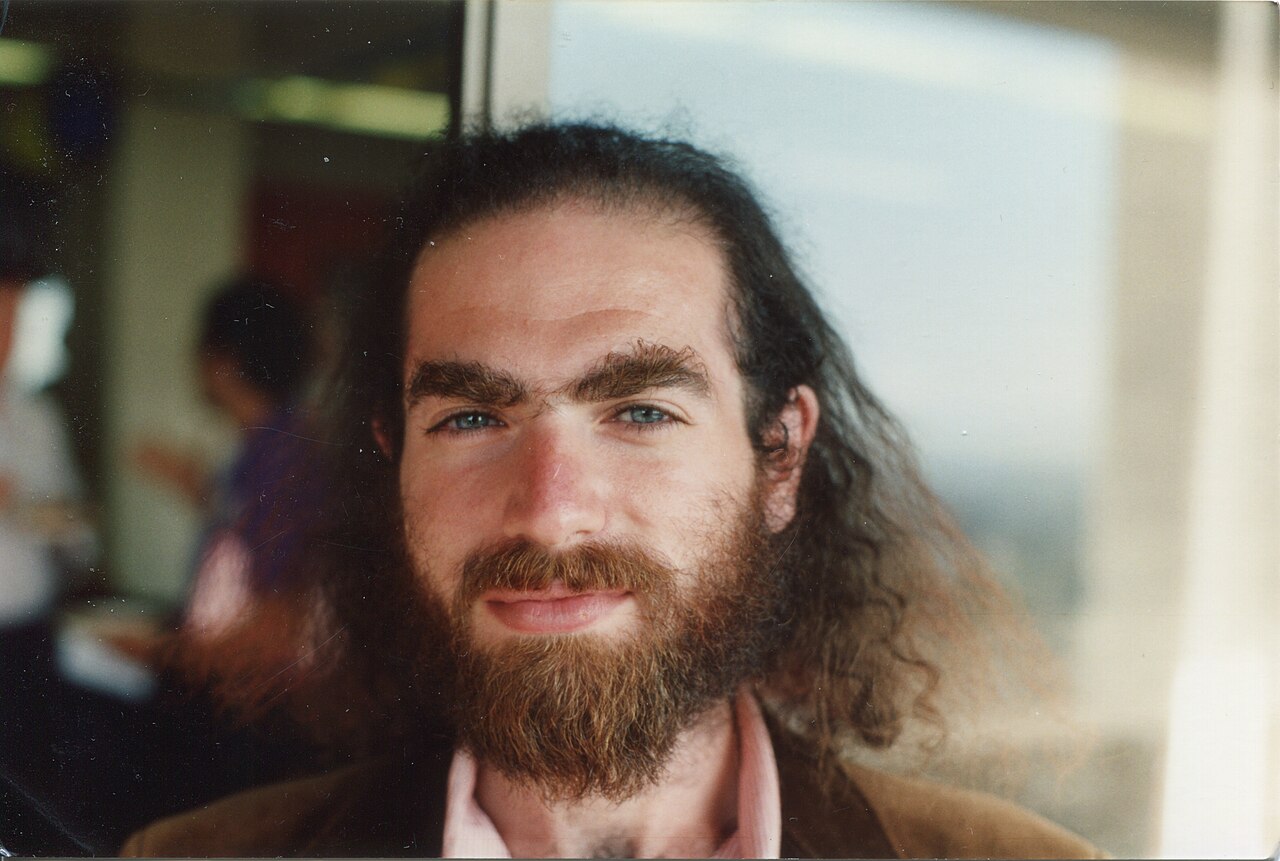
On November 11, a Russian mathematician posted the first installment of a proof that opens a question in geometry that has stood since 1904.
The mathematician at work in his St Petersburg office — George Bergman
ST. PETERSBURG, November 11 — The century's deepest questions in geometry have stood like locked doors since Henri Poincaré first posed his famous conjecture in 1904. Today a reclusive Russian mathematician has posted to the Internet the first installment of a proof that opens one of them.
Russian mathematician Grigori Perelman posts the first of three preprint texts with his proof of the Poincaré conjecture. It remains the only of the Millennium Prize Problems in mathematics to be solved. He later refused both the prize money from Clay Mathematics Institute as well as the Fields Medal for his work.
1982 — Columbia Reaches Orbit on First Operational Shuttle Flight; Crew of Four Opens Space Transportation Era
STS-5 clears the pad at 7:19 a.m. — the reusable spacecraft begins its promised routine
CAPE CANAVERAL, November 11 — Vance Brand, Robert Overmyer, William Lenoir and Joseph Allen rode a pillar of fire into orbit this morning, and with them went NASA's wager that spaceflight could become ordinary. The four astronauts commanded Space Shuttle Columbia as it lifted from Pad 39A at Kennedy Space Center at 7:19 a.m., beginning STS-5, the first operational mission of the shuttle program. Unlike the test flights that preceded it, this launch carries a commercial satellite payload and a crew trained for routine deployment rather than experimental verification.
Space Shuttle Columbia launches from the Kennedy Space Center on STS-5, the first operational mission of the Space Shuttle program.
1675 — Leibniz First to Demonstrate New Method of Finding Areas Under Curves
The Hanover philosopher-mathematician applies his integral calculus to the graph of y = ƒ(x) — a general solution where none existed
PARIS, November 11 — In an age when geometry served astronomy and the new mechanics alike, the problem of quadrature, finding the space beneath a curve, has defeated the most skilled analysts of Europe. Gottfried Wilhelm Leibniz, the Hanoverian councilor and philosopher, has now demonstrated a general method for this ancient task, applying what he terms integral calculus to determine the area under the graph of y = ƒ(x). The demonstration, made this autumn to the learned societies with which he corresponds, arrives three years after his first announcement of a differential method.
Gottfried Leibniz demonstrates integral calculus for the first time to find the area under the graph of y = ƒ(x).
1572 — New Star Blazes Forth in Cassiopeia — Danish Astronomer Tycho Brahe First to Chronicle the Marvel
First seen in early November of 1572, the new star in Cassiopeia outshines Venus and equals Jupiter in brightness, its lack of parallax measured by Brahe with brass quadrants at Herrevad Abbey and Uraniborg.
COPENHAGEN, November 11 — Tycho Brahe, gentleman astronomer of Denmark, hath this autumn observed a new star of exceeding brightness where none before stood, in the constellation Cassiopeia.
The apparition, first sighted in early November of this year 1572, burneth now with a steady light surpassing Venus and even rivalling Jupiter. Brahe, having repaired to his instruments at Herrevad Abbey and thereafter at his estate of Uraniborg, hath measured the phenomenon with his great brass quadrants and findeth it utterly without parallax, thereby proving it no mere comet or atmospheric fire but a generation in the aethereal regions themselves.
This discovery shattereth the ancient consensus of Aristotle, who held the heavens immutable above the sphere of the moon.
1821Fyodor DostoevskyFyodor Mikhailovich Dostoevsky was a Russian philosopher, novelist, short-story writer, essayist and journalist.
1898René ClairRené Clair, born René-Lucien Chomette, was a French filmmaker and writer.
1928Carlos FuentesCarlos Fuentes Macías was a Mexican novelist, essayist and ambassador to France.
1930Mildred DresselhausMildred Spiewak Dresselhaus, known as the "Queen of Carbon Science", was an American physicist, materials scientist, and nanotechnologist.
1868Édouard VuillardJean-Édouard Vuillard was a French painter, decorative artist, and printmaker.
1945Daniel Ortega(81 this year)José Daniel Ortega Saavedra is a Nicaraguan politician, revolutionary, and former guerrilla fighter who, under various titles, has been the leader of Nicaragua since 2007 and previously from 1979 to 1990.
1964Calista Flockhart(62 this year)Calista Kay Flockhart is an American actress.
1050Henry IVHenry IV was Holy Roman Emperor (1084–1105), King of Germany (1054–1105), and King of Italy and Burgundy (1056–1105).
1579Frans SnydersFrans Snyders or Frans Snijders was a Flemish painter of animals, hunting scenes, market scenes, and still lifes.
1743Carl Peter ThunbergCarl Peter Thunberg, also known as Karl Peter von Thunberg, Carl Pehr Thunberg, or Carl Per Thunberg, was a Swedish naturalist and an "apostle" of Carl Linnaeus.
1867Shrimad RajchandraShrimad Rajchandra, also known as Param Krupalu Dev, was a Jain poet, mystic, philosopher, scholar, and a major reformer from India.
1869Gaetano BresciGaetano Bresci was an Italian anarchist who assassinated King Umberto I of Italy.
1869Victor Emmanuel III of ItalyVictor Emmanuel III was King of Italy from 29 July 1900 until his abdication on 9 May 1946.
1888Abul Kalam AzadAbul Kalam Ghulam Muhiyuddin, better known as Maulana Azad and sometimes referred to as Abul Kalam Azad, was an Indian writer, activist of the Indian independence movement and statesman.
1888J. B. KripalaniJivatram Bhagwandas Kripalani, popularly known as Acharya Kripalani, was an Indian politician, noted particularly for holding the presidency of the Indian National Congress during the transfer of power in 1947 and the husband of Sucheta Kripalani.
1899Pat O'BrienWilliam Joseph Patrick O'Brien was an American film actor with more than 100 screen credits.
1912Thomas C. MannThomas Clifton Mann was an American diplomat who specialized in Latin American affairs.
1914Howard FastHoward Melvin Fast was an American author and television writer.
1914Henry WadeHenry Menasco Wade was an American lawyer who served as district attorney of Dallas County from 1951 to 1988.
1926Harry LumleyHarry "Apple Cheeks" Lumley was a Canadian professional ice hockey goaltender in the National Hockey League (NHL).
1927Martin ŠpegeljMartin Špegelj was a Croatian army general and politician who served as the second defense minister of Croatia and, later, the chief of staff of the newborn Croatian army and inspector-general of the army.
1929Hans Magnus EnzensbergerHans Magnus Enzensberger was a German author, poet, playwright, essayist, translator, and editor.
1935Bibi AnderssonBerit Elisabet "Bibi" Andersson was a Swedish actress, best known for her frequent collaborations with filmmaker Ingmar Bergman.
1953Andy Partridge(73 this year)Andrew John Partridge is an English guitarist, singer-songwriter and record producer best known for co-founding the band XTC.
1972Adam Beach(54 this year)Adam Rueben Beach is a Canadian actor.
Quote of the Day
“The woods are lovely, dark and deep, But I have promises to keep, And miles to go before I sleep.” — Robert Frost, New Hampshire
November 11 History Quiz
In what year was the Armistice signed between Germany and the Allies in Compiègne?
1918
Which mathematician posted the first proof of the Poincaré Conjecture online in November 2002?
Grigori Perelman
What was the name of the supernova observed by Tycho Brahe on November 11, 1572?
Every event on this page was picked by hand from the historical record, written up as a news report, and checked against its source. Photographs are matched to the event they illustrate and verified before they are used. Sources are linked on each story.

![Front page of Evening public ledger, Philadelphia [Pa.], 11 November 1918](https://tile.loc.gov/image-services/iiif/service:ndnp:pst:batch_pst_geary_ver01:data:sn83045211:00237282541:1918111101:0773/full/pct:50/0/default.jpg)

 “To Sir With Love”,
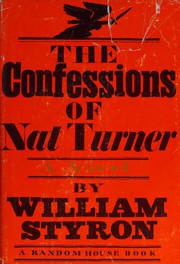 The Confessions of Nat Turner, William Styron
 “I Can See Clearly Now”,
  The Dark Half, Stephen King
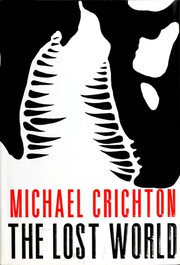 The Lost World, Michael Crichton
 The Last Precinct, Patricia Cornwell
 “Rockstar”,
 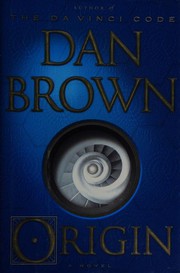 Origin, Dan Brown
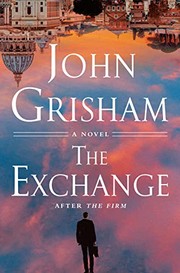 The Exchange, John Grisham


