Our front page for November 9 — written and set by The Yesterday Times from the events below. Not an archival document.
Day of the year
313
Days left in 2026
52
In 2026 it falls on a
Monday
Star sign
Scorpio
Birthstone
Topaz
On November 9 in 1989, 37 years ago, East Germans Flood West as 28-Year Berlin Wall Opens After Press Conference. This page reports 11 stories from the date, 25 people born on this day.
The stories in full
Cold War Watch
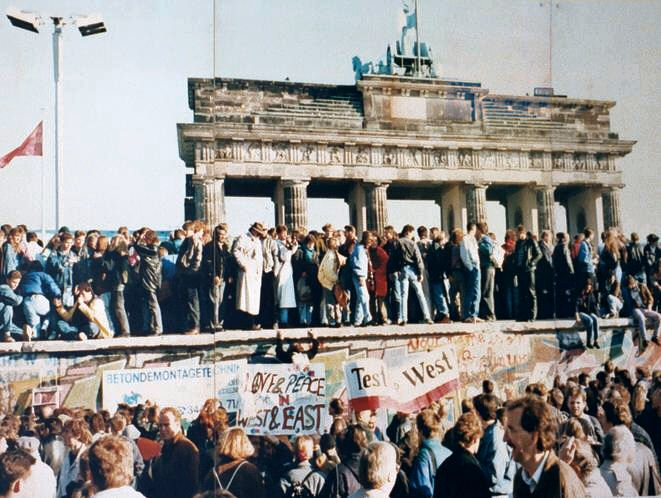
1989 — East Germans Flood West as 28-Year Berlin Wall Opens After Press Conference
Politburo spokesman's 'effective immediately' remark triggers mass border crossing.
East and West Berliners crowd onto the Wall at the Brandenburg Gate — Wikimedia Commons
East Germany abandoned the Berlin Wall tonight, ending the 28-year barrier that divided the city. Politburo spokesman Günter Schabowski announced new travel regulations at a 6 p.m. press conference, saying they took effect immediately when questioned. West German television broadcast his remarks at 7:17 p.m. and 8 p.m., reaching nearly all of East Germany. At 11:30 p.m., Stasi officer Harald Jäger opened the gates at Bornholmer Straße and thousands poured through. The wall had stood since 1961 with two 4-metre walls, a mined death strip and 302 watchtowers. Millions are expected to cross in coming days; hundreds of thousands may move permanently. Jäger later told reporters he acted alone after his superiors failed to answer his urgent calls for instructions. West Berliners gathered at the crossing cheered and embraced the arrivals, pressing West German marks and beer into their hands. Some East Berliners returned home before midnight, carrying bananas and chocolate.
Günter Schabowski announced the immediate opening of the border at a press conference starting at 18:00 CET on 9 November 1989.
Schabowski read a note from Egon Krenz and replied 'effective immediately, without delay' when asked when the regulations would take effect.
At 23:30, Stasi Officer Harald Jäger opened the gates at the Bornholmer Straße border crossing, allowing East Berliners into West Berlin.
The West German television channels ZDF and ARD broadcast Schabowski's press conference in their evening news at 19:17 and 20:00, reaching nearly all of East Germany.
The Berlin Wall had stood for 28 years, with two 4-metre-tall walls, a mined death strip, and 302 watchtowers by 1989.
2023 — Surgeons Transplant Whole Human Eye in World First
NYU Langone Health team announces breakthrough procedure at Manhattan hospital.
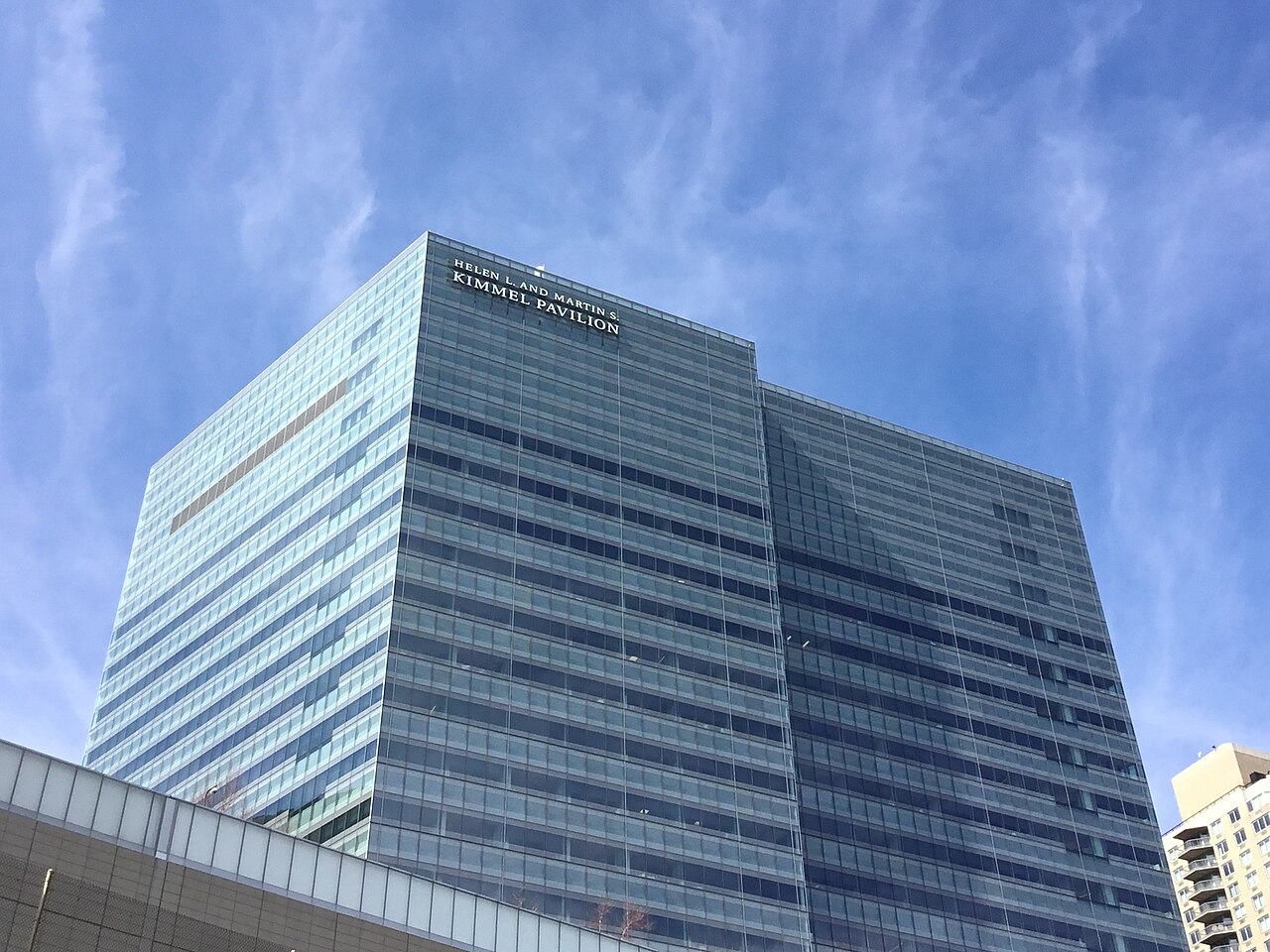
NYU Langone Health's Kimmel Pavilion, where surgeons performed the transplant — Kidfly182
In the long arc of transplantation medicine, from the first kidney in 1954 to face and hand replacements of recent decades, surgeons have now crossed into territory once thought beyond reach. A team at NYU Langone Health has performed the world's first whole eye transplant, the hospital announced today.
The procedure marks a watershed in surgical capability. Whole eye transplantation had remained unachieved due to the optic nerve's complexity and the challenges of restoring vision. The surgery took place at NYU Langone's Kimmel Pavilion in Manhattan. Hospital officials did not release details of the recipient's condition or whether visual function has been restored. The surgical team will present findings at upcoming medical conferences. The donor tissue came from a male patient in his 50s who had also donated a kidney and liver. Researchers will monitor whether the transplanted eye shows any signs of neural integration in coming months.
U.S. surgeons at NYU Langone Health announce the world's first whole eye transplant.
1942 — Paulus Drives 6th Army to Volga, 90% of Stalingrad Falls
German forces split Soviet defenders into two pockets along the river.
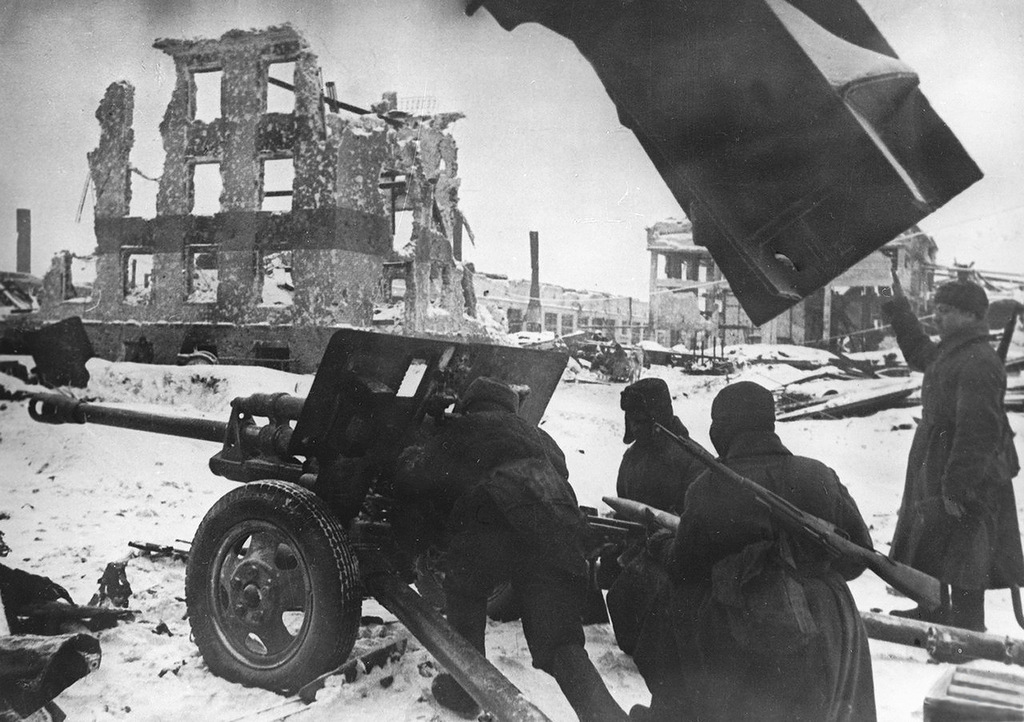
German gun crew fires into Soviet positions amid the ruins of Stalingrad — Wikimedia Commons
General Friedrich Paulus has pushed his 6th Army to the banks of the Volga, seizing nine-tenths of the ruined city of Stalingrad and driving a wedge between the remaining Soviet defenders.
German gun crews now fire into Soviet positions from the rubble of what was once a thriving industrial center on the great bend of the Volga. The capture of 90 percent of the city leaves Red Army forces clinging to two narrow pockets along the river's west bank. The battle has raged since August, reducing Stalingrad to shattered brick and twisted steel. Soviet resistance continues in pockets along the waterfront, but German command reports the city effectively secured. The Volga, Russia's vital artery to the Caspian and Caucasus oil fields, is now within artillery range of German positions. Civilians who remained in the city have taken refuge in cellars and underground tunnels, subsisting on what stores they salvaged before the encirclement. Temperatures on the steppe have begun to fall, and quartermasters on both sides are already requisitioning winter clothing from surrounding villages. The 6th Army's advance has cost it heavily: casualty lists forwarded to Berlin indicate infantry strength in some regiments has fallen by half since August.
Battle of Stalingrad: German forces of the 6th Army under general Friedrich Paulus reach the river bank of the Volga, capturing 90% of the ruined city of Stalingrad and splitting the remaining Soviet forces into two narrow pockets.
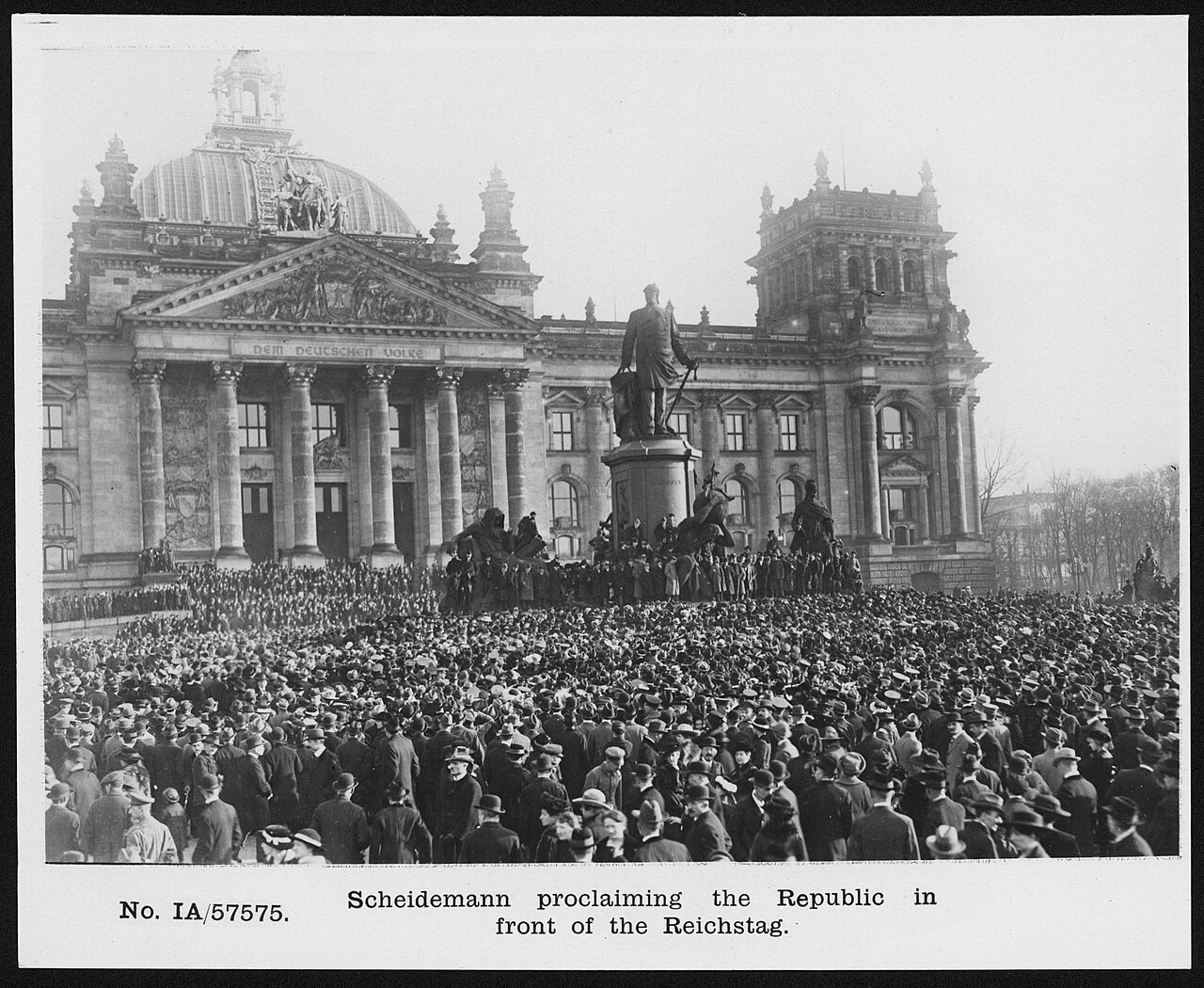
The Hohenzollern dynasty ended today as Kaiser Wilhelm II abdicated and Germany was proclaimed a Republic. The Kaiser fled to Holland as revolutionary crowds filled Berlin streets. Social Democrat Philipp Scheidemann stood before the Reichstag to declare the new government. The German Revolution, sparked by naval mutiny and spreading unrest, forced the monarch from his throne after 30 years of rule. The armistice with the Allies is expected within hours.
Kaiser Wilhelm II of Germany abdicates after the German Revolution, and Germany is proclaimed a Republic.
Jann Wenner and music critic Ralph J. Gleason released the first issue of Rolling Stone magazine today. The 25-cent tabloid features John Lennon on its pulp newsprint cover. Wenner, 21, borrowed $7,500 from family members to fund the San Francisco startup. The 24-page debut leads with coverage of the Monterey International Pop Festival. Gleason, a Chronicle veteran, serves as co-editor. Wenner promises coverage of music and its broader cultural attitudes.
The first issue was released on November 9, 1967, and featured John Lennon on the cover.
Jann Wenner borrowed $7,500 from his family and his future wife's parents to pay for the magazine's setup costs.
The first issue was in tabloid-sized pulp newsprint format with a cover price of 25 cents.
The magazine was founded in San Francisco by Jann Wenner and music critic Ralph J. Gleason.
The lead article in the first issue covered the Monterey International Pop Festival.
The 1566 Ottoman span plunged into the Neretva River after hours of bombardment.
Croatian Defence Council forces destroyed the Stari Most today. The 16th-century arch collapsed into the Neretva River. Built in 1566 under Sultan Suleiman the Magnificent, the bridge had linked Mostar's communities for 427 years.
Bosnian War: Croatian Defence Council forces destroyed the Stari Most, a 16th-century bridge crossing the river Neretva in the city of Mostar (rebuilt bridge pictured).
The coup of 18 Brumaire installs Napoleon as First Consul of new Consulate Government.
France's revolutionary government collapsed Saturday as Napoleon Bonaparte orchestrated a military coup that dissolved the five-man Directory and established a new Consulate regime with Bonaparte himself as First Consul.
The action, executed on 18 Brumaire by the revolutionary calendar, overturned the constitution of 1795.
Napoleon Bonaparte leads the Coup of 18 Brumaire ending the Directory government, and becoming First Consul of the successor Consulate Government.
1917 — Balfour Declaration Published in The Times, Pledges Jewish Homeland in Palestine
A letter published in The Times of London commits Britain to establish a national home for the Jewish people in Palestine.
Amid the grinding attrition of total war, a single letter published today in The Times of London has redrawn the map of the postwar world and committed Britain to establish in Palestine a national home for the Jewish people.
The Balfour Declaration is published in The Times newspaper.
1985 — Kasparov, 22, Ends Karpov Reign to Become Youngest World Chess Champion
The 22-year-old clinched the crown at Moscow's Tchaikovsky Concert Hall with 13 points against 11, wrapping up the 24-game contest.
Garry Kasparov seized the World Chess Championship today at age 22, unseating Anatoly Karpov to become the youngest titleholder in the sport's history.
Kasparov won the decisive 24th game at Moscow's Tchaikovsky Concert Hall, finishing with 13 points to Karpov's 11.
Kasparov defeated Anatoly Karpov in Moscow from September 3 to November 9, 1985.
Kasparov became the youngest undisputed world champion at age 22, a record he held until 2024.
The match was played at Moscow's Tchaikovsky Concert Hall as the best of 24 games.
Kasparov won the deciding 24th game to finish with 13 points against Karpov's 11.
Kasparov's seconds were Grandmaster Josif Dorfman and Alexander Nikitin, with Gennadi Timoshchenko and Evgeny Vladimirov also helping.
1888 — Mary Jane Kelly Is Fifth Victim of Jack the Ripper in Miller's Court Killing
At 25, Kelly died at 13 Miller's Court in a back room of 26 Dorset Street, where she paid 4s 6d weekly, during a two-hour mutilation that surgeons call the most extensive of the five killings.
Mary Jane Kelly, 25, was found slain this morning in her single room at 13 Miller's Court, off Dorset Street. Surgeons estimate her mutilations took two hours to perform, the most extensive of the five killings attributed to Jack the Ripper. The murder occurred indoors, unlike the four previous canonical victims killed in Whitechapel and Spitalfields streets. Kelly, a prostitute, occupied a sparsely furnished back room of 26 Dorset Street, paying weekly rent of 4s 6d. The unidentified killer is believed to have claimed his final victim.
Mary Jane Kelly was murdered in her single room at 13 Miller's Court, unlike the other canonical victims who were killed outdoors.
Kelly's body was the most extensively mutilated of the canonical five, with mutilations taking approximately two hours to perform.
Kelly was approximately 25 years old and working as a prostitute at the time of her death on 9 November 1888.
The murder of Mary Jane Kelly is widely believed to be the final victim of Jack the Ripper, who killed at least five women in Whitechapel and Spitalfields.
Kelly's body was discovered in a sparsely furnished room at the back of 26 Dorset Street, with a weekly rent of 4s 6d.
1967 — NASA Launches Apollo 4 Aboard First Saturn V Rocket From Florida
Unmanned test spacecraft marks debut of mightiest booster ever built.
NASA launched Apollo 4 this morning, sending the unmanned test spacecraft aloft atop the first Saturn V rocket from Cape Kennedy, Florida.
The liftoff marks the maiden flight of the towering booster, the most powerful rocket ever constructed for the American space program. The mission tests systems critical to the manned lunar landing goal President Kennedy set in 1961.
Engineers at the Florida launch complex monitored the Saturn V's performance through its ascent phases. The three-stage rocket, standing 363 feet, generates 7.6 million pounds of thrust at liftoff.
The Apollo 4 spacecraft carries no crew.
Apollo program: NASA launches the unmanned Apollo 4 test spacecraft, atop the first Saturn V rocket, from Florida's Cape Kennedy.
1871Florence R. SabinFlorence Rena Sabin was an American physician and medical scientist known for pioneering work on the development of the lymphatic system and for later transforming public health in Colorado.
1886Ed WynnIsaiah Edwin Leopold, better known as Ed Wynn, was an American actor and comedian.
1955Fernando Meirelles(71 this year)Fernando Ferreira Meirelles is a Brazilian filmmaker.
1951Lou Ferrigno(75 this year)Louis Jude Ferrigno Sr. is an American actor and retired professional bodybuilder.
1938Ti-Grace Atkinson(88 this year)Grace Atkinson, better known as Ti-Grace Atkinson, is an American radical feminist activist, writer and philosopher.
1973Nick Lachey(53 this year)Nicholas Scott Lachey is an American singer-songwriter, TV personality, producer and actor.
1984French Montana(42 this year)Karim Kharbouch, known professionally as French Montana, is a Moroccan and American rapper.
1522Martin ChemnitzMartin Chemnitz was a second-generation German, Evangelical Lutheran, Christian theologian, and a Protestant reformer, churchman, and confessor.
1829Peter LumsdenGeneral Sir Peter Stark Lumsden was a British military officer who served in India.
1854Maud Howe ElliottMaud Howe Elliott was an American novelist, most notable for her Pulitzer Prize-winning collaboration with her sisters, Laura E. Richards and Florence Hall, on their mother's biography The Life of Julia Ward Howe (1916).
1862Gigo GabashviliGiorgi "Gigo" Ivanes dze Gabashvili was a Georgian painter and educator.
1873Otfrid FoersterOtfrid Foerster was a German neurologist and neurosurgeon, who made innovative contributions to neurology and neurosurgery, such as rhizotomy for the treatment of spasticity, anterolateral cordotomy for pain, the hyperventilation test for epilepsy, Foerster's syndrome, the first electrocorticogram of a brain tumor, and the first surgeries for epilepsy.
1904Viktor BrackViktor Hermann Brack was a member of the Schutzstaffel (SS), a convicted war criminal and one of the prominent organisers of the involuntary euthanasia programme Aktion T4; this Nazi initiative resulted in the systematic murder of 275,000 to 300,000 disabled people.
1906Arthur RudolphArthur Louis Hugo Rudolph was a German rocket engineer who was a leader of the effort to develop the V-2 rocket.
1915Sargent ShriverRobert Sargent Shriver Jr. was an American diplomat, politician, and activist.
1920Philip G. HodgePhilip Gibson Hodge Jr. was an American engineer who specialized in mechanics of elastic and plastic behavior of materials.
1922Dorothy DandridgeDorothy Jean Dandridge was an American actress and singer.
1924Robert FrankRobert Frank was a Swiss American photographer and documentary filmmaker.
1928Anne SextonAnne Sexton was an American poet known for her highly personal, confessional verse.
1934Carl SaganCarl Edward Sagan was an American astronomer, planetary scientist and science communicator.
1937Roger McGough(89 this year)Roger Joseph McGough is an English poet, performance poet, broadcaster, children's author and playwright.
1939Paul Cameron(87 this year)Paul Drummond Cameron is an American psychologist.
1944Chitresh DasChitresh Das was a classical dancer of the North Indian style of Kathak.
1945Moeletsi Mbeki(81 this year)Moeletsi Goduka Mbeki is a South African political economist and the chairman of the South African Institute of International Affairs, an independent think tank based at the University of the Witwatersrand, and a political analyst for Nedcor Bank.
1948Joe Bouchard(78 this year)Blue Öyster Cult is an American rock band formed on Long Island, New York, in the hamlet of Stony Brook, in 1967.
Quote of the Day
“Curiouser and curiouser!” — Lewis Carroll, Alice's Adventures in Wonderland
November 9 History Quiz
On November 9, 1989, which East German official accidentally announced immediate travel freedom, leading to the Berlin Wall's opening?
Günter Schabowski
The first issue of Rolling Stone magazine, published November 9, 1967, featured which musician on its cover?
John Lennon
On November 9, 1918, Kaiser Wilhelm II abdicated and Germany was proclaimed a republic. Who became the first Chancellor of the Weimar Republic?
Every event on this page was picked by hand from the historical record, written up as a news report, and checked against its source. Photographs are matched to the event they illustrate and verified before they are used. Sources are linked on each story.

![Front page of The Salt Lake herald, Salt Lake City [Utah], 9 November 1888](https://tile.loc.gov/image-services/iiif/service:ndnp:uuml:batch_uuml_fisher_ver01:data:sn85058130:00206535787:1888110901:0082/full/pct:50/0/default.jpg)
![Front page of The Indianapolis journal, Indianapolis [Ind.], 9 November 1888](https://tile.loc.gov/image-services/iiif/service:ndnp:in:batch_in_ashbel_ver01:data:sn82015679:00202191605:1888110901:0092/full/pct:50/0/default.jpg)

 “Mack The Knife”,
 Advise and Consent, Allen Drury
 The Group, Mary McCarthy
 “You Ain't Seen Nothing Yet/Free Wheelin'”,
  “Miami Vice Theme”,
  Texas, James Michener
 Scarlett, Alexandra Ripley
 “Lose Yourself”,
  Q" Is for Quarry, Sue Grafton
 Just One Evil Act, Elizabeth George
 “A Bar Song (Tipsy)”,
  The Waiting, Michael Connelly


