Our front page for September 14 — written and set by The Yesterday Times from the events below. Not an archival document.
Day of the year
257
Days left in 2026
108
In 2026 it falls on a
Monday
Star sign
Virgo
Birthstone
Sapphire
On September 14 in 2015, 11 years ago, Gravitational Waves Detected From Black Hole Collision. This page reports 8 stories from the date, 25 people born on this day.
The stories in full
Space & Cosmos
2015 — Gravitational Waves Detected From Black Hole Collision
Twin black holes merged 1.3 billion years ago, releasing energy that rippled through detectors in Louisiana and Washington.
The LIGO Hanford detector's two-mile arm stretches across the Washington desert — Umptanum
The signal GW150914, detected September 14, 2015, marks the first direct observation of a binary black hole merger. Two black holes of 36 and 29 solar masses coalesced into a 62-solar-mass remnant, converting 3.0 solar masses to gravitational-wave energy. The peak power of 3.6×10^49 watts exceeded all starlight in the observable universe. Both LIGO observatories captured the wave simultaneously, measuring arm displacements one-thousandth of a proton's width across a 1,120-kilometer baseline. This confirms black hole mergers occur in the present-day universe. The detection caps a four-decade search that began when Rainer Weiss, now 79, sketched the first interferometer design in 1972. Caltech and MIT jointly operate the $1.1 billion project.
The signal, named GW150914, was detected on September 14, 2015, by both LIGO observatories.
The gravitational wave originated from the merger of two black holes of 36 and 29 solar masses into a 62-solar-mass remnant.
The merger released energy equivalent to 3.0 solar masses, totaling about 5.3×10^47 joules as gravitational waves.
The peak power output of the merger reached about 3.6×10^49 watts, exceeding all starlight in the observable universe.
The ripple changed the length of LIGO's 1,120 km effective span by a thousandth of a proton's width.
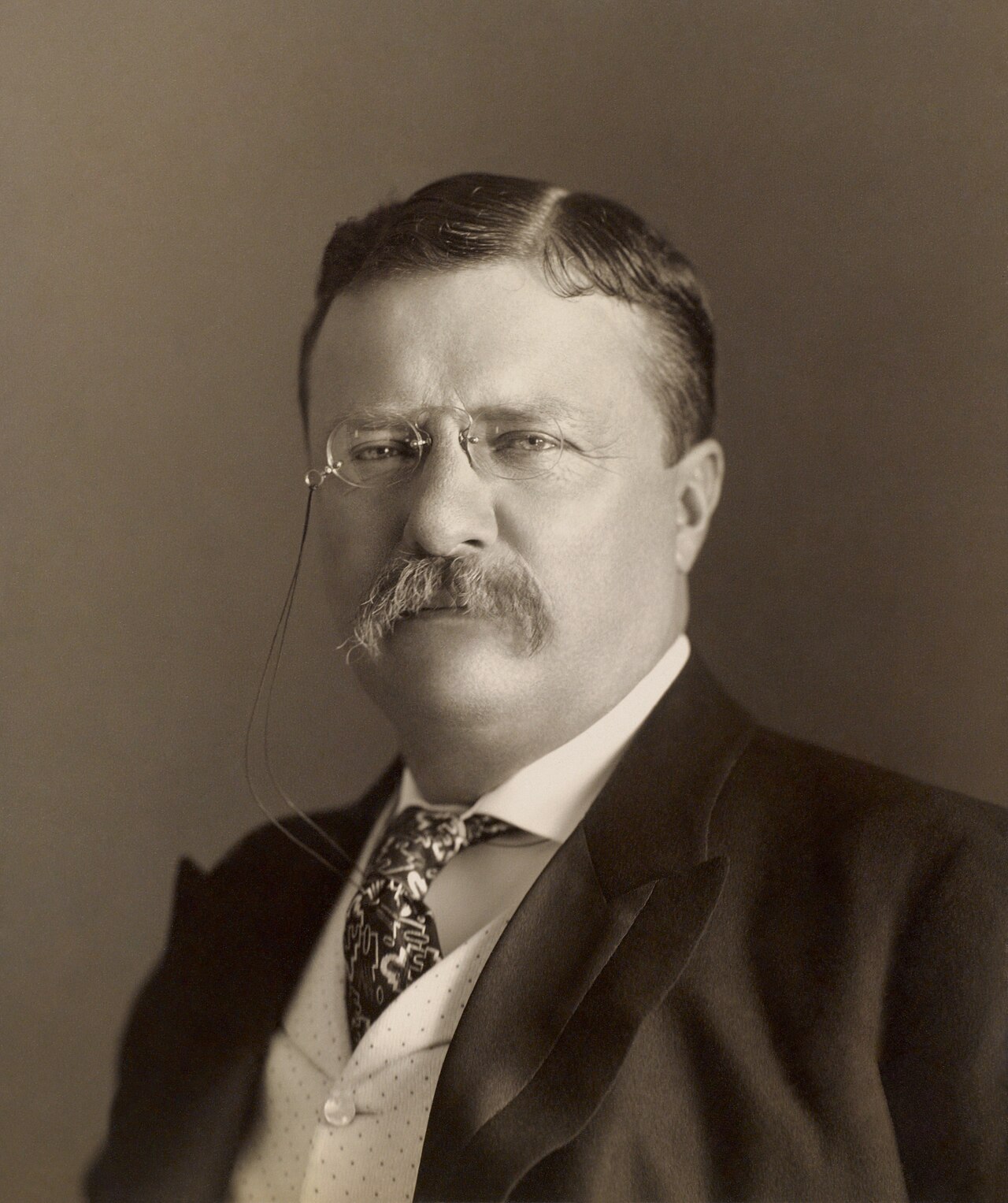
Theodore Roosevelt took the presidential oath of office today at age 42, becoming the youngest man ever to occupy the White House, eight days after an assassin's bullet fatally wounded William McKinley in Buffalo, New York.
Roosevelt had served only six months as vice president under McKinley before the succession. The McKinley-Roosevelt ticket had won a landslide victory in the 1900 presidential election.
The new president, in formal dress for the brief ceremony, assumes command amid national mourning. McKinley died Saturday evening from gangrene that developed around his abdominal wound.
The inauguration occurred at the home of Roosevelt's friend Ansley Wilcox on Delaware Avenue in Buffalo. Chief Judge John R. Hazel of the United States Circuit Court administered the oath. Secretary of State John Hay, who had served Lincoln and witnessed that president's death, was present.
Roosevelt will return to Washington immediately to assume the duties of office.
Theodore Roosevelt was 42 years old upon his first inauguration.
Roosevelt became president after the assassination of William McKinley.
Roosevelt had served only six months as vice president under McKinley before succeeding him.
The McKinley–Roosevelt ticket won a landslide victory in the 1900 presidential election.
2007 — Northern Rock Seeks Emergency Funds as Savers Flood Branches
Northern Rock, Britain's fifth-largest mortgage lender, saw shares plunge 32 percent as 6,000 Newcastle employees faced the nation's first bank run since 1866.
Customers queued outside Northern Rock branches across Britain today, withdrawing deposits after the mortgage lender disclosed it had sought emergency liquidity support from the Bank of England.
The facility, confirmed September 14, 2007, marks the first bank run in the United Kingdom since Overend, Gurney & Co. collapsed in 1866. Northern Rock, the nation's fifth-largest mortgage lender, had pursued wholesale funding as housing markets turned.
Central banks worldwide began injecting liquidity into credit markets by August 2007 as financial contagion spread from American subprime mortgage losses. The crisis has now reached global institutions.
The liquidity crisis will climax with the bankruptcy of Lehman Brothers in September 2008, according to market analysts. Northern Rock's shares fell 32 percent. Chancellor Alistair Darling appealed for calm, stating deposits remain safe.
Queues stretched past closing time at branches in Newcastle, where the bank employs 6,000.
Northern Rock received liquidity support from the Bank of England on September 14, 2007.
The liquidity crisis spread to global institutions by mid-2007 and climaxed with the bankruptcy of Lehman Brothers in September 2008.
Central banks began injecting liquidity into global credit markets by August 2007 as financial contagion spread.
2008 — Aeroflot 737 Crashes on Approach to Perm, Killing All 88 on Board
Boeing 737-500 strikes Trans-Siberian Railway in early morning disaster
Aerial view of crash site with scattered wreckage and rescue workers below — MAK
All 88 people aboard Aeroflot Flight 821 perished when the Boeing 737-500 crashed into a section of the Trans-Siberian Railway while on approach to Perm International Airport in Perm, Russia.
The aircraft, operating from Moscow's Sheremetyevo Airport, went down in early morning darkness. Wreckage scattered across railway tracks and adjacent woodland. Rescue workers reached the site as dawn broke over the Ural Mountains.
The crash destroyed a portion of the historic rail line linking Moscow and Vladivostok. Recovery operations have suspended eastbound traffic on the route.
Aeroflot, Russia's flag carrier, confirmed the passenger and crew total. The 737-500, a workhorse of Soviet-era successor airlines, entered service in 1991.
Investigators from the Interstate Aviation Committee have begun examining flight data. Weather at Perm reported marginal visibility with low cloud. The aircraft had begun its descent when contact was lost.
Aeroflot Flight 821, a Boeing 737-500, crashes into a section of the Trans-Siberian Railway while on approach to Perm International Airport, in Perm, Russia, killing all 88 people on board.
1812 — French Army Occupies Moscow as Flames Consume City
In 1812, the Grande Armée's entry into the Russian capital marked the farthest advance of Napoleon's empire.
The great campaigns of this age of ambition have reached their culminating stroke upon the smoking streets of Moscow. Today, the fourteenth day of September in the year 1812, French columns of the Grande Armée passed through the gates of the Russian capital, finding the metropolis abandoned by its defenders and already kindling with fire.
No sooner had the last Russian regiments withdrawn than flames began to spread through the city's quarters. The conflagration, whether set by retreating troops or by accident in the confusion of evacuation, now threatens to leave Napoleon master of little more than scorched stone and ash. The Emperor had marched his host across hundreds of leagues of hostile territory expecting capitulation and provisions; instead he receives an empty fortress and a burning sky.
Napoleonic Wars: The French Grande Armée enters Moscow. The Fire of Moscow begins as soon as Russian troops leave the city.
1984 — Kittinger Solo Across Atlantic in Gas Balloon
The 56-year-old colonel completed the 3,543-mile flight from Maine to Italy in 86 hours.
Col. Joseph Kittinger stepped from his gondola onto Italian soil this morning, becoming the first man to pilot a gas balloon alone across the Atlantic Ocean. He launched from Caribou, Maine, on September 14, 1984. The 3,543-mile voyage lasted 86 hours.
Joe Kittinger becomes the first person to fly a gas balloon alone across the Atlantic Ocean.
The 56-year-old composer completed the 259-page score in 24 days of sustained labor.
In just 24 days, Georg Friedrich Händel has produced a sacred work of unprecedented scale. The 56-year-old German-born composer, naturalized British subject, this week laid down his pen upon the completed score of Messiah, an oratorio in three acts running to 259 manuscript pages.
George Frideric Handel completes his oratorio Messiah.
1814 — Key Pens Verse on Bombardment of Fort McHenry
The poem Defence of Fort McHenry was written after the British attack on Baltimore on September 14, 1814.
Francis Scott Key, a Georgetown lawyer detained aboard a British flagship during the bombardment of Baltimore, has composed a poem commemorating the American defense of Fort McHenry. Key wrote the verse, titled Defence of Fort McHenry, after witnessing through the night of September 13 the British naval assault upon the harbor fortification.
Key had come under a flag of truce to negotiate the release of a civilian prisoner, Dr. William Beanes. The British admiral, Alexander Cochrane, agreed to the exchange but held both men aboard ship lest they carry intelligence to shore. From that vantage they watched the bombardment, and when dawn on September 14 revealed the American flag still flying above the fort, Key set his impressions to verse.
Battle of Baltimore: The poem Defence of Fort McHenry is written by Francis Scott Key. The poem is later used as the lyrics of The Star-Spangled Banner.
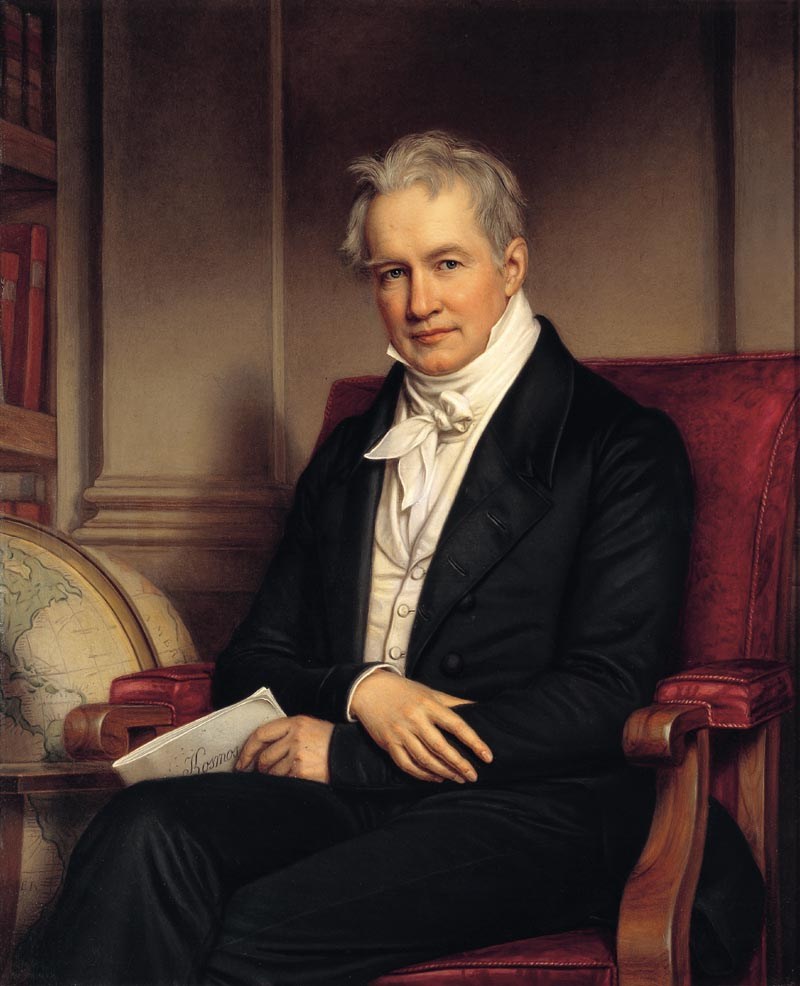
1769Alexander von HumboldtFriedrich Wilhelm Heinrich Alexander von Humboldt was a German polymath, geographer, naturalist, explorer, and proponent of Romantic philosophy and science.
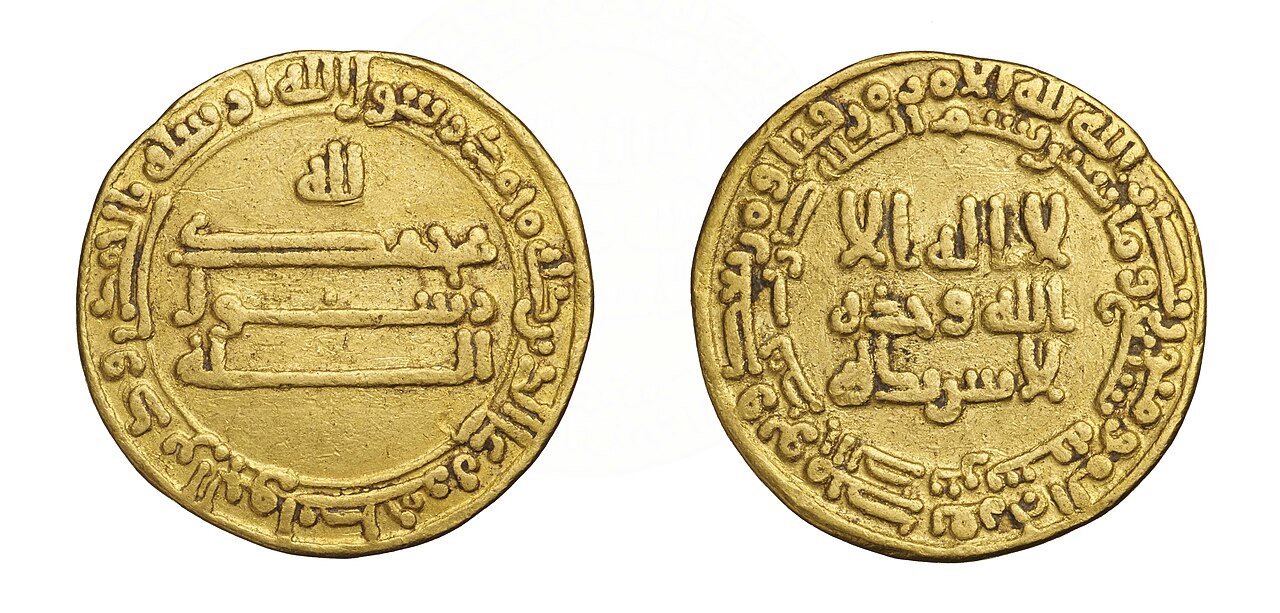
768Al-Ma'munAbū al-ʿAbbās Abd Allāh ibn Hārūn al-Maʾmūn, better known by his regnal name al-Ma'mun, was the seventh Abbasid caliph, who reigned from 813 until his death in 833.
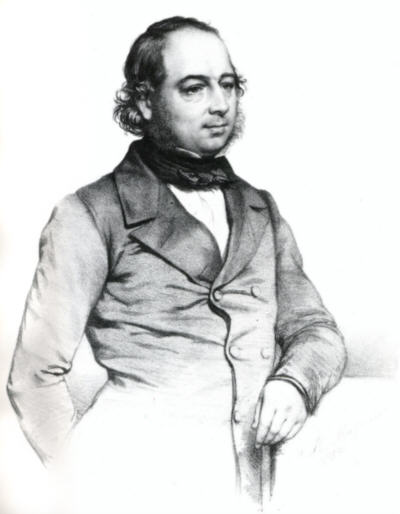
1804John GouldJohn Gould was an English ornithologist who published monographs on birds, illustrated by plates produced by his wife, Elizabeth Gould, and several other artists, including Edward Lear, Henry Constantine Richter, Joseph Wolf and William Matthew Hart.
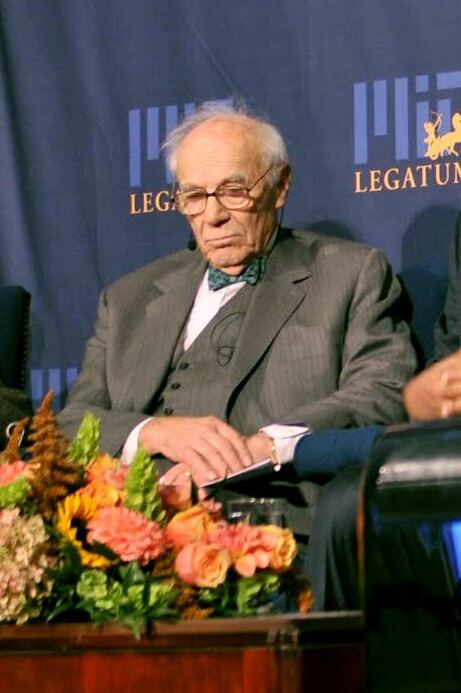
1920Lawrence KleinLawrence Robert Klein was an American economist.
1988Martin Fourcade(38 this year)Martin Fourcade is a French retired biathlete and military officer.
208DiadumenianDiadumenian was the son of the Roman emperor Macrinus and served as his co-ruler for a brief time in 218.
1384Ephraim of Nea MakriSt. Ephraim the Neomartyr, Ephraim the Martyr, or Ephraim of Mount Amomon, believed to have lived from 1384 to 1426, is venerated as a martyr and miracle-working saint by Ecumenical Patriarchate of Constantinople and Greek Orthodox Church.
1804Louis Désiré MaigretLouis-Désiré Maigret, SS.CC., served as the first vicar apostolic of the Vicariate Apostolic of the Sandwich Islands, now the Roman Catholic Diocese of Honolulu.
1891Ivan Matveyevich VinogradovIvan Matveevich Vinogradov was a Soviet mathematician, who was one of the creators of modern analytic number theory, and also a dominant figure in mathematics in the USSR.
1910Rasuna SaidHajjah Rangkayo Rasuna Said was a campaigner for Indonesian independence and women's rights, particularly their rights to education and participation in politics.
1913Jacobo ÁrbenzJuan Jacobo Árbenz Guzmán was a Guatemalan military officer and politician who served as the 25th president of Guatemala.
1924Jerry ColemanGerald Francis Coleman was an American Major League Baseball (MLB) second baseman for the New York Yankees and manager of the San Diego Padres for one year.
1932John TemboJohn Zenus Ungapake Tembo was a Malawian politician who served for years as President of the Malawi Congress Party (MCP).
1933Zoe CaldwellZoe Ada Caldwell was an Australian actress.
1942Oliver Lake(84 this year)Oliver Lake is an American jazz saxophonist, flutist, composer, poet, and visual artist.
1944Günter Netzer(82 this year)Günter Theodor Netzer is a German former professional football player, executive and pundit.
1945Martin Tyler(81 this year)Martin Tyler is an English football commentator and coach.
1946Pete Agnew(80 this year)Nazareth are a Scottish hard rock band formed in Dunfermline in 1968 that had many hit singles and albums in Canada, the United Kingdom, and a number of other European countries beginning in the early 1970s. The breadth of their popularity expanded internationally, including in the United States, with their 1975 album Hair of the Dog, which featured their hits "Hair of the Dog" and a cover of the ballad "Love Hurts".
1957Tim Wallach(69 this year)Timothy Charles Wallach, nicknamed "Eli", is an American former professional baseball player and coach.
1966Iztok PucIztok Puc was a Croatian-Slovenian handball player, who was one of the world's top players of the 1980s and 1990s. During his career he played professionally for Borac Banja Luka, Zagreb, Celje and Prule 67.
1971Christopher McCulloch(55 this year)Christopher McCulloch, also known by the pseudonym Jackson Publick, is an American storyboard artist, writer, director, producer, and voice actor.
1972David Bell(54 this year)David Michael Bell is an American former professional baseball infielder, coach, and manager who most recently managed the Cincinnati Reds of Major League Baseball (MLB).
1973Terrell Fletcher(53 this year)Terrell Antoine Fletcher is an American former professional football player who spent his entire eight-year career as a running back for the San Diego Chargers of the National Football League (NFL).
1985Aya Ueto(41 this year)Aya Ueto is a Japanese actress, singer and television personality.
1986Ai Takahashi(40 this year)Ai Takahashi is a Japanese singer and actress.
Quote of the Day
“Nothing is so painful to the human mind as a great and sudden change.” — Mary Shelley, Frankenstein
September 14 History Quiz
Which event confirmed a major prediction of Einstein's general theory of relativity?
First observation of gravitational waves
Which British bank sparked a bank run in 2007 after receiving emergency liquidity support?
Northern Rock
What inspired Francis Scott Key to write the poem that became the US national anthem?
Every event on this page was picked by hand from the historical record, written up as a news report, and checked against its source. Photographs are matched to the event they illustrate and verified before they are used. Sources are linked on each story.





![Front page of Deseret evening news, Great Salt Lake City [Utah], 14 September 1901](https://tile.loc.gov/image-services/iiif/service:ndnp:uuml:batch_uuml_twelve_ver01:data:sn83045555:00175049757:1901091401:0704/full/pct:50/0/default.jpg)


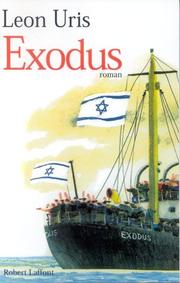 Exodus, Leon Uris
 “My Boyfriend's Back”,
 The Shoes of the Fisherman, Morris West
 “I Shot The Sheriff”,
 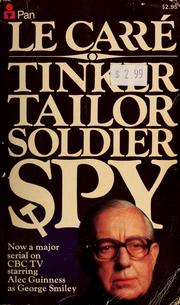 Tinker Tailor Soldier Spy, John le Carré
 “St. Elmo's Fire (Man In Motion)”,
 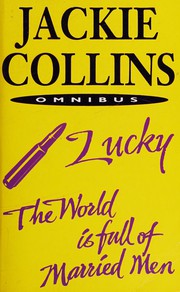 Lucky, Jackie Collins
 “The Promise Of A New Day”,
 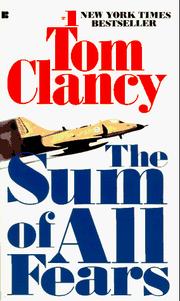 The Sum of All Fears, Tom Clancy
 “Dilemma”,
 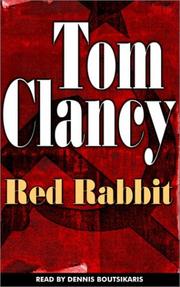 Red Rabbit, Tom Clancy
 “Roar”,
 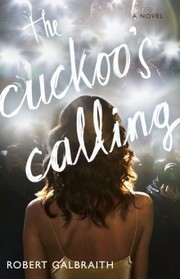 The Cuckoo's Calling, Robert Galbraith
 “A Bar Song (Tipsy)”,
  It Ends with Us, Colleen Hoover