Our front page for September 20 — written and set by The Yesterday Times from the events below. Not an archival document.
Day of the year
263
Days left in 2026
102
In 2026 it falls on a
Sunday
Star sign
Virgo
Birthstone
Sapphire
On September 20 in 1973, 53 years ago, King Crushes Riggs in $100,000 'Battle of the Sexes'. This page reports 10 stories from the date, 25 people born on this day.
The stories in full
Tennis
1973 — King Crushes Riggs in $100,000 'Battle of the Sexes'
Ninety million viewers worldwide saw the match at the Houston Astrodome on September 20, 1973.
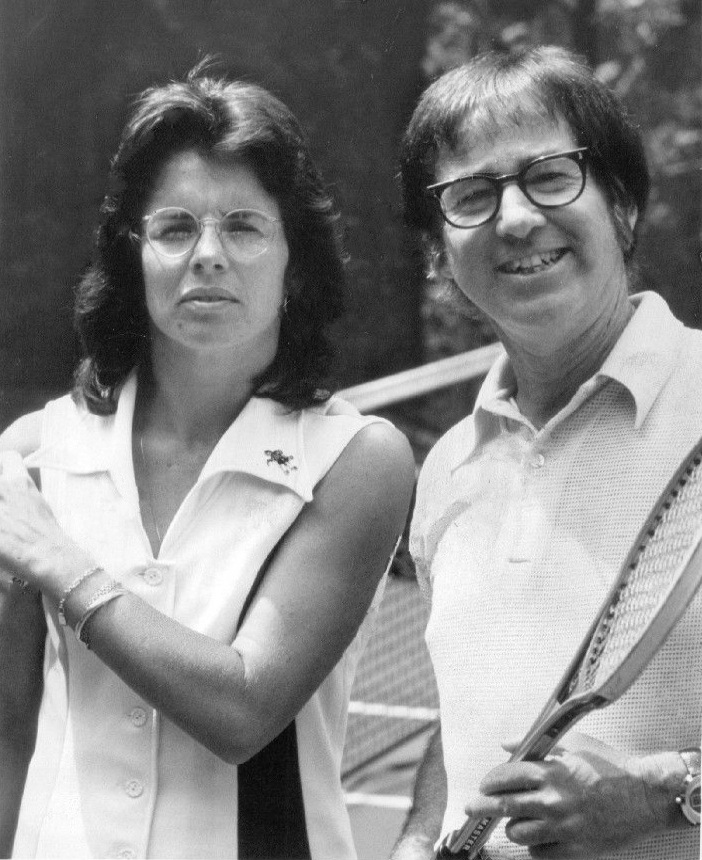
Billie Jean King and Bobby Riggs before their match at the Astrodome — Wikimedia Commons
Thirty million, four hundred seventy-two. That is how many packed the Houston Astrodome to witness Billie Jean King dismantle Bobby Riggs 6–4, 6–3, 6–3 in the most-watched tennis match in history.
King, 29, needed only three sets to silence Riggs, 55, the self-proclaimed male chauvinist who had boasted that no woman could defeat him. The winner-takes-all $100,000 purse went to the woman who refused to be a sideshow.
The spectacle began with entrances that matched the hype. King arrived on a feather-bedecked litter borne by four bare-chested men. Riggs pulled up in a rickshaw drawn by models. He presented her with a giant Sugar Daddy lollipop; she countered with a squealing piglet, her commentary on his attitudes.
But King had drawn a hard line days earlier. She threatened withdrawal unless ABC removed Jack Kramer as commentator. The network complied.
An estimated 90 million viewers worldwide saw the telecast. The match was held at the Houston Astrodome on September 20, 1973.
The match was held at the Houston Astrodome on September 20, 1973, with a winner-takes-all prize of $100,000.
King won in straight sets, 6–4, 6–3, 6–3, before an audience of 30,472 in the Astrodome.
An estimated 50 million people in the United States and 90 million worldwide viewed the televised match.
King entered the court on a feather-adorned litter carried by four bare-chested men, while Riggs arrived in a rickshaw pulled by models.
Riggs presented King with a giant Sugar Daddy lollipop; she gave him a squealing piglet symbolic of male chauvinism.
Hurricane Maria made landfall in Puerto Rico as a powerful Category 4 hurricane, killing 2,975 people and inflicting $90 billion in damage while triggering a major humanitarian crisis.
The storm obliterated infrastructure across the island, leaving residents without power, clean water, or reliable communication. Emergency responders faced impassable roads and collapsed buildings as they attempted to reach isolated communities.
The federal government mobilized relief efforts, but the scale of destruction overwhelmed initial response capabilities. Hospitals operated on generators; fuel shortages crippled transportation and emergency services.
Economic analysts projected years of recovery for the territory's already fragile economy. The damage figure of $90 billion placed Maria among the costliest Atlantic hurricanes on record.
Residents walk through debris-strewn streets after the hurricane.
Hurricane Maria makes landfall in Puerto Rico as a powerful Category 4 hurricane, resulting in 2,975 deaths, US$90 billion in damage, and a major humanitarian crisis.
2011 — Military Ends 'Don't Ask, Don't Tell' After 18 Years
2011 — Gay and lesbian service members may now serve openly following repeal certification by President Obama, Defense Secretary Panetta, and Admiral Mullen on July 22.
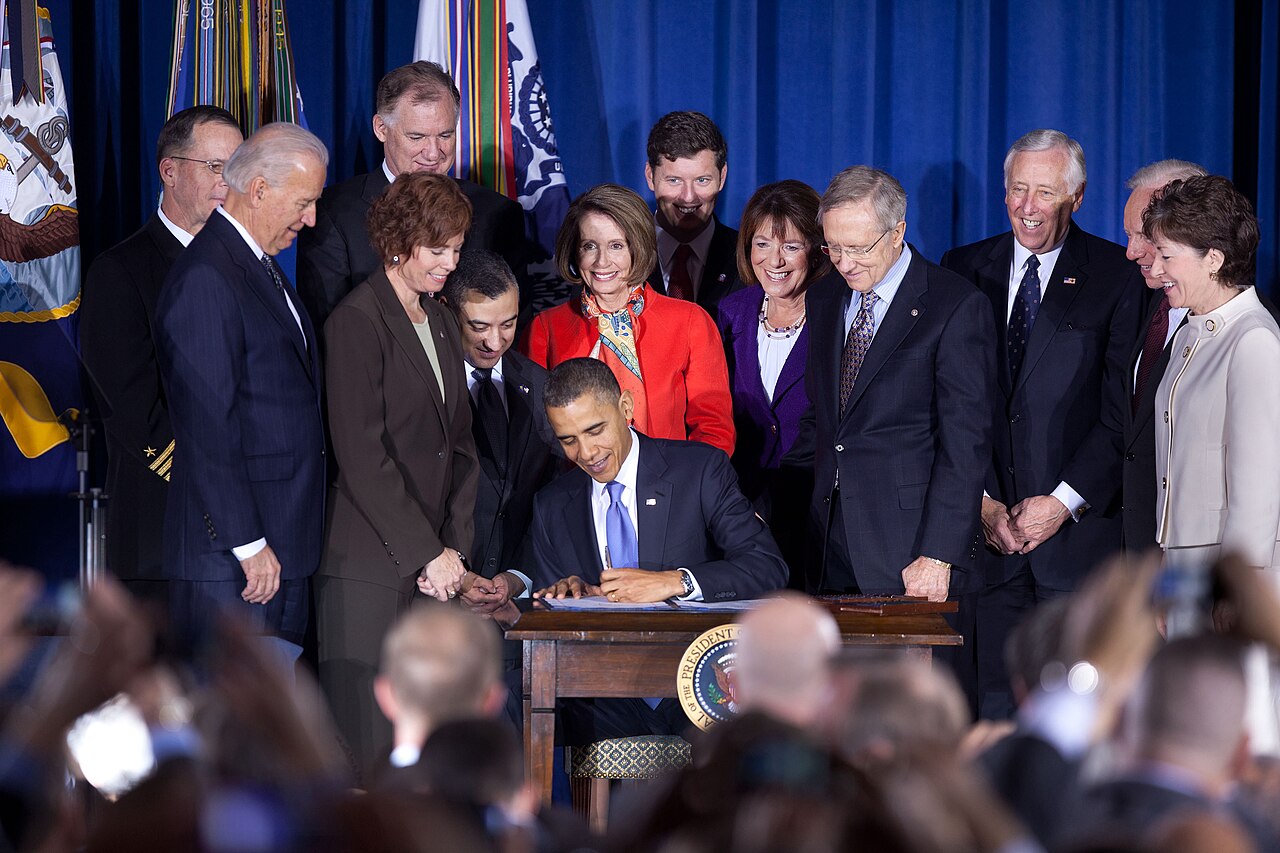
The president signed the repeal surrounded by lawmakers last December, but the Pentagon needed nine more months to prepare. Today the ban ends.
The United States military ended its "don't ask, don't tell" policy, allowing gay and lesbian people to serve openly. Implementation of repeal was completed 60 days after certification, ending DADT on September 20, 2011.
President Obama, Defense Secretary Leon Panetta, and Joint Chiefs Chairman Mike Mullen had certified repeal to Congress on July 22, 2011. The Don't Ask, Don't Tell Repeal Act of 2010 was signed into law by President Obama on December 22, 2010.
The House passed the stand-alone repeal bill 250-175 on December 15, 2010, after a Senate filibuster blocked the Defense Authorization Act.
President Obama, Defense Secretary Panetta, and Joint Chiefs Chairman Mullen certified repeal to Congress on July 22, 2011.
The Don't Ask, Don't Tell Repeal Act of 2010 was signed into law by President Obama on December 22, 2010.
Implementation of repeal was completed 60 days after certification, ending DADT on September 20, 2011.
The Department of Defense's Comprehensive Review Working Group issued a report on November 30, 2010, indicating low risk of service disruptions from repeal.
The House passed the stand-alone repeal bill 250-175 on December 15, 2010, after a Senate filibuster blocked the Defense Authorization Act.
2019 — Four Million Join Global Student Climate Strikes
2019 — Roughly four million people, mostly students, demonstrate worldwide; Greta Thunberg, 16, leads the New York City march.
Demonstrators gather outside the Finnish Parliament House in Helsinki — Kaihsu Tai
The largest climate protest in history reshaped the political conversation on carbon emissions. Roughly four million people, mostly students, demonstrated across the world to address climate change.
Sixteen-year-old Greta Thunberg from Sweden led the demonstration in New York City. Demonstrators gather outside the Finnish Parliament House in Helsinki.
Roughly four million people, mostly students, demonstrate across the world to address climate change. Sixteen-year-old Greta Thunberg from Sweden leads the demonstration in New York City.
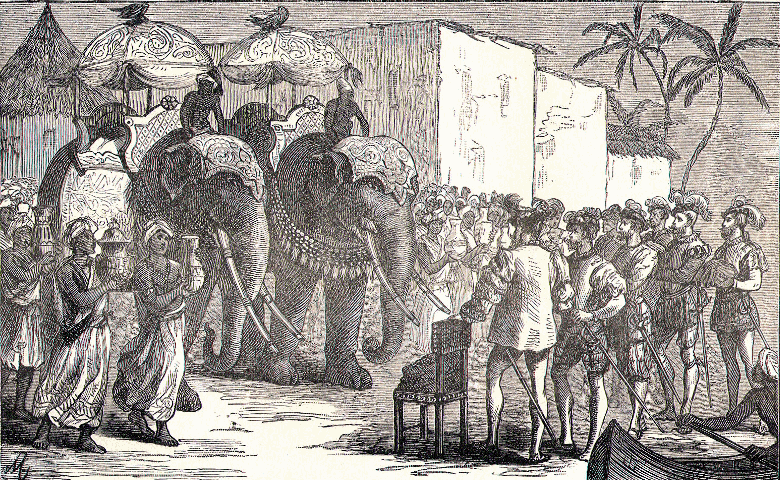
In this autumn of the year 1519, when Christendom still reckons the earth's measure by conjecture and mariner's tale, Ferdinand Magellan, captain of the Armada de Molucca, hath put forth from Sanlúcar de Barrameda upon a voyage whose like none hath attempted.
The fleet, numbering five vessels and some 270 men, sails now for the Ocean Sea by way of the New-found World, seeking passage to the Spice Islands of the Portuguese.
Ferdinand Magellan sets sail from Sanlúcar de Barrameda with about 270 men on his expedition which ultimately culminates in the first circumnavigation of the globe.
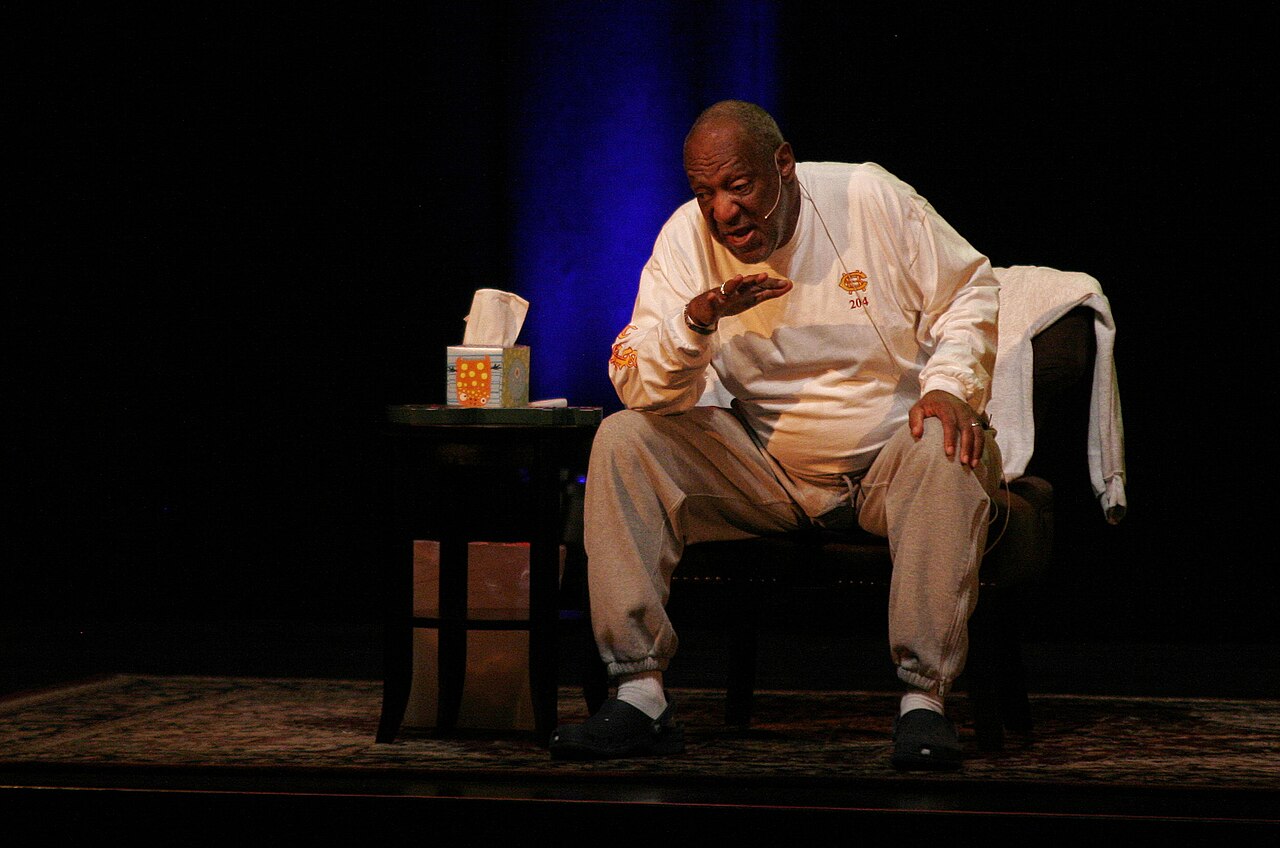
Bill Cosby returns to prime time tonight as NBC airs the pilot of "The Cosby Show," a half-hour family comedy the network hopes will reverse its ratings slide.
The series, recorded in May with regular production starting July, stars Cosby as Dr. Cliff Huxtable, an obstetrician raising five children in Brooklyn. Stu Gardner and Cosby composed the theme, titled "Kiss Me."
The Cosby Show aired on NBC from September 20, 1984 to April 30, 1992, spanning eight seasons.
A total of 201 original episodes and one best-moments special were produced.
The pilot was recorded in May 1984, and regular production began in July 1984.
The show's theme song, titled 'Kiss Me', was composed by Stu Gardner and Bill Cosby.
2001 — Bush Declares War on Terror in Address to Congress
President speaks to joint session nine days after attacks on New York and Washington.
For the first time since the attacks of September 11, President George W. Bush tonight declared a "war on terror" before a joint session of Congress and a national television audience.
The address, delivered from the House chamber, framed the administration's response to the deadliest assault on American soil. Bush outlined a campaign targeting terrorist networks and the states that harbor them.
The speech marked a pivotal shift in American foreign and domestic policy. Lawmakers of both parties rose repeatedly in applause. Security at the Capitol remained unprecedented following the hijackings that destroyed the World Trade Center and damaged the Pentagon.
Vice President Cheney and cabinet members were kept away from the chamber as a precaution. The speech ran approximately 30 minutes.
In an address to a joint session of Congress and the American people, U.S. President George W. Bush declares a "war on terror".
1870 — Bersaglieri Storm Porta Pia, Seizing Rome for Italy
The XII Battalion enters through a breach in the Aurelian Walls.
The Bersaglieri entered Rome through the Porta Pia today, ending the temporal power of the Pope and completing the unification of Italy.
The XII Bersaglieri Battalion stormed through a breach opened by Italian artillery in the Aurelian Walls near Porta Pia. The capture of Rome ends papal rule over the city and surrounding territory.
King Victor Emmanuel II's forces have now secured the entire peninsula.
On 20 September 1870, the XII Bersaglieri Battalion stormed Rome through a breach in the Aurelian Walls near Porta Pia.
The breach was created by Italian artillery, allowing the Bersaglieri to enter and capture Rome.
The capture of Rome ended the temporal power of the Pope, completing the unification of Italy.
A monument commemorating the event was erected in front of Porta Pia in 1932.
The National Museum of the Bersaglieri corps was moved to Porta Pia in 1932 and remains there today.
1857 — Delhi Restored to Company Rule as Sepoy Revolt Crushed
The Indian Rebellion of 1857 concludes with the fall of the ancient capital.
The Union Jack flies once more above the battered walls of the Red Fort, where native troops loyal to the East India Company have stormed the last rebel stronghold. The Indian Rebellion of 1857 ends with the recapture of Delhi, restoring British authority over the ancient capital after months of desperate siege.
The Indian Rebellion of 1857 ends with the recapture of Delhi by troops loyal to the East India Company.
1988 — Thatcher Says Federalism Threatens British Self-Rule
The Prime Minister's Bruges speech alienated several senior Cabinet members by 1988.
Margaret Thatcher warned that greater economic integration into the European Economic Community would lead to a federalist Europe. She argued that surrendering Britain's ability to self-govern would result from such federalism. Her opposition to greater economic integration alienated several senior members of her Cabinet by the late 1980s.
Thatcher argued that greater economic integration into the European Economic Community would lead to a federalist Europe.
Thatcher argued that surrendering Britain's ability to self-govern would result from federalist Europe.
Thatcher's opposition to greater economic integration into the European Economic Community alienated several senior members of her Cabinet by the late 1980s.
1948George R. R. Martin(78 this year)George Raymond Richard Martin, also known by the initials GRRM, is an American author, screenwriter, and television producer.
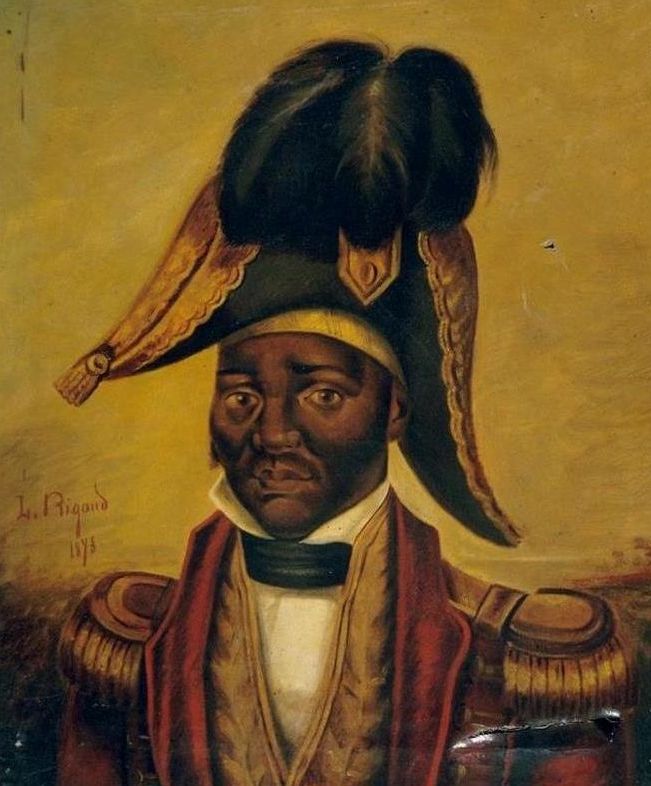
1758Jean-Jacques DessalinesJean-Jacques Dessalines was the first Haitian Emperor, leader of the Haitian Revolution, and the first ruler of an independent Haiti under the 1805 constitution.
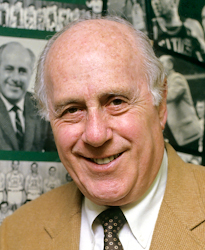
1917Red AuerbachArnold Jacob "Red" Auerbach was an American professional basketball coach and executive.
1951Guy LafleurGuy Damien Lafleur, nicknamed "the Flower" and "Le Démon Blond", was a Canadian professional ice hockey player.
1971Henrik Larsson(55 this year)Edward Henrik Larsson is a Swedish professional football coach and former player who played 106 times for the Swedish national team.
1899Leo StraussLeo Strauss was a German-American political philosopher and historian of philosophy whose work greatly influenced twentieth-century political theory in the United States and the study of classical political thought.
1951Javier MaríasJavier Marías Franco was a Spanish author, translator, and columnist.
1778Fabian Gottlieb von BellingshausenFaddey Faddeyevich Bellingshausen or Fabian Gottlieb Benjamin von Bellingshausen was a Russian cartographer, explorer, and naval officer of Baltic German descent, who attained the rank of admiral.
1893Colin Fraser BarronColin Fraser Barron was a Canadian recipient of the Victoria Cross, the highest and most prestigious award for gallantry in the face of the enemy that can be awarded to British and Commonwealth forces.
1917Obdulio VarelaObdulio Jacinto Muiños Varela was a Uruguayan football player.
1924HartiniSiti Suhartini, better known as Hartini and also known as Hartini Sukarno, was the fourth wife of President Sukarno of Indonesia.
1925Ananda MahidolAnanda Mahidol was the eighth king of Siam from the Chakri dynasty, titled Rama VIII.
1928Donald HallDonald Andrew Hall Jr. was an American poet, writer, editor, and literary critic.
1929Anne MearaAnne Meara was an American comedian and actress.
1935Jim TaylorJames Charles Taylor was an American professional football player who was a fullback in the National Football League (NFL) for ten seasons, with the Green Bay Packers from 1958 to 1966 and with the expansion New Orleans Saints in 1967.
1947Patrick Poivre d'Arvor(79 this year)Patrick Poivre d'Arvor is a French TV journalist and writer.
1949Mahesh Bhatt(77 this year)Mahesh Bhatt is a retired Indian film director, producer and screenwriter known for his works in Hindi cinema.
1961Lisa Bloom(65 this year)Lisa Read Bloom is an American civil rights attorney known for representing high-profile clients in cases involving sexual harassment, discrimination, and abuse.
1965Poul-Erik Høyer Larsen(61 this year)Poul-Erik Høyer Larsen is a retired Danish badminton player and sports administrator.
1969Patrick Pentland(57 this year)John Patrick Thomas Pentland is an Irish-born rock guitarist and a member of the Canadian rock band Sloan.
1975Asia Argento(51 this year)Asia Argento is an Italian actress and filmmaker.
1975Juan Pablo Montoya(51 this year)Juan Pablo Montoya Roldán is a Colombian former racing driver who competed in Formula One from 2001 to 2006, IndyCar between 1999 and 2022, and the NASCAR Cup Series between 2006 and 2024.
1976Jon Bernthal(50 this year)Jonathan Edward Bernthal is an American actor.
1977Chris Mooney(49 this year)Christopher Cole Mooney is an American journalist, professor at the University of Virginia and author of four books including The Republican War on Science (2005).
1978Dante Hall(48 this year)Damieon Dante Hall is an American former professional football player who was a wide receiver and return specialist for nine seasons in the National Football League (NFL).
Quote of the Day
“Water, water, every where, Nor any drop to drink.” — Samuel Taylor Coleridge, The Rime of the Ancient Mariner
September 20 History Quiz
In what year did Billie Jean King defeat Bobby Riggs in the 'Battle of the Sexes'?
1973
Which tennis venue hosted the famous Billie Jean King vs. Bobby Riggs match?
Astrodome
What was the U.S. military policy regarding LGBTQ service members that ended on September 20, 2011?
Every event on this page was picked by hand from the historical record, written up as a news report, and checked against its source. Photographs are matched to the event they illustrate and verified before they are used. Sources are linked on each story.




![Front page of The New York herald, New York [N.Y.], 20 September 1870](https://tile.loc.gov/image-services/iiif/service:ndnp:dlc:batch_dlc_itchweed_ver01:data:sn83030313:00271743713:1870092001:0881/full/pct:50/0/default.jpg)
![Front page of The evening telegraph, Philadelphia [Pa.], 20 September 1870](https://tile.loc.gov/image-services/iiif/service:ndnp:pst:batch_pst_grange_ver01:data:sn83025925:00280776300:1870092001:0130/full/pct:50/0/default.jpg)
 The Love Machine, Jacqueline Susann
 “Fame”,
 Ragtime, E. L. Doctorow
 “Upside Down”,
 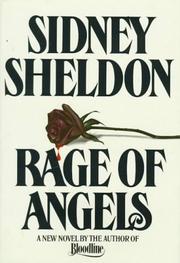 Rage of Angels, Sidney Sheldon
 Cold Mountain, Charles Frazier
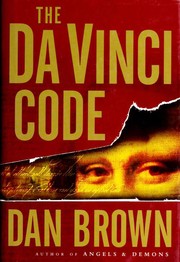 The Da Vinci Code, Dan Brown
 The Long Way Home, Louise Penny
 Katabasis, R. F. Kuang