Our front page for September 25 — written and set by The Yesterday Times from the events below. Not an archival document.
Day of the year
268
Days left in 2026
97
In 2026 it falls on a
Friday
Star sign
Libra
Birthstone
Sapphire
On September 25 in 1789, 237 years ago, Madison's Amendments Win Congressional Approval. This page reports 12 stories from the date, 25 people born on this day.
Twelve articles sent to the states for ratification — the people's liberties enshrined at last — yet two provisions stir doubt among the delegates
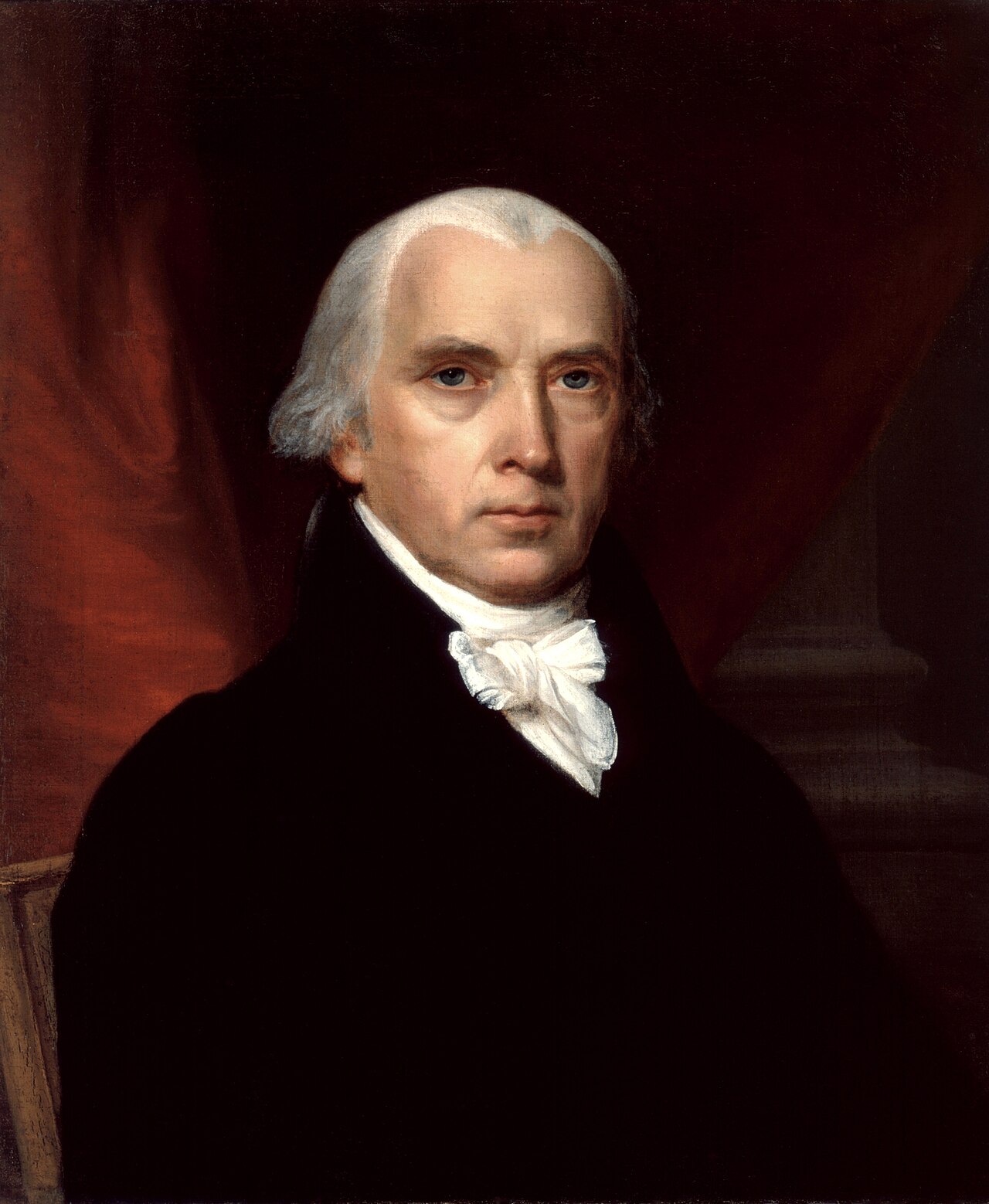
The congressman who drafted the amendments — John Vanderlyn
NEW YORK, September 25 — James Madison, representative from Virginia and principal draftsman of the proposed amendments, this day saw his labors bear fruit as the Congress of the United States approved twelve articles for submission to the several states. The measure passed the House of Representatives and Senate in their present forms, having undergone considerable revision from Madison's original seventeen proposals.
The ten articles first in the series secure the ancient rights of Englishmen to these shores: freedom of worship, of speech, of the press; protections against arbitrary search, compelled self-accusation, and cruel punishment; guarantees of speedy trial by jury and of due process. These have won the approbation of Federalists and moderate Antifederalists alike.
Yet the remaining two articles have drawn less certain favor. The first, regulating the apportionment of representatives among the states, has been deemed by some too intricate; the second, delaying any alteration of congressional salaries until after the next election, has satisfied few that it reaches the heart of the people's grievances.
Madison, who pledged his constituents in Virginia to secure a declaration of rights, has now discharged that obligation. Whether the states shall ratify the whole, or pare these twelve to ten, or reject them outright, remains for the legislatures to determine. The Congress adjourns tomorrow to Philadelphia.
The United States Congress passes twelve constitutional amendments: the ten known as the Bill of Rights, the (unratified) Congressional Apportionment Amendment, and the Congressional Compensation Amendment.
1066 — Harold's Host Shatters Norsemen at Stamford Bridge
Four days after marching 185 miles from London, Harold Godwinson's unarmored foes fell at Stamford Bridge, where one axeman killed more than forty Englishmen before being cut down.
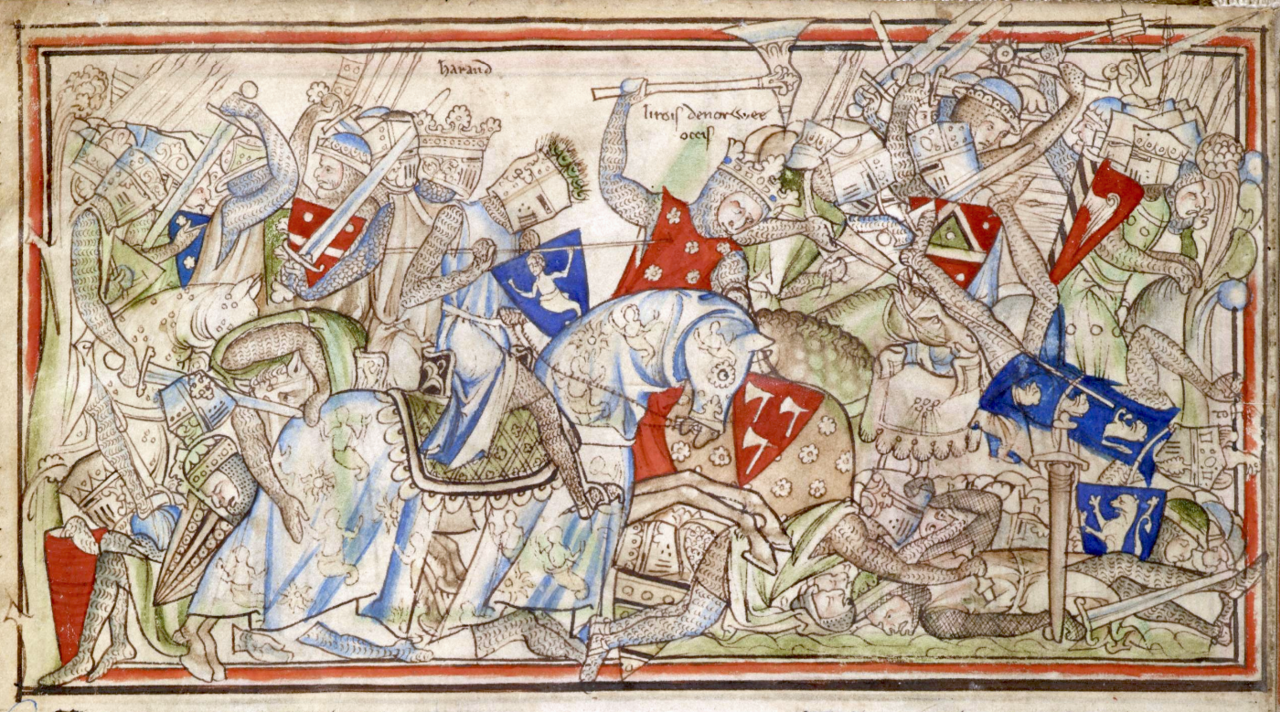
English and Norwegian forces clash at Stamford Bridge, 1066 — Matthew Paris
YORK, September 25 — Four days since the army of Harold Godwinson, King of the English, set forth from London, and already the usurpers from Norway have been broken upon the sword. The distance of 185 miles availed nothing against the wrath of the English host, which fell upon Harald Hardrada and the traitor Tostig Godwinson as they made sport of their easy conquest.
The battle was joined at the bridge over the Derwent, where a single Norwegian axeman held the crossing against all comers, killing more than forty Englishmen before he was cut down. Even this could not stem the tide. When the English won across, they found the Norse arrayed without armor, the day being warm.
King Harold Godwinson marched his army from London to Yorkshire, about 185 miles, in only four days.
A lone Norwegian axeman held up the entire English army at the bridge, killing more than 40 Englishmen before being killed.
Both King Harald Hardrada and Tostig Godwinson were killed at the Battle of Stamford Bridge on 25 September 1066.
The Norwegian army, numbering between 7,000 and 9,000 men, was reinforced by troops led by Eystein Orre, who ran 16 miles from Riccall.
Tostig Godwinson, exiled by his brother Harold, allied with King Harald Hardrada of Norway to invade England.
1981 — Reagan Nominee O'Connor Sworn as First Woman on High Court Bench
The 51-year-old Arizona judge, nominated on August 19, received unanimous Senate confirmation with no dissenting votes recorded.
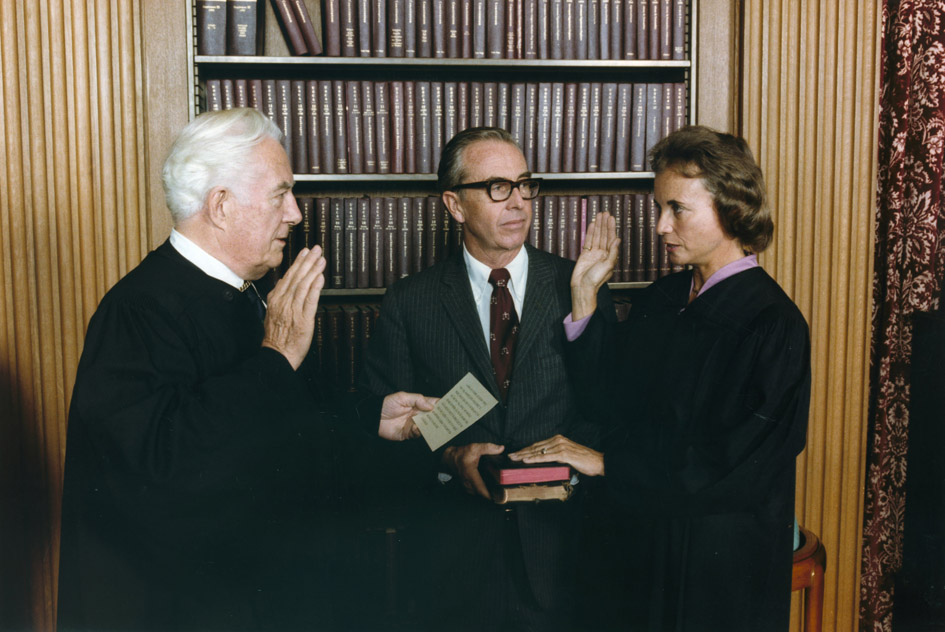
Sandra Day O'Connor takes the oath as first woman on the Supreme Court — President (1981-1989
WASHINGTON, September 25 — Sandra Day O'Connor took the oath this morning to become the first female justice of the Supreme Court of the United States, ending 192 years of exclusively male membership on the nation's highest tribunal.
President Ronald Reagan, who pledged during his 1980 campaign to appoint the first woman to the Court, nominated the 51-year-old Arizona judge on August 19. The Senate confirmed her unanimously, with no dissenting votes recorded.
President Ronald Reagan nominated Sandra Day O'Connor on August 19, 1981.
O'Connor was confirmed unanimously by the United States Senate.
O'Connor was the first woman to serve as a U.S. Supreme Court justice.
Reagan had pledged during his 1980 presidential campaign to appoint the first woman to the Court.
O'Connor replaced retiring Justice Potter Stewart on the Supreme Court.
2018 — Cosby Sentenced to Three to Ten Years for Sexual Assault
The 81-year-old comedian led from court in handcuffs — a Montgomery County judge pronounces the term after April conviction — the first major celebrity sentenced in the #MeToo era
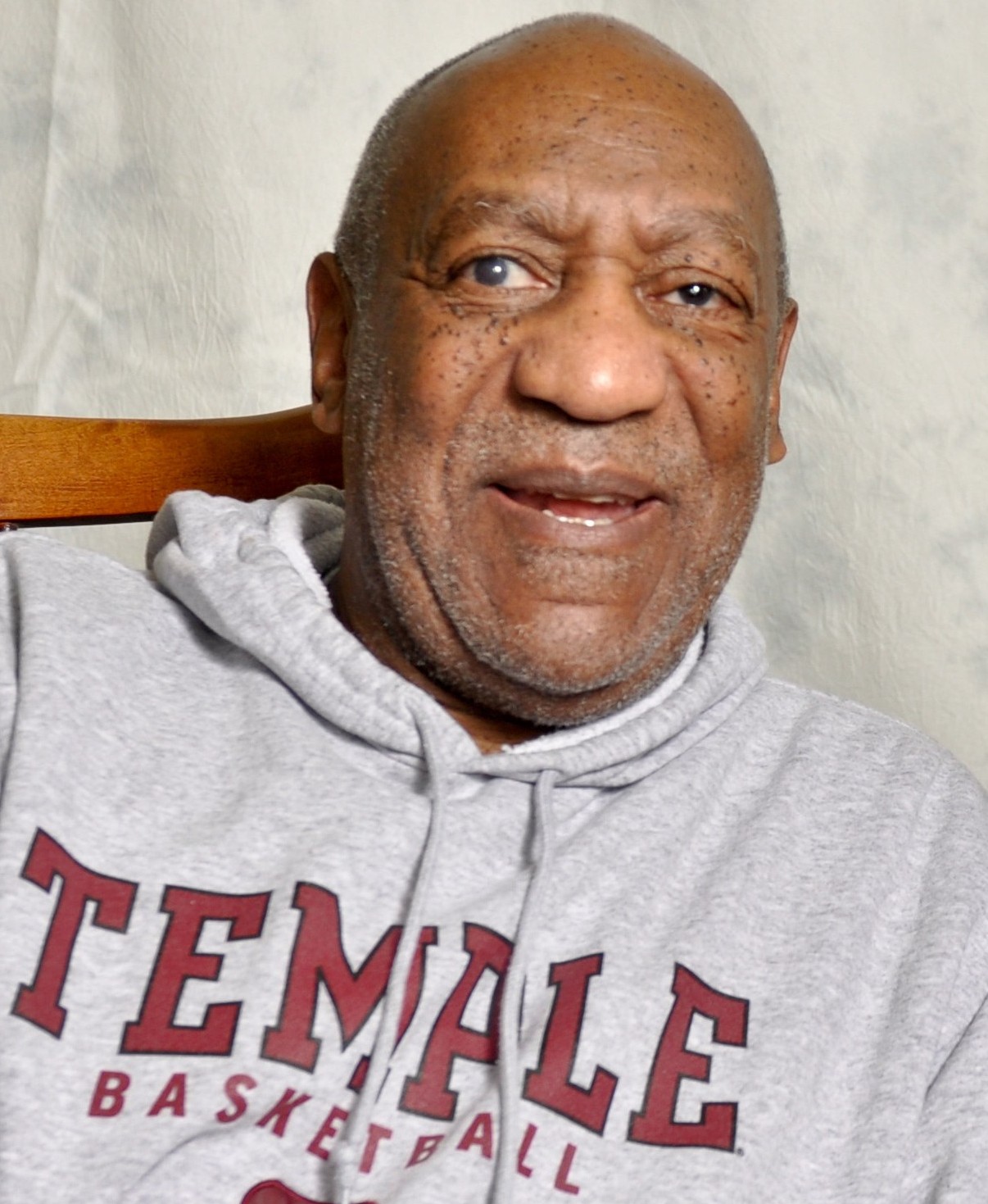
NORRISTOWN, Pa., September 25 — Bill Cosby left the Montgomery County Courthouse this afternoon in handcuffs and a grey Temple University sweatshirt, sentenced to three to ten years in state prison for aggravated sexual assault.
The 81-year-old entertainer, once celebrated as "America's Dad," showed little visible reaction as Judge Steven O'Neill pronounced the term. Cosby was convicted in April of drugging and molesting Andrea Constand at his suburban Philadelphia home in 2004. The sentence, which includes classification as a sexually violent predator, makes Cosby the first major celebrity to face incarceration since the #MeToo movement reshaped public reckoning with sexual misconduct.
Cosby's attorneys had argued for house arrest, citing blindness and advanced age. Prosecutors sought the maximum term of five to ten years. The judge denied bail pending appeal, and sheriff's deputies immediately remanded Cosby to custody.
The grey sweatshirt bore the name of Cosby's alma mater, where he long served as a public face and benefactor.
Bill Cosby is sentenced to three to ten years in prison for aggravated sexual assault.
1513 — Balboa Finds Great South Sea, Opens Route to Spice Riches
Balboa reached the South Sea after crossing mountains for twenty-five days from the Atlantic settlement.
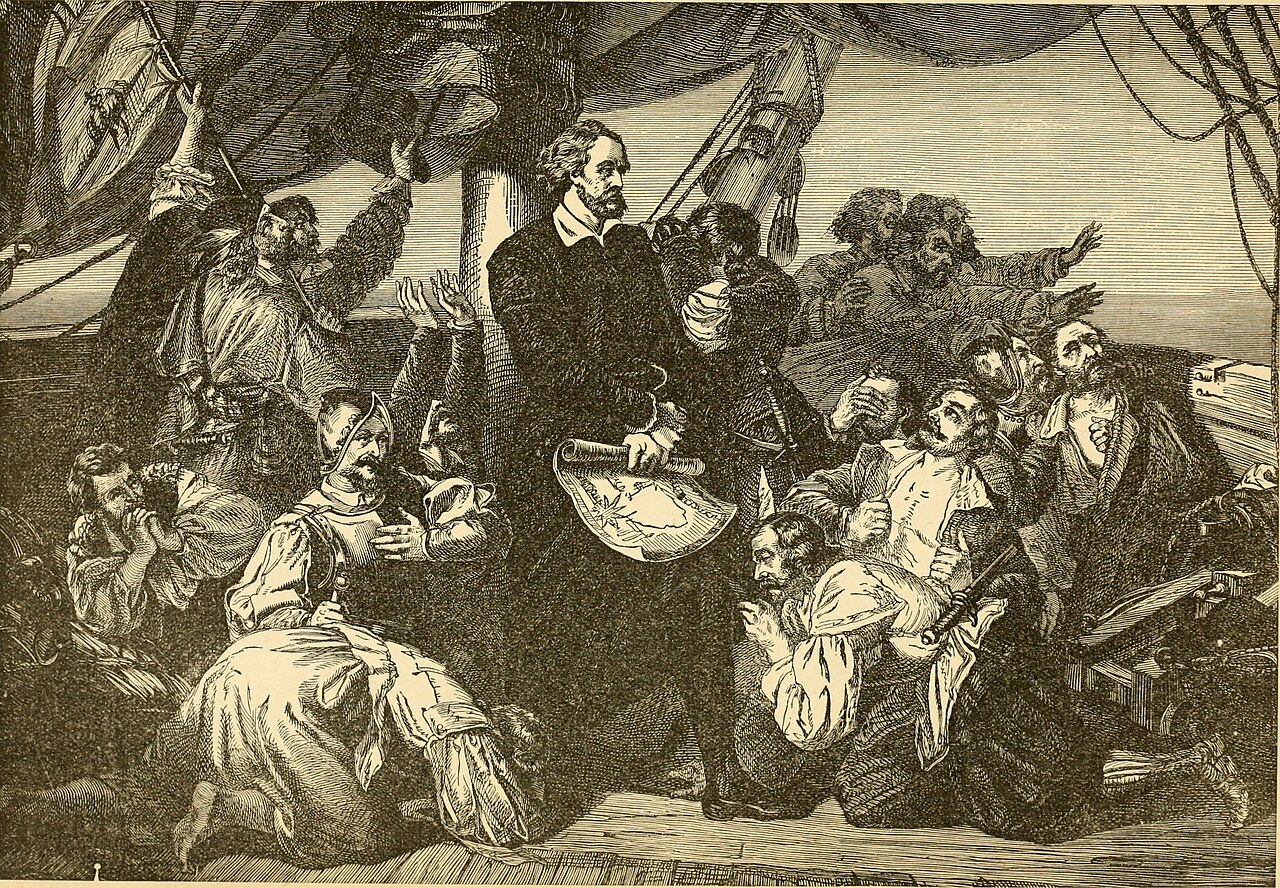
Balboa stands on the deck as his crew kneels at first sight of the new — Ridpath et al.
The wealth of the Indies now lies open to the Crown by a road no Portuguese may block. Vasco Núñez de Balboa, adelantado of Darien, has reached the far shore of this American land and beheld the great South Sea stretching to unknown horizons.
SAN MIGUEL DE DARIEN, September 25 — From a height above the isthmus, Balboa and his men first saw the waters that mariners since Magellan have sought. He waded into the surf with sword and buckler to claim the sea and all its shores for Spain. The expedition had crossed mountains for twenty-five days from their settlement on the Atlantic shore. Indians of the region spoke of a land rich in gold beyond those waters.
Spanish explorer Vasco Núñez de Balboa reaches what would become known as the Pacific Ocean.
The age of crowded skies and computer-controlled approaches has recorded its darkest day in American aviation history. A Pacific Southwest Airlines Boeing 727 descending toward Lindbergh Field struck a Cessna 172 over the city at mid-morning Monday, sending both aircraft flaming into a residential district.
SAN DIEGO, September 25 — The collision occurred as Flight 182 prepared to land after a routine run from Sacramento.
PSA Flight 182, a Boeing 727, collides in mid-air with a Cessna 172 and crashes in San Diego, killing all 135 aboard Flight 182, both occupants of the Cessna, as well as seven people on the ground.
1992 — NASA Launches Mars Observer on Decade-Long Quest
The $1 billion probe heads for the red planet — but controllers will wait eleven months to know its fate.
Mars Observer has begun its eleven-month voyage to the red planet. The 5,100-pound spacecraft rode a Titan III rocket from Cape Canaveral at 1:05 p.m. EDT Friday on a mission to map the Martian surface and study its atmosphere.
NASA launches the Mars Observer. Eleven months later, the probe would fail while preparing for orbital insertion.
1555 — Charles V Grants German Princes Right to Choose Faith
Charles V permits princes to decide whether Lutheran or Roman faith prevails in their own territories.
Two religions now stand lawful in the German lands where one Emperor once ruled one Church. Charles V has granted the princes of the Schmalkaldic League the right to determine whether Lutheran or Roman faith shall hold in their territories.
The Peace of Augsburg is signed by Emperor Charles V and the princes of the Schmalkaldic League.
Bayezid I's Ottoman host smote a French and Hungarian force at Nicopolis on September 25.
NICOPOLIS, September 25 — Ottoman Emperor Bayezid I hath this day smitten a great Christian army upon the field of Nicopolis. The Sultan's host hath put to flight the combined might of French and Hungarian lords who sought to drive the Turk from Europe.
Ottoman Emperor Bayezid I defeats a Christian army at the Battle of Nicopolis.
1959 — Bandaranaike Shot by Monk; Ceylon Premier Dies Tomorrow
A Buddhist monk shot the Ceylon Prime Minister on the 25th at his Colombo residence, where surgeons operated through the day.
COLOMBO, September 25 — A saffron-robed figure raised a revolver at the Prime Minister's veranda this morning. S. W. R. D. Bandaranaike, Prime Minister of Ceylon, fell mortally wounded from bullets fired by Talduwe Somarama, a Buddhist monk who had gained private audience.
Surgeons operated through the day.
S. W. R. D. Bandaranaike, Prime Minister of Ceylon, is mortally shot by a Buddhist monk, Talduwe Somarama, and dies the next day.
1911 — French Dreadnought Liberté Destroyed by Magazine Blast
Poudre B propellant explodes at Toulon — 286 killed, neighbouring ships damaged, powder scandal follows.
TOULON, September 25 — The French Navy faces inquiry and recrimination after unstable propellant charges reduced the battleship Liberté to a burning wreck this morning. An explosion of badly degraded propellant detonated her forward ammunition magazines, killing 286 of her crew and destroying the ship outright.
The explosion killed 286 of Liberté's crew.
The blast damaged several other vessels and killed crewmen on six neighboring ships.
An investigation revealed that the standard French propellant, Poudre B, was prone to decomposition that rendered it very unstable.
The wreck remained in Toulon until 1925, when her destroyed hull was refloated, towed into a drydock, and broken up.
1906 — Torres Quevedo Commands Electric Boat by Wireless
Telekino transmits across two kilometres of water — Bilbao demonstration establishes remote-control principle.
BILBAO, September 25 — The age of wireless command has arrived upon the waters of the Abra. The vessel carried several passengers as it obeyed his signals from more than two kilometers offshore. Observers on the beach watched the craft turn and throttle without a hand aboard. Torres Quevedo, a Spanish engineer and mathematician, developed the Telekino to transmit precise mechanical commands through electromagnetic waves. The demonstration took place in the broad estuary near Bilbao, where shipping traffic has long made remote navigation a practical concern. Similar experiments with wireless control have been attempted in France and Italy, though none have matched this range with a manned vessel. Electrical engineers here said the system could guide torpedoes or lifeboats in hazardous conditions. The Telekino apparatus occupied a small wooden case connected to the boat's rudder and motor circuits. More trials are planned before winter weather closes the harbor.
Leonardo Torres Quevedo demonstrates the Telekino in the Bilbao Abra (Spain), guiding an electric boat from the shore with people on board, which was controlled at a distance over 2 km (1.2 mi), in what is considered to be the origin of modern wireless remote-control operation principles.
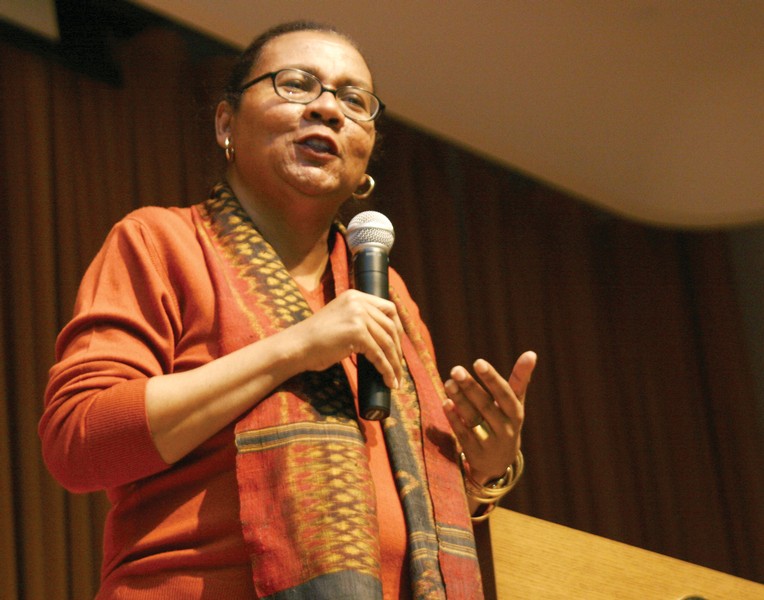
1952bell hooksGloria Jean Watkins, better known by her pen name bell hooks, was an American philosopher, educator, author, and social critic; she was a Distinguished Professor in Residence at Berea College in Kentucky.
1773Agostino BassiAgostino Bassi, sometimes called de Lodi, was an Italian entomologist.
1910Ralph JordanJames Ralph "Shug" Jordan was an American football, basketball, and baseball player and coach of football and basketball.
1916Jessica AndersonJessica Margaret Anderson was an Australian novelist and short story writer.
1916Deendayal UpadhyayaDeendayal Upadhyaya, was an Indian politician, a proponent of integral humanism ideology and leader of the political party Bharatiya Jana Sangh (BJS), the forerunner of Bharatiya Janata Party (BJP).
1925Silvana PampaniniSilvana Pampanini was an Italian film actress, director and singer.
1926Jack HylesJack Frasure Hyles was a leading figure in the Independent Fundamental Baptist movement, having pastored the First Baptist Church of Hammond in Hammond, Indiana, from August 1959 until his death.
1938Ron HillRonald Hill MBE was a British runner and clothing entrepreneur.
1938Jonathan MotzfeldtJonathan Jakob Jørgen Otto Motzfeldt was a Greenlandic priest and politician.
1939Feroz KhanFeroz Khan was an Indian actor, film director, producer, screenwriter, and editor, best known for his work in Indian cinema.
1946Bishan Singh BediBishan Singh Bedi was an Indian cricketer who was primarily a slow left-arm orthodox bowler.
1946Felicity Kendal(80 this year)Felicity Ann Kendal is an English actress, working principally in television and theatre.
1948Mimi Kennedy(78 this year)Mary Claire "Mimi" Kennedy is an American actress, author and activist.
1954Sylvester Croom(72 this year)Sylvester Croom Jr. is an American former football player and coach.
1955Steven Severin(71 this year)Steven John Bailey, known as Steven Severin, is an English songwriter, composer, multi-instrumentalist and producer.
1955Zucchero Fornaciari(71 this year)Adelmo Fornaciari, known professionally as Zucchero Fornaciari or simply Zucchero, is an Italian singer, musician and songwriter.
1959Jeon Soo-il(67 this year)Jeon Soo-il is a South Korean film director, film producer and screenwriter.
1964Maria Doyle Kennedy(62 this year)Maria Josephine Doyle Kennedy is an Irish singer and actress.
1968John A. List(58 this year)John August List is an American economist known for his work in establishing field experiments as a tool in empirical economic analysis.
1970Paul Pope(56 this year)Paul Pope is an American alternative cartoonist.
1971John Lynch(55 this year)John Terrence Lynch Jr. is an American professional football executive and former safety who is the general manager of the San Francisco 49ers of the National Football League (NFL).
1976Chauncey Billups(50 this year)Chauncey Ray Billups is an American professional basketball coach and former player who last served as the head coach of the Portland Trail Blazers of the National Basketball Association (NBA).
1980T.I.(46 this year)Clifford Joseph Harris Jr., known professionally as T.I. or Tip, is an American rapper and actor.
1981Rocco Baldelli(45 this year)Rocco Daniel Baldelli is an American former professional baseball outfielder, coach and manager, who is currently an executive in the baseball operations department of the Los Angeles Dodgers.
1982Hyun Bin(44 this year)Kim Tae-pyung, better known by his stage name Hyun Bin (현빈), is a South Korean actor.
Quote of the Day
“Two roads diverged in a wood, and I— I took the one less traveled by, And that has made all the difference.” — Robert Frost, Mountain Interval
September 25 History Quiz
On September 25, 1981, who became the first woman to serve on the U.S. Supreme Court?
Sandra Day O'Connor
In 1066, which English king defeated Harald Hardrada at the Battle of Stamford Bridge on September 25?
Harold II
Which Spanish conquistador first sighted the Pacific Ocean from the Americas on September 25, 1513?
Every event on this page was picked by hand from the historical record, written up as a news report, and checked against its source. Photographs are matched to the event they illustrate and verified before they are used. Sources are linked on each story.




 “Take Good Care Of My Baby”,
  The Agony and the Ecstasy, Irving Stone
 “Go Away Little Girl”,
  The Exorcist, William Peter Blatty
 Master of the Game, Sidney Sheldon
 The Bridges of Madison County, Robert James Waller
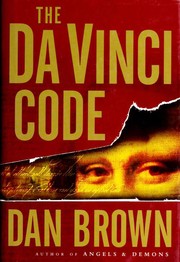 The Da Vinci Code, Dan Brown
 “Teenage Dream”,
  “Stay”,
  A Slow Fire Burning, Paula Hawkins