Our front page for September 7 — written and set by The Yesterday Times from the events below. Not an archival document.
Day of the year
250
Days left in 2026
115
In 2026 it falls on a
Monday
Star sign
Virgo
Birthstone
Sapphire
On September 7 in 1940, 86 years ago, London Blitz Begins as RAF Holds. This page reports 9 stories from the date, 25 people born on this day.
The stories in full
War Desk
1940 — London Blitz Begins as RAF Holds
German bombers struck London on September 7 after abandoning RAF airfields, opening a city campaign expected to run until May 1941.
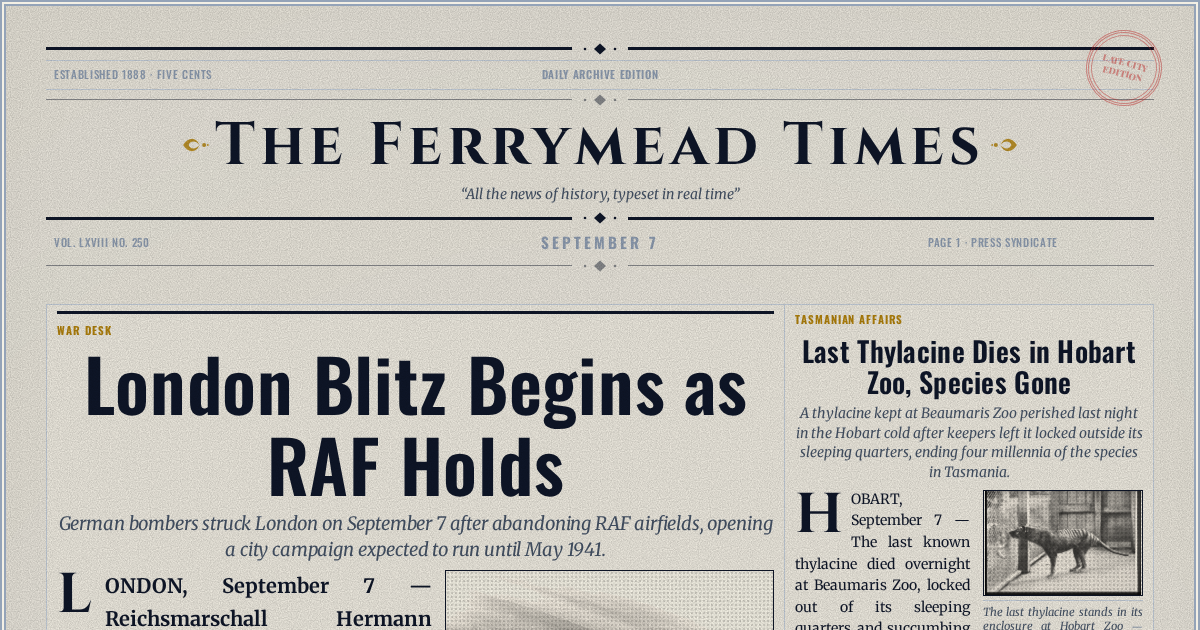
German bombers fly in formation over the English coast — Richard Opitz
LONDON, September 7 — Reichsmarschall Hermann Goering's Luftwaffe opened a massive bombing assault on London tonight, shifting strategy from RAF airfields to Britain's capital and marking the start of what officials here call the Blitz. German bombers flew in formation over the English coast at dusk, and explosions shook the East End and docks through the evening.
The attack signals a fateful turn in the Battle of Britain, which British command dates from July 10. German historians already treat the campaign as a single operation running until next May, encompassing both the aerial fighting and the coming months of city bombing.
The Blitz is expected to continue until May 1941.
The Luftwaffe began bombing London on 7 September 1940, marking the start of the Blitz.
The Blitz lasted from 7 September 1940 to 11 May 1941, overlapping the Battle of Britain.
The British officially recognize the Battle of Britain's duration as 10 July to 31 October 1940.
German historians regard the Battle of Britain as a single campaign from July 1940 to May 1941, including the Blitz.
The Luftwaffe's failure to overwhelm the RAF forced Hitler to postpone and eventually cancel Operation Sea Lion.
1936 — Last Thylacine Dies in Hobart Zoo, Species Gone
A thylacine kept at Beaumaris Zoo perished last night in the Hobart cold after keepers left it locked outside its sleeping quarters, ending four millennia of the species in Tasmania.
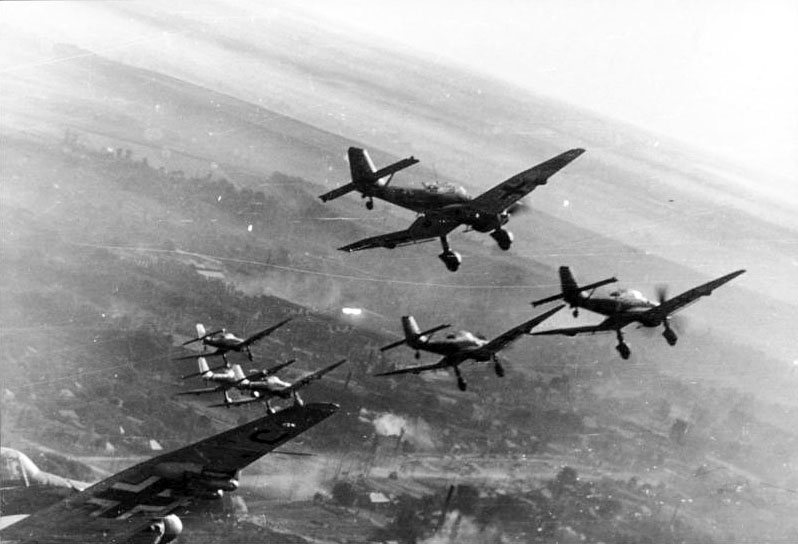
The last thylacine stands in its enclosure at Hobart Zoo — Harry Burrell
HOBART, September 7 — The last known thylacine died overnight at Beaumaris Zoo, locked out of its sleeping quarters and succumbing to exposure in the Hobart cold. Keepers found the animal this morning. The death, believed to have occurred September 7, extinguishes a species that roamed Tasmania for four millennia.
The thylacine appears on Tasmania's official coat of arms.
The last known thylacine died of exposure after being locked out of its sleeping enclosure at Hobart Zoo on 7 September 1936.
National Threatened Species Day has been held annually on 7 September in Australia since 1996 to commemorate the thylacine's death.
The remains of the last known thylacine were discovered at the Tasmanian Museum and Art Gallery in 2022.
The thylacine is featured on the official coat of arms of Tasmania.
The most powerful earthquake worldwide this year struck late Thursday with 8.2 magnitude, killing at least 60.
MEXICO CITY, September 7 — An 8.2 magnitude earthquake struck southern Mexico off the Chiapas coast late Thursday, killing at least 60 people and triggering tsunami warnings across the Pacific. The tremor, the most powerful worldwide this year, rattled buildings as far north as Mexico City.
The 8.2 Mw 2017 Chiapas earthquake strikes southern Mexico, killing at least 60 people.
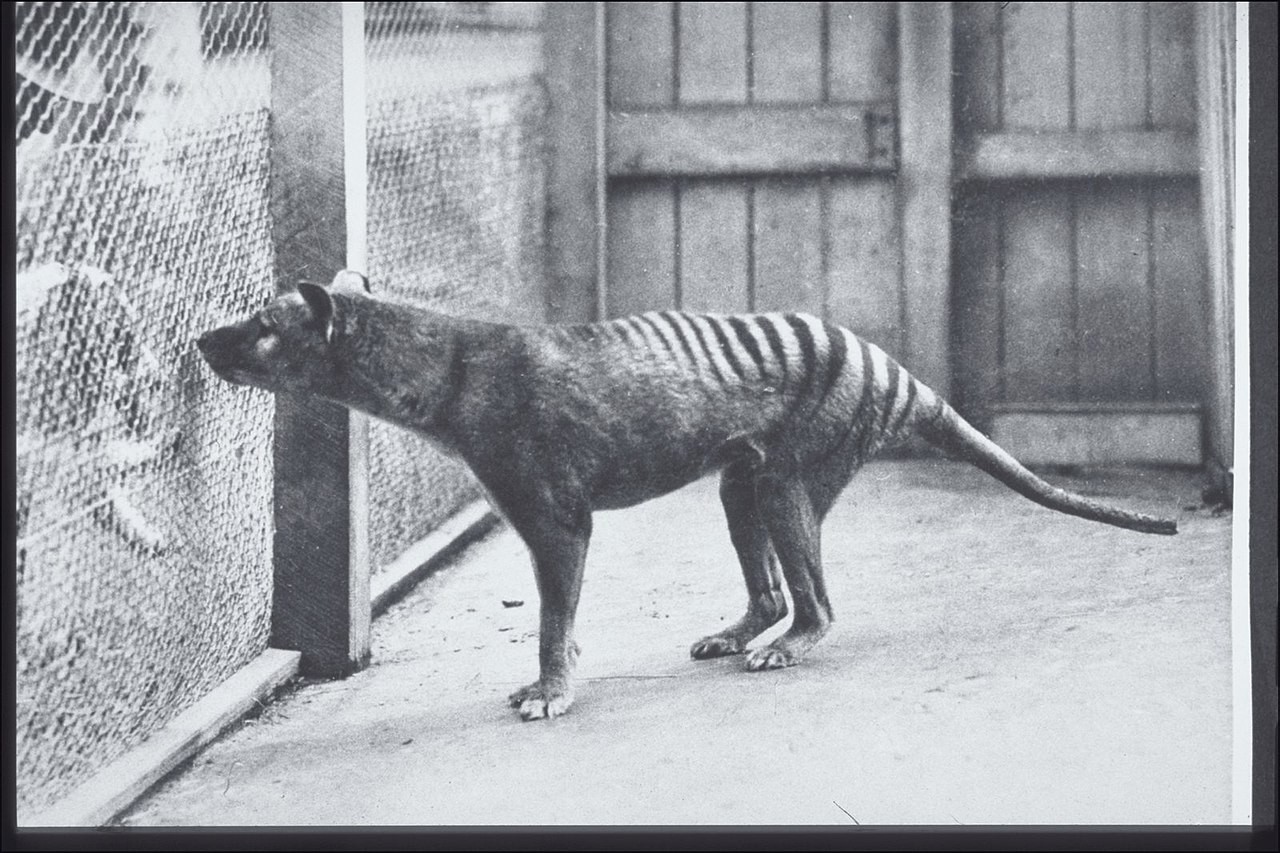
CAPE TOWN, September 7 — Desmond Tutu, the 1984 Nobel Peace Prize winner, assumed the throne of St. George's Cathedral today as Archbishop of Cape Town, becoming the first black leader of the Anglican Church of Southern Africa. The new archbishop also became president of the All Africa Conference of Churches this year.
Tutu will serve until 1986. As archbishop, he is expected to oversee the introduction of female priests.
Desmond Tutu became Archbishop of Cape Town in 1986, the first Black African to hold the position.
Tutu served as Archbishop of Cape Town from 1986 to 1996.
Tutu won the Nobel Peace Prize in 1984 for his anti-apartheid activism.
In 1986, Tutu also became president of the All Africa Conference of Churches.
Tutu oversaw the introduction of female priests as Archbishop of Cape Town.
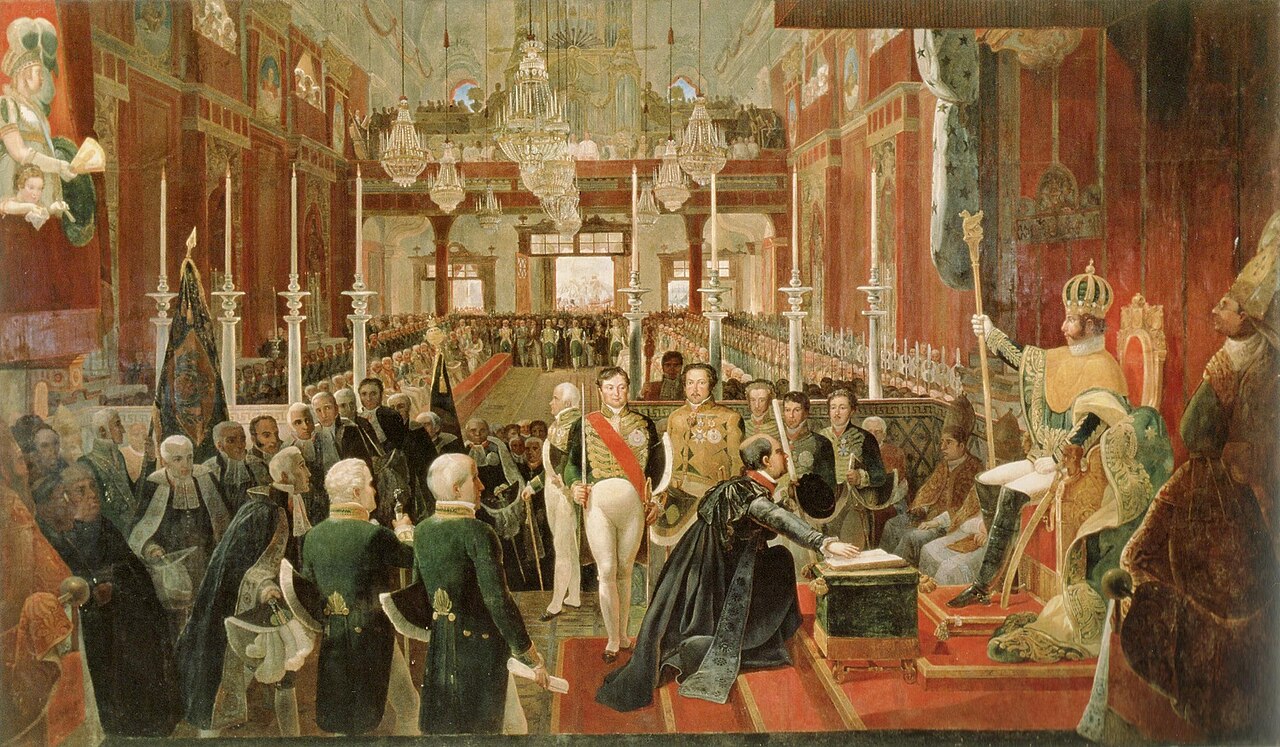
1822 — Brazil Severs Colonial Bonds; Pedro I Proclaims Empire at São Paulo
The 24-year-old prince, acclaimed Emperor Dom Pedro I on October 12, 1822, had agreed to remain in Brazil on January 9 after 8,000 subjects petitioned him with the cry: "I am staying."
A new sovereign power rises in the Americas. Dom Pedro I, Prince Regent, has severed Brazil's 322-year tether to Portugal, establishing the Empire of Brazil with himself as crowned head.
RIO DE JANEIRO, September 7 — The declaration came this date as the Prince returned from São Paulo, resolving the crisis that has gripped the colony since Portuguese courts demanded his return to Europe.
On 7 September 1822, while returning from São Paulo, Pedro I declared Brazil's independence from Portugal.
He was acclaimed Emperor Dom Pedro I on his 24th birthday, 12 October 1822.
By March 1824, Pedro I had defeated all armies loyal to Portugal.
A few months later, Pedro I crushed the Confederation of the Equator, a failed secession attempt in Brazil's northeast.
On 9 January 1822, Pedro I agreed to remain in Brazil after a petition of 8,000 signatures, saying 'I am staying.'
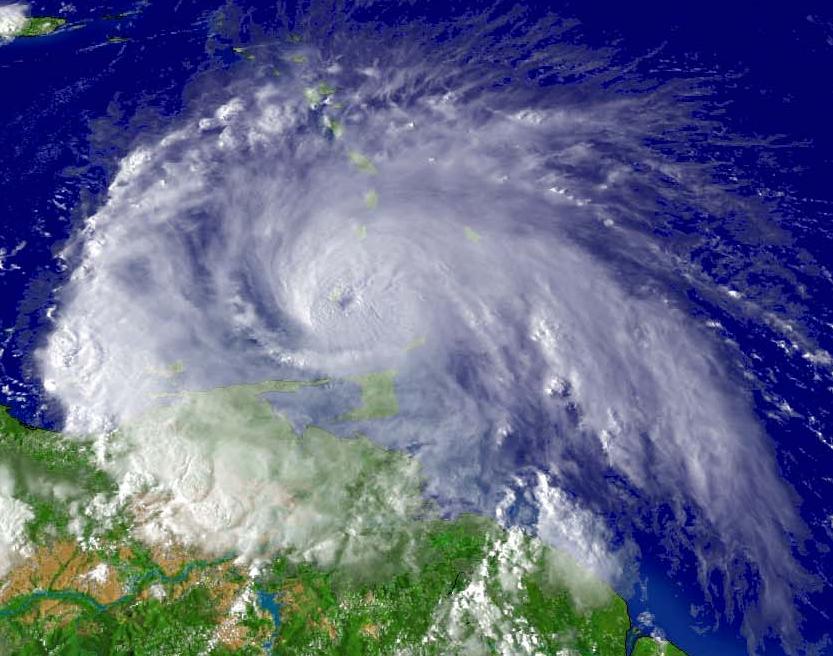
2004 — Grenada Left in Ruins as Hurricane Ivan Levels 85% of Island Buildings
Hurricane Ivan, a Category 3 cyclone with 125 mph winds, passed north of the island nation on September 7.
Hurricane Ivan bears down on Grenada, September 2004 — NOAA
The age of megastorms, already defining the early twenty-first century, delivered its most devastating blow yet to a sovereign Caribbean state when Hurricane Ivan erased the infrastructure of Grenada in a matter of hours.
ST. GEORGE'S, GRENADA, September 7 — Hurricane Ivan passed just north of this island nation today as a Category 3 storm with sustained winds of 125 mph.
On September 7, 2004, Hurricane Ivan passed just north of Grenada as a Category 3 storm with winds of 125 mph (205 km/h).
Within a day of Ivan's passage, USAID deployed 67,600 gallons of water and other supplies totaling $6 million in aid to Grenada.
Guyana sent about $250,000 worth of sugar and 100 defense force members to assist Grenada's reconstruction.
Trinidad and Tobago sent 190 policemen, and Anguilla sent 1,230 cases of water to Grenada after the hurricane.
Grenada's economy contracted by nearly 3% in 2004, versus a projected growth of 4.7%, due to Ivan's destruction.
1927 — Farnsworth Perfects All-Electric Television; Mechanical Scanning Obsolete as Idaho Inventor Achieves First Fully Electronic System
The 21-year-old inventor's breakthrough eliminates the spinning disks that have hampered television development since Baird's earliest experiments.
Philo Farnsworth has achieved what engineers from Berlin to Menlo Park have pursued since the first flickering mechanical images: a television system built entirely upon electronic principles, with no moving parts to blur or distort the picture.
SAN FRANCISCO, September 7 — The 21-year-old inventor, working in his Green Street laboratory, has demonstrated the first fully electronic television system. The apparatus employs cathode-ray tubes for both transmission and reception, scanning images through purely electronic means rather than the rotating Nipkow disks that have limited television's progress.
The first fully electronic television system is achieved by Philo Farnsworth.
2011 — Lokomotiv Yaroslavl Hockey Team Perishes in Yak-42 Crash; 44 of 45 Aboard Killed Near Volga
KHL postponed its season opener by five days; Prime Minister Putin attended a memorial service with an estimated 100,000 mourners.
Forty-four dead. One survivor. An entire professional hockey organization erased when their chartered aircraft failed to clear the runway at Tunoshna Airport. Yak-Service Flight 9633, carrying the Lokomotiv Yaroslavl ice hockey club's players and coaching staff, overran the runway, struck an antenna mast, and came to rest on the bank of the Volga River. The sole survivor is the aircraft's mechanic. One player initially survived the impact but succumbed to injuries days later.
All but one of the 45 people on board were killed in the crash of YAK-Service Flight 9633 near Yaroslavl.
The only survivor was the aircraft's mechanic; one player also survived the crash but died from injuries days later.
The aircraft overran the runway, struck an antenna mast, and crashed on the bank of the Volga river.
The investigation found that the pilot used falsified documents to obtain permission to fly the Yak-42.
KHL officials suspended a game in progress and later postponed the start of the season by five days.
1996 — Rapper Tupac Shakur Shot Four Times in Drive-by on Vegas Strip
Shakur and Death Row CEO Suge Knight were ambushed at a traffic light after a Mike Tyson fight.
PARADISE, Nevada, September 7 — Rapper Tupac Shakur was shot four times late Saturday night in a drive-by attack at East Flamingo Road and Koval Lane, four miles from the Luxor Las Vegas hotel where he was staying.
Shakur, 25, was struck by bullets from a .40-caliber Glock 22 pistol at approximately 11:15 p.m. while his BMW waited at a red light. Death Row Records chief executive Marion "Suge" Knight was driving and suffered a graze wound. Knight drove the vehicle one mile to the intersection of Las Vegas Boulevard and Harmon Avenue before medical personnel arrived.
The shooting occurred following the Mike Tyson-Bruce Seldon heavyweight bout at the MGM Grand, where Shakur and Knight had been in attendance. Police have not announced arrests.
Tupac Shakur was shot four times from a .40-caliber Glock 22 pistol at 11:15 p.m. on September 7, 1996, in Paradise, Nevada.
Shakur was staying at the Luxor Las Vegas hotel during his visit, but the shooting occurred four miles from the resort.
Shakur died from his injuries six days later, on September 13, 1996.
Duane 'Keefe D' Davis, uncle of suspect Orlando Anderson, was arrested on September 29, 2023, for first-degree murder of Shakur.
The shooting occurred when Shakur's car was stopped at a red light at East Flamingo Road and Koval Lane.
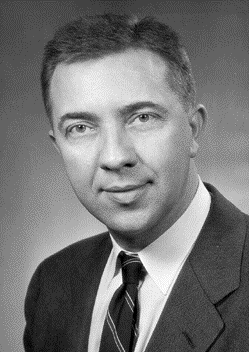
1914James Van AllenJames Alfred Van Allen was an American space physicist at the University of Iowa who was instrumental in establishing the field of magnetospheric research in space.
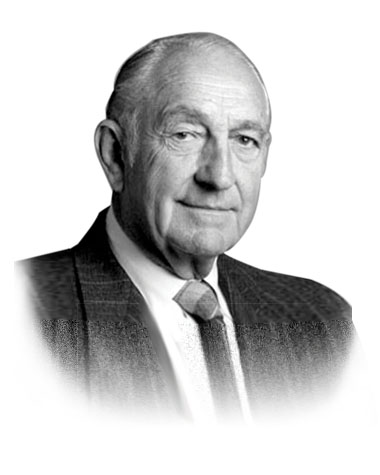
1912David PackardDavid Packard was an American electrical engineer and co-founder, with Bill Hewlett, of Hewlett-Packard (1939), serving as president (1947–64), CEO (1964–68), and chairman of the board of HP.
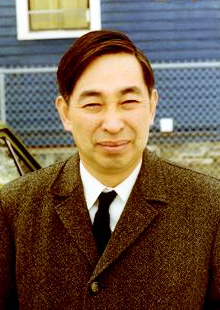
1915Kiyosi ItôKiyosi Itô was a Japanese mathematician who made fundamental contributions to probability theory, in particular, the theory of stochastic processes.
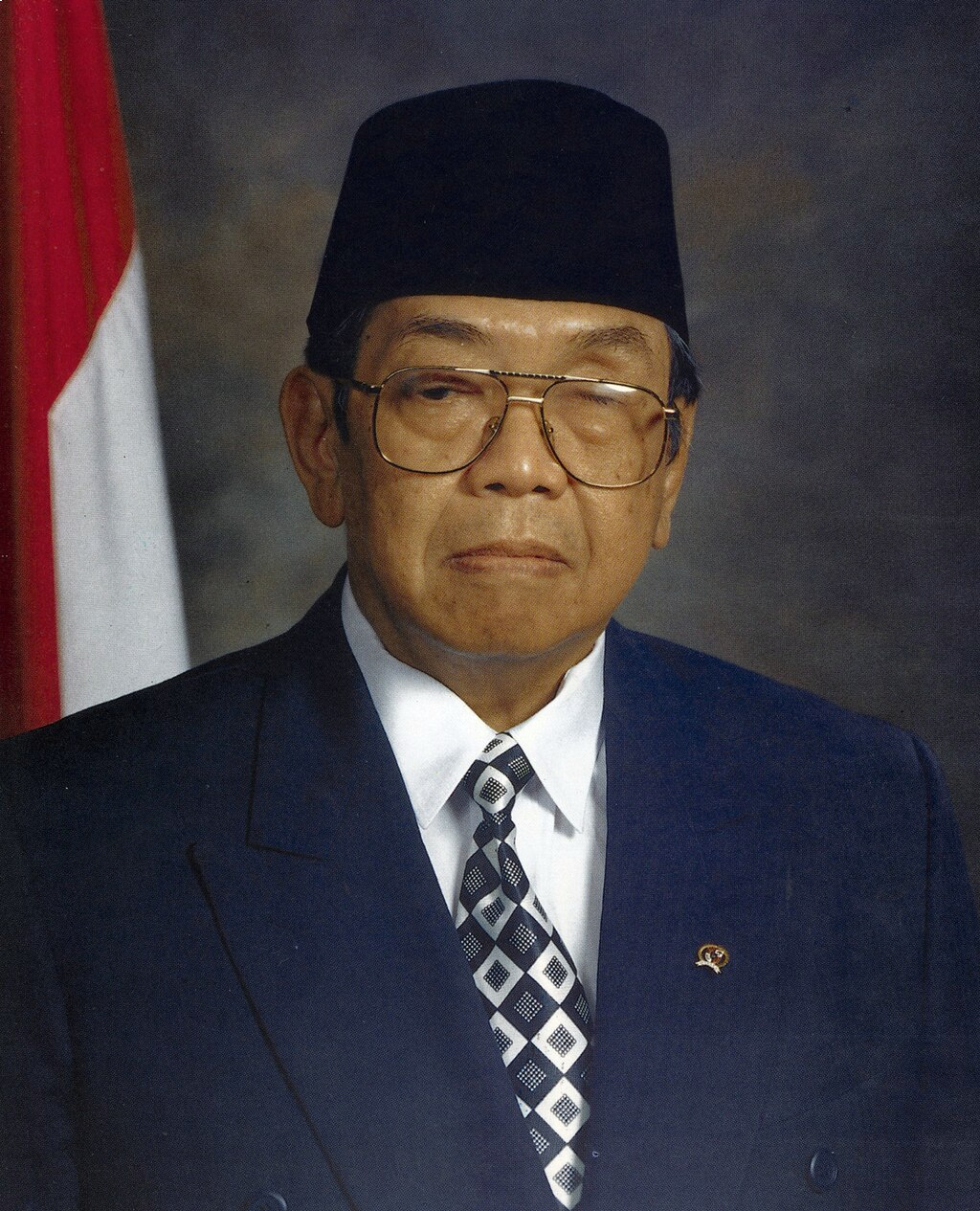
1940Abdurrahman WahidAbdurrahman Wahid, more colloquially known as Gus Dur, was an Indonesian politician and Islamic religious leader who served as the fourth president of Indonesia, from his election in 1999 until he was removed from office in 2001.
1956Diane Warren(70 this year)Diane Eve Warren is an American songwriter.
1836Henry Campbell-BannermanSir Henry Campbell-Bannerman was Prime Minister of the United Kingdom from 1905 to 1908 and Leader of the Liberal Party from 1899 to 1908.
1967Leslie Jones(59 this year)Annette Leslie Jones is an American stand-up comedian and actress.
1629Sir John PercevalSir John Perceval, 1st Baronet was an Irish nobleman and landowner.
1819Thomas A. HendricksThomas Andrews Hendricks was an American politician and lawyer from Indiana who served as the 16th governor of Indiana from 1873 to 1877 and the 21st vice president of the United States from March 1885 until his death in November of that year.
1855William Friese-GreeneWilliam Friese-Greene was a prolific English inventor and professional photographer.
1871George HirstGeorge Herbert Hirst was an English professional cricketer who played first-class cricket for Yorkshire County Cricket Club between 1891 and 1921, with a further appearance in 1929.
1897Al ShermanAvrum Sherman, pen name Al Sherman, was an American songwriter and composer active during the Tin Pan Alley era in American music history.
1917Jacob LawrenceJacob Armstead Lawrence was an American painter known for his portrayal of African-American historical subjects and contemporary life.
1925Bhanumathi RamakrishnaP. Bhanumathi Ramakrishna was an Indian actress, singer, film producer, director, music composer, writer, editor, studio owner and novelist.
1926Don MessickDonald Earle Messick was an American voice actor, known for his performances in Hanna-Barbera cartoons.
1934Mary BauermeisterMary Hildegard Ruth Bauermeister was a German artist who worked in sculpture, drawing, installation, performance, and music.
1936George CassidyGeorge Cassidy was a Northern Irish jazz musician and music teacher from Bloomfield, Belfast, Northern Ireland, specializing in the tenor saxophone.
1943Joe SimonJoseph Simon was an American soul and R&B musician.
1944Bertel Haarder(82 this year)Bertel Geismar Haarder is a Danish writer, teacher and politician, who was a member of the Folketing for the Venstre political party.
1946Joe Klein(80 this year)Joe Klein is an American political commentator and author.
1950David Cannadine(76 this year)Sir David Nicholas Cannadine is a British author and historian who specialises in modern history, Britain and the history of business and philanthropy.
1950Julie Kavner(76 this year)Julie Deborah Kavner is an American actress.
1951Mammootty(75 this year)Muhammad Kutty Panaparambil Ismail, known professionally as Mammootty, is an Indian actor and film producer who works predominantly in Malayalam-language films.
1963W. Earl Brown(63 this year)William Earl Brown is an American actor, screenwriter, producer, musician, and songwriter.
1978Matt Cooke(48 this year)Matthew David Cooke is a Canadian professional ice hockey coach and former professional player.
Holidays and observances
Labor Day (United States), in 2026
Quote of the Day
“Why, sometimes I've believed as many as six impossible things before breakfast.” — Lewis Carroll, Through the Looking-Glass
September 7 History Quiz
Which British city did the Luftwaffe begin bombing on September 7, 1940?
London
What was the last known thylacine, which died in 1936?
A marsupial
Who led Brazil to independence from Portugal in 1822?
Every event on this page was picked by hand from the historical record, written up as a news report, and checked against its source. Photographs are matched to the event they illustrate and verified before they are used. Sources are linked on each story.


 Exodus, Leon Uris
 “My Boyfriend's Back”,
 The Shoes of the Fisherman, Morris West
 “(You're) Having My Baby”,
  Tinker Tailor Soldier Spy, John le Carré
 “St. Elmo's Fire (Man In Motion)”,
 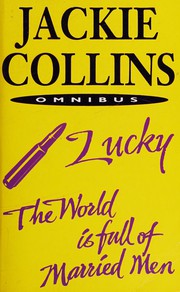 Lucky, Jackie Collins
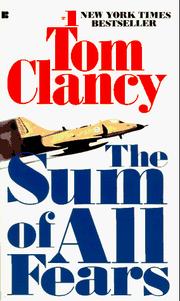 The Sum of All Fears, Tom Clancy
 “Dilemma”,
 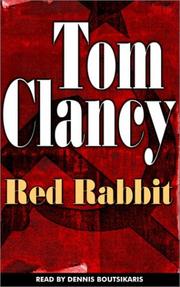 Red Rabbit, Tom Clancy
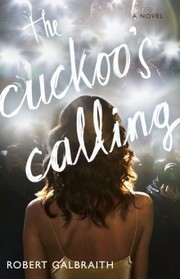 The Cuckoo's Calling, Robert Galbraith
 “A Bar Song (Tipsy)”,
 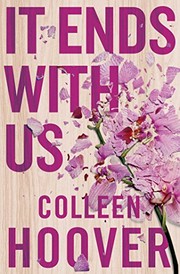 It Ends with Us, Colleen Hoover